Kumano Hayatama Taisha, Shingu: How to Visit This World Heritage Shrine on Foot (Access, Hours & Tips)
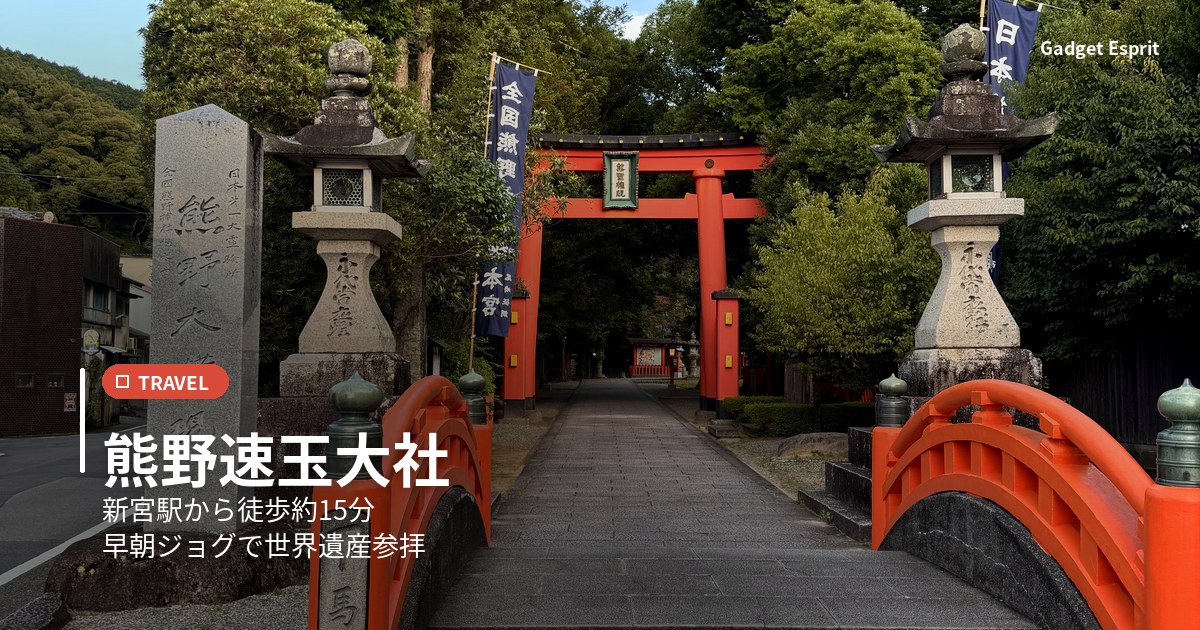
If you’re heading to Japan’s Kii Peninsula and want to see a World Heritage shrine without a long hike, Kumano Hayatama Taisha (熊野速玉大社) in Shingu is one of the easiest of the three great Kumano shrines to reach. You can walk to it straight from the train station on flat streets — no mountain climb required.

I visited early one morning as the destination for a jog while on a work trip to the Wakayama area, so this guide is written from an actual on-foot visit.
The short version: It’s a flat 15–20 minute walk from JR Shingu Station. The grounds are free to enter, with a free parking lot, and you can pray at any hour (the amulet/goshuin office only opens during the day). Wondering whether you can get there without a car, or whether early morning is fine? Yes on both counts.
What is Kumano Hayatama Taisha, and why go?
Kumano Hayatama Taisha is one of the Kumano Sanzan — the three grand shrines (with Kumano Hongu Taisha and Kumano Nachi Taisha) that form the spiritual heart of the Kumano region. Together with the Kumano Kodo pilgrimage routes that connect them, they make up the UNESCO World Heritage Site “Sacred Sites and Pilgrimage Routes in the Kii Mountain Range.” This shrine is the head shrine of thousands of Kumano shrines across Japan, and it will mark 1,900 years since its founding in 2028.
Unlike its siblings (Nachi with its waterfall, Hongu deep in the mountains), Hayatama sits right in the town of Shingu — so it’s the most accessible of the three, ideal if you’re short on time or don’t want a hike.
How to get there
- Nearest station: JR Kisei Main Line (Kinokuni Line) Shingu Station. From there it’s a 15–20 minute walk via the Ekimae-hondori street — flat, straightforward, and hard to get lost on.
- From Nagoya: the Limited Express “Nanki” reaches Shingu in about 3 hours 20 minutes (about 4 round trips daily).
- From the Kansai side: the Limited Express “Kuroshio.”
- By car: there is a free parking lot on site. It wasn’t crowded on my early-morning visit, and there’s space for large vehicles / tour coaches too.
- Suitcase note: you can wheel a suitcase from the station to the shrine entrance (flat the whole way), but the grounds themselves are gravel, so a suitcase won’t roll inside — better to use a station locker for big bags.
- Address / map: Shingu 1, Shingu City, Wakayama — search “Kumano Hayatama Taisha” on Google Maps.
The walk from Shingu Station
Early in the morning the station plaza is quiet and almost empty — a calm way to begin. Walk out and you’ll hit the Shingu Station intersection, where a Chinese-style gate marks Jofuku Park (tied to the legend of Xu Fu, sent by China’s first emperor to find the elixir of immortality).
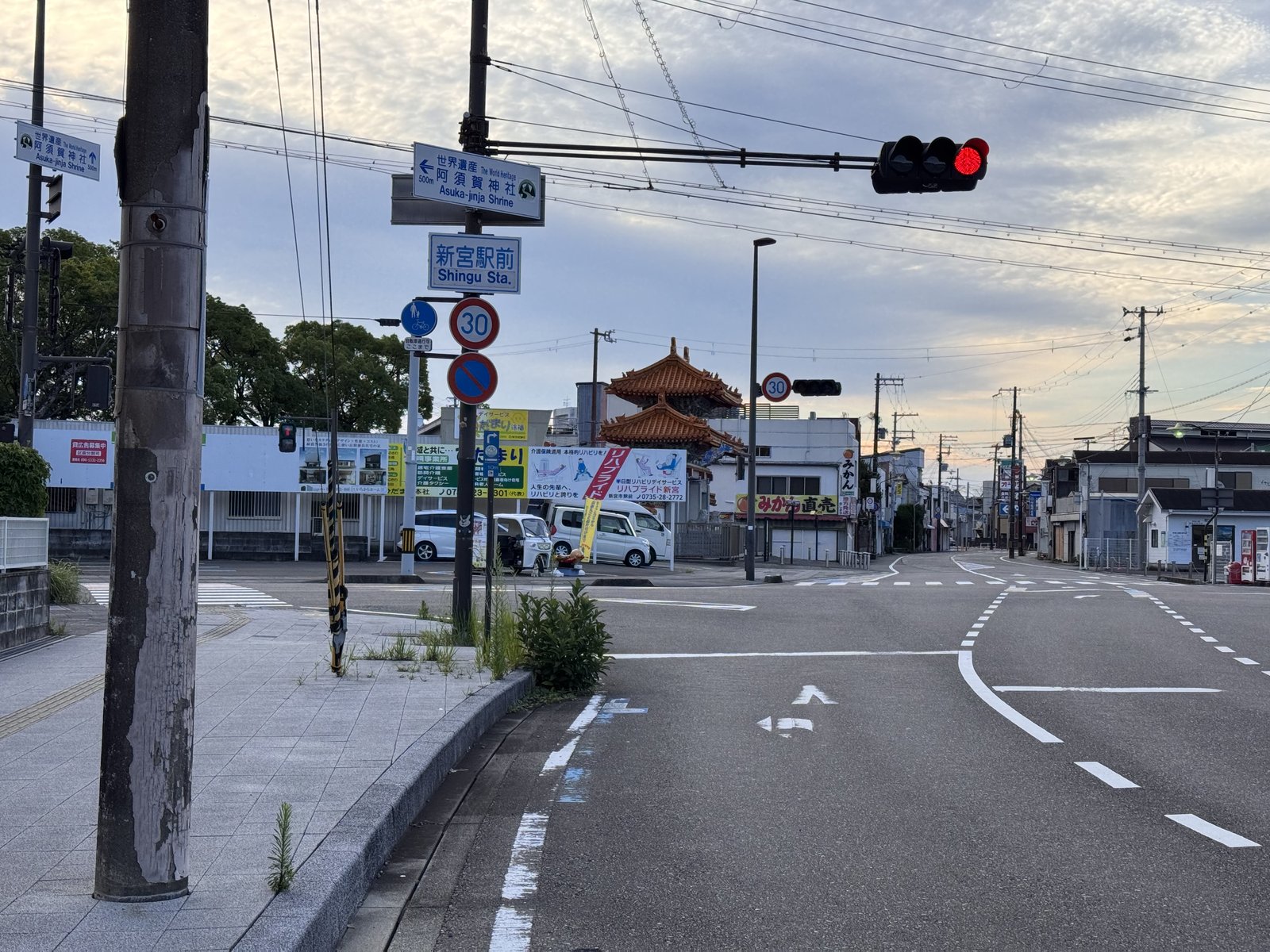
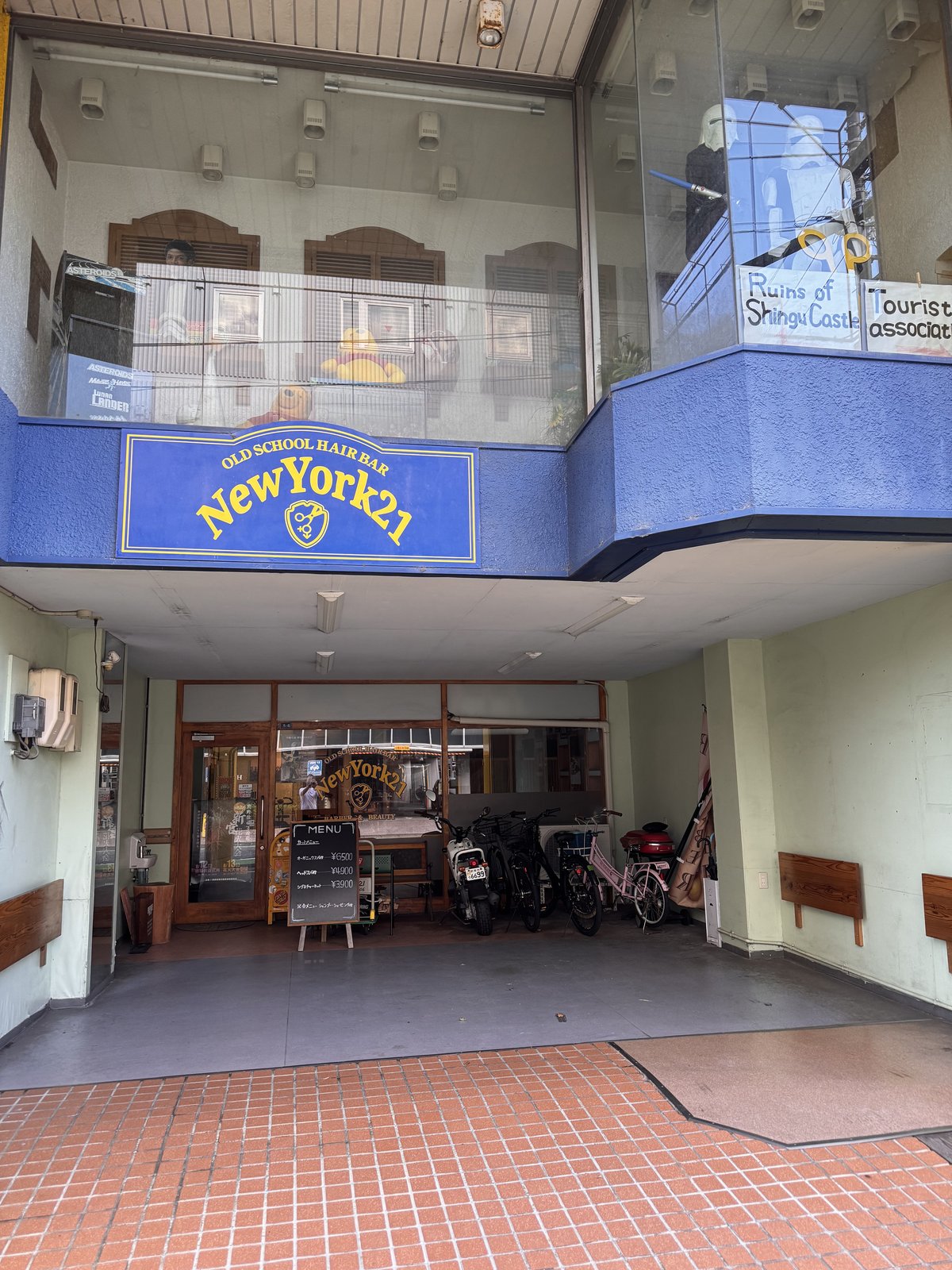
From there you follow the Ekimae-hondori shopping street. It has a faded, old-Showa-era feel with a few brand-new little shops mixed in — an oddly charming contrast, and at that hour almost nobody around. Near the Tankakucho intersection the shrine is just beyond. The whole route is flat and very easy to walk, which is a big part of why this shrine is so beginner-friendly.
Passing through the great torii
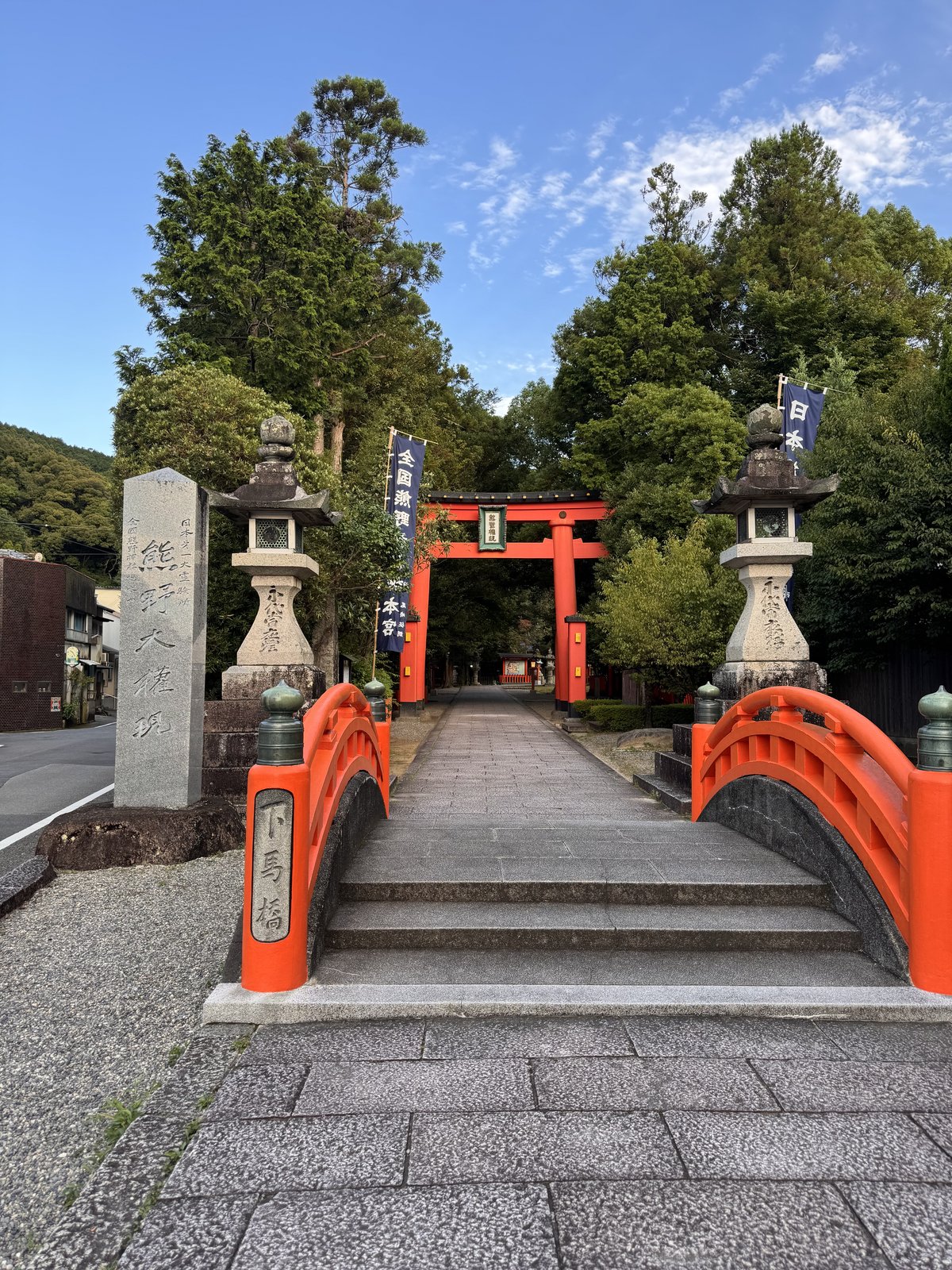
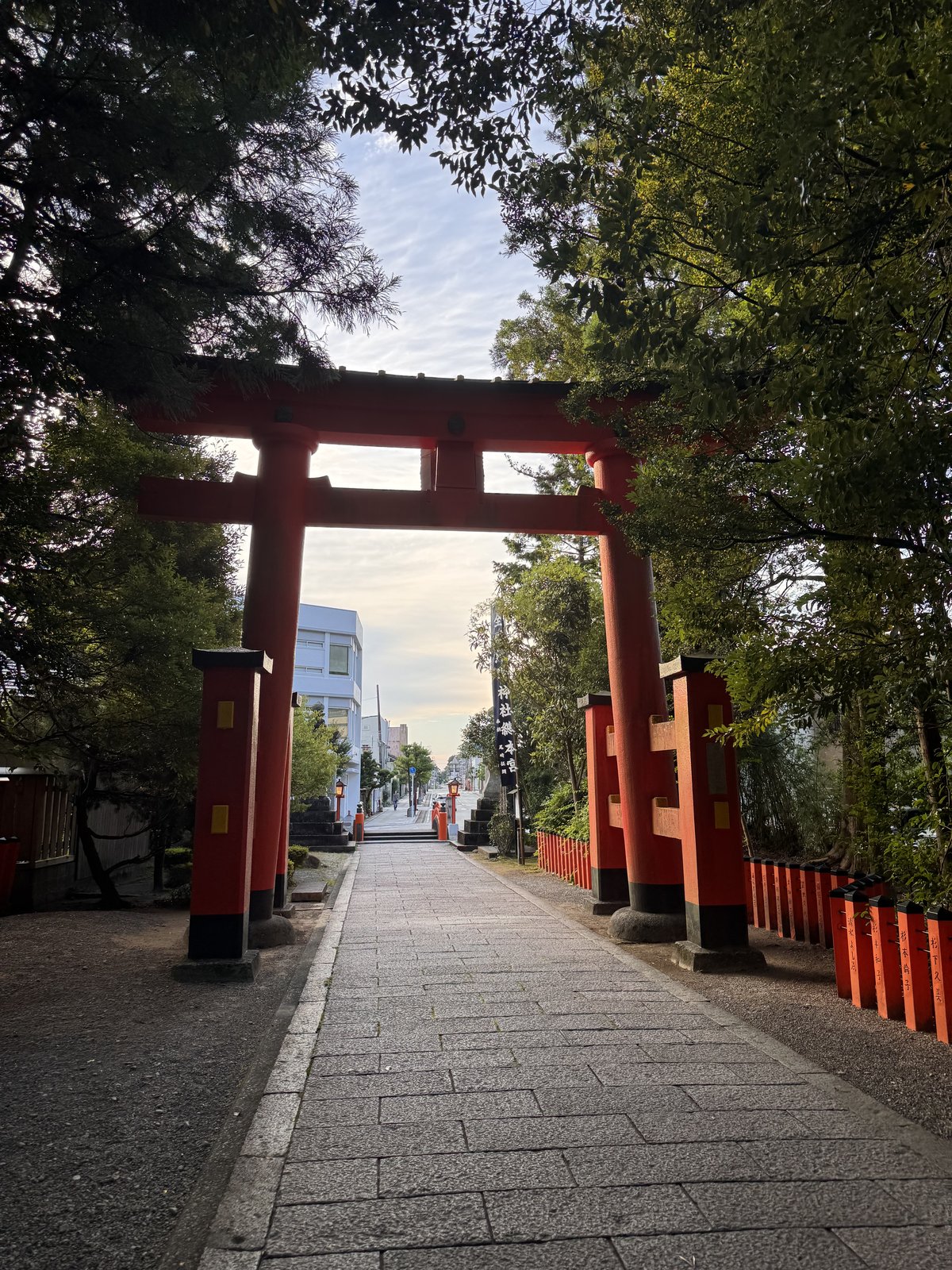
You reach the shrine’s vermilion great torii gate, flanked by stone lanterns. There’s a genuine shift in the air once you step through — maybe it’s just the atmosphere getting to me, but the bright vermilion against a clear morning sky really does make you stand a little straighter. Even that early, someone was already sweeping fallen leaves — the grounds are beautifully kept.
Things you should see on the grounds
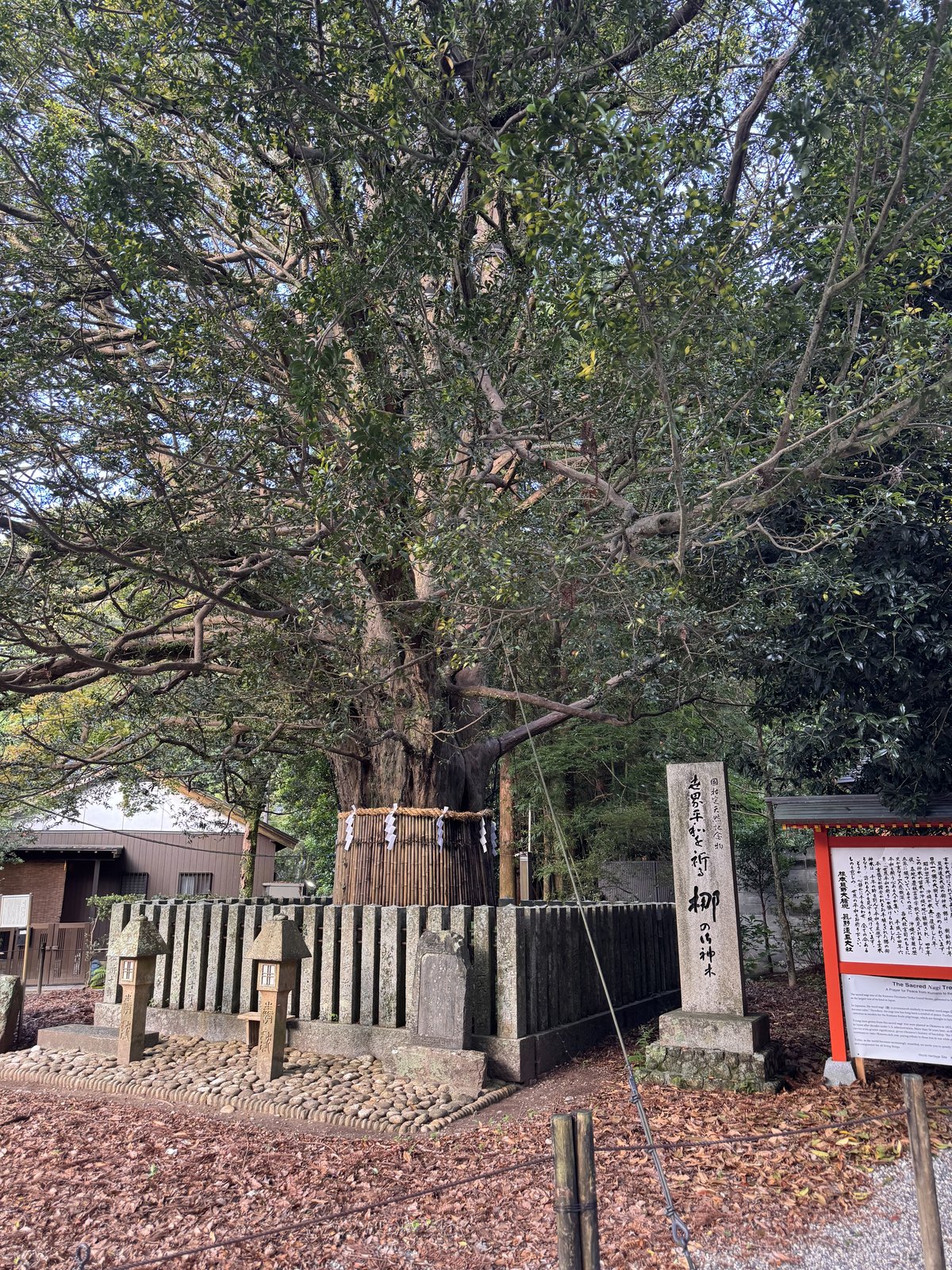
The sacred Nagi tree (梛). Don’t miss the giant Nagi tree wrapped with a sacred rope. It’s a National Natural Monument, an estimated 1,000 years old, and the largest Nagi tree in Japan, said to have been planted by Taira no Shigemori in the late Heian period. Traditionally, pilgrims tuck a Nagi leaf into their clothing to pray for safe travels — as a runner, I couldn’t help but wish for many more safe miles.
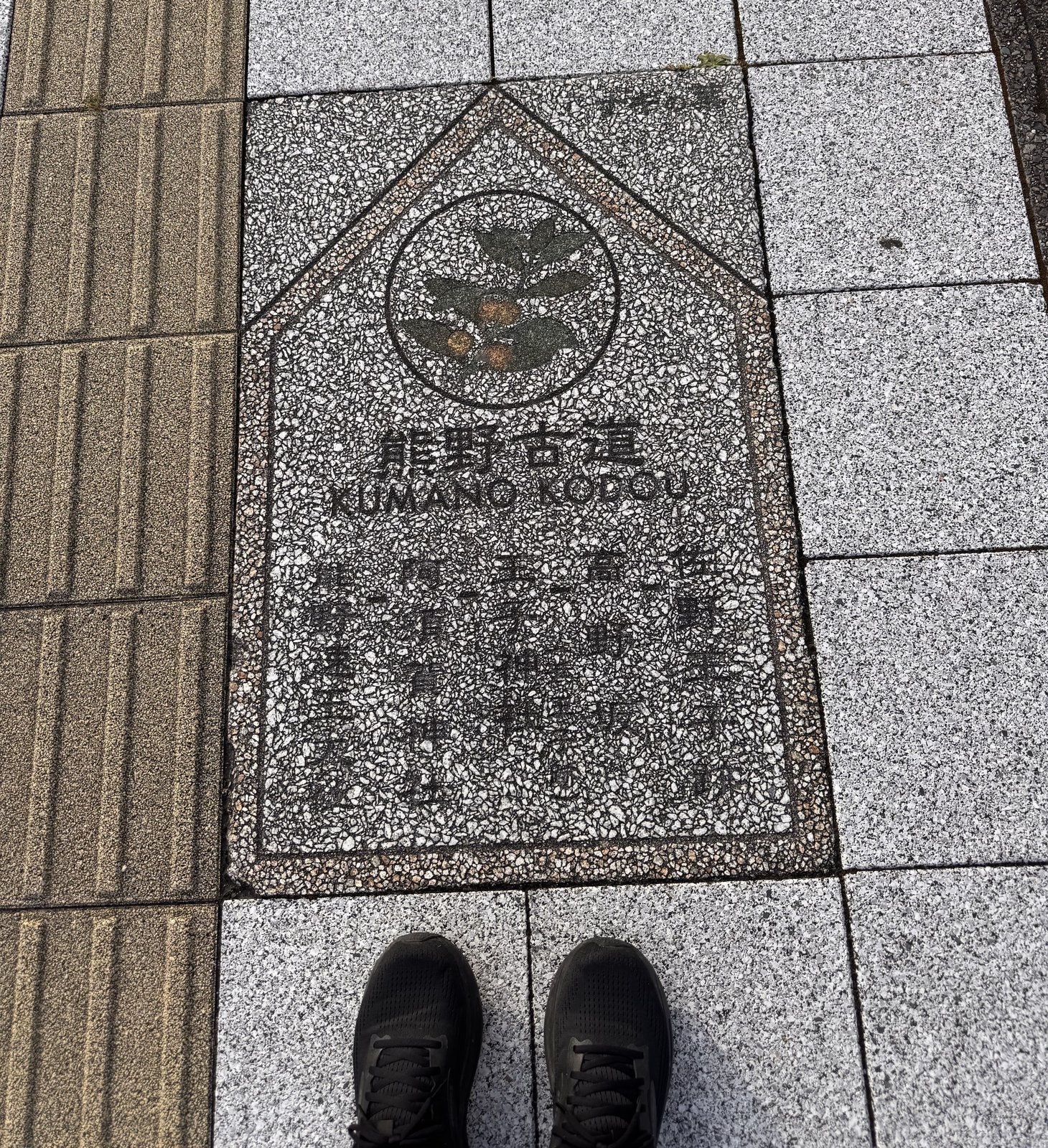
Kumano Kodo underfoot. On the way to the shrine, I glanced down and noticed a plaque set into the sidewalk reading “Kumano Kodo.” In the circle at the top is the three-legged crow — the Yatagarasu, the symbol of Kumano and, fun fact, the emblem of Japan’s national football team. It really hit me that I was running my pilgrimage right on top of a World Heritage pilgrimage route.😀
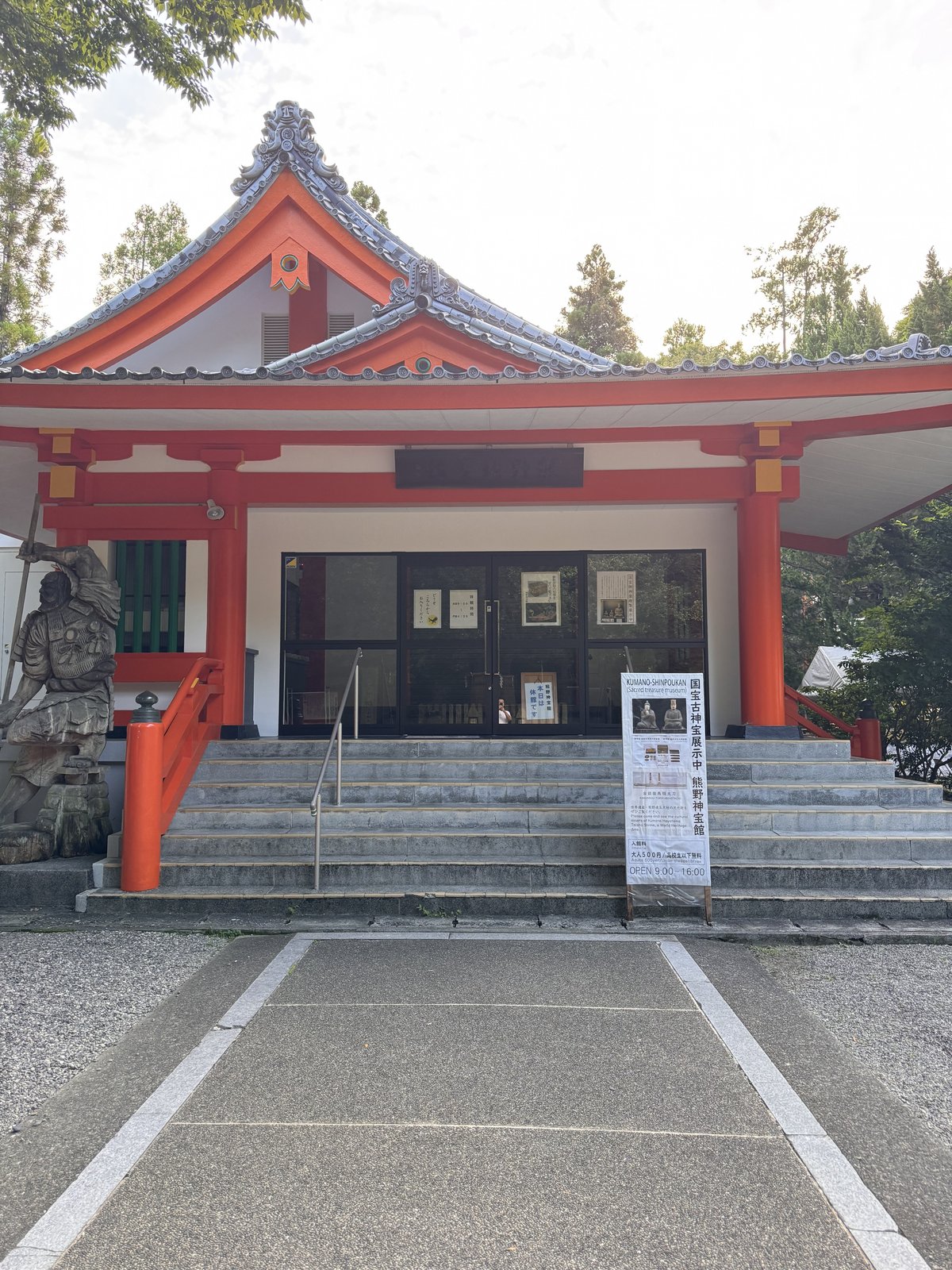
Kumano Shinpokan (Treasure Museum). The grounds include a museum of national-treasure sacred artifacts. I arrived before it opened, so I only saw it from outside — one for next time.
Practical information
Details are from my visit; please confirm current times/prices on the official site.
- Worship: the grounds are free and open for worship early.
- Treasure Museum: 9:00–16:00, 500 yen (exhibits rotate).
- Amulets & goshuin (seal stamps): the amulet office runs during daytime hours — I came too early and couldn’t get a goshuin, so plan accordingly.
- Toilets / accessibility: next to the free parking there’s a public restroom with an accessible stall, and wheelchairs are available to borrow.
- How long to allow: about 10–15 minutes for the main grounds; longer if you add the museum or nearby shrines.
Is it worth visiting?
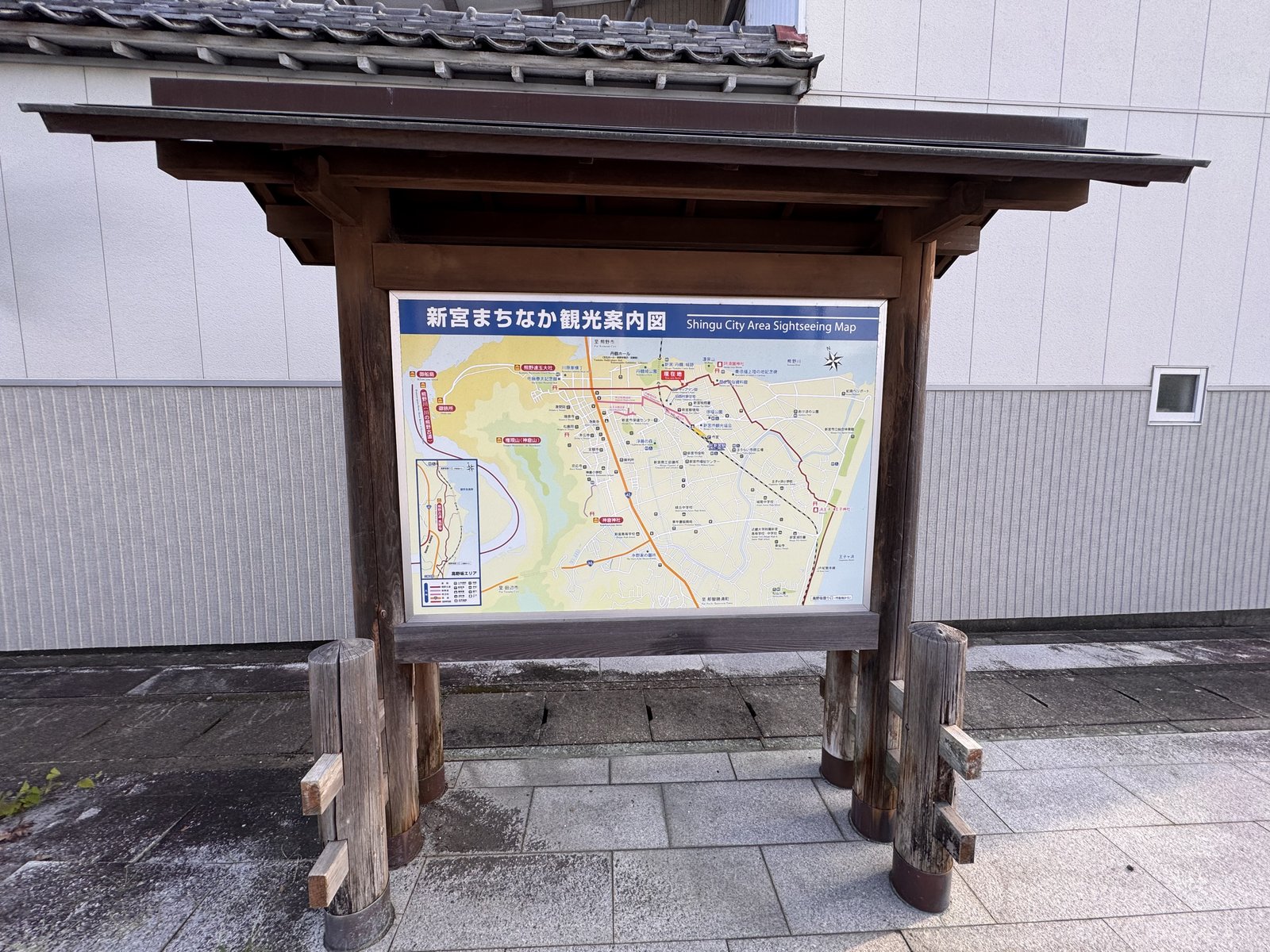
Yes — especially if you want a calm, uncrowded Kumano experience. I only had time for Hayatama this trip, but the area is dotted with other spots — Kamikura-jinja (a steep stone stairway to the Gotobiki-iwa rock, 15 min away), Asuka-jinja, Jofuku Park, and the Shingu Castle ruins — enough for a full day of town walking. When I visited early in the morning there were very few tourists, foreign or Japanese. If the crowds at Nachi and Hongu aren’t your thing, Hayatama plus a stroll around Shingu is a lovely, low-key choice.
FAQ
Is Kumano Hayatama Taisha worth visiting?
Yes, particularly for an easy, uncrowded World Heritage shrine you can reach on foot. It pairs well with nearby Kamikura-jinja and a walk around Shingu.
How far is it from Shingu Station?
About a 15–20 minute flat walk via the Ekimae-hondori street.
Can you visit without a car?
Yes. It’s an easy walk from Shingu Station; there’s also a free parking lot if you drive.
How long should you spend there?
Around 10–15 minutes for the main grounds, more if you visit the Treasure Museum or nearby sites.
Is it part of the UNESCO World Heritage Site?
Yes — it’s one of the Kumano Sanzan within “Sacred Sites and Pilgrimage Routes in the Kii Mountain Range.”
Can you get a goshuin (seal stamp)?
Yes, but the office opens during daytime hours — too early and it may be closed (as I found out).
Can you bring a suitcase?
You can wheel one from the station to the shrine entrance on flat pavement, but the grounds inside are gravel, so it won’t roll well — a station locker is the easier option.
Runner’s note
For the record, I walked/jogged this in the Brooks GhostMAX 2 — plenty of cushioning for travel walking and light jogging, and very comfortable on the paved route from the station. If you like to run while traveling, picking a shrine as your “sightseeing run” destination is a great way to feel the character of a place.
I hope this helps anyone planning to visit Kumano Hayatama Taisha on foot. An early-morning visit here is genuinely worth the early alarm.