Zenkoji Temple, Nagano: A First-Timer Visit Guide (Access, Food & Souvenirs)
Hi, this is HACHIYA from Gadget Esprit. Thanks for stopping by.
Every year my family visits our ancestral grave in Matsushiro, Nagano, and this time we decided to finally stop somewhere we had never actually been: Zenkoji Temple. It is one of the most famous temples in all of Japan, yet somehow we had never visited as a family. Here is what our first visit was like, mixed with the practical info you will want if you are coming from abroad – how to get there, what to eat, and what to buy.
What is Zenkoji, and why go?
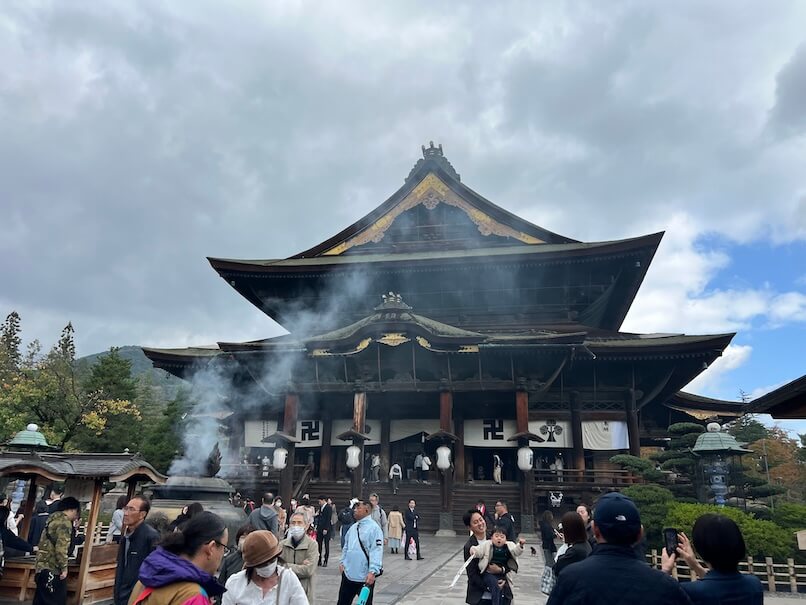
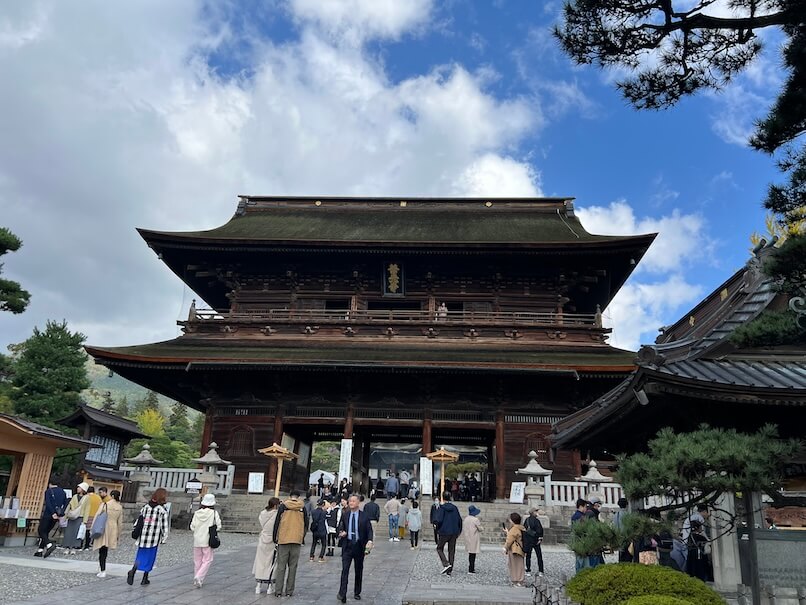
Zenkoji is a roughly 1,400-year-old temple in the heart of Nagano City. Its huge wooden Main Hall (Hondo) is a National Treasure, and unusually for Japan the temple belongs to no single Buddhist sect – everyone is welcome regardless of faith. That open, welcoming feel is a big part of why it has drawn pilgrims for centuries. There is even an old saying, “Ushi ni hikarete Zenkoji mairi” (led to Zenkoji by an ox), about being drawn to the temple by an unexpected twist of fate.
It also pairs perfectly with other Nagano trips like the Snow Monkeys of Jigokudani or the old castle town of Matsushiro, so it slots nicely into a wider itinerary.
The approach: what the walk up to Zenkoji feels like
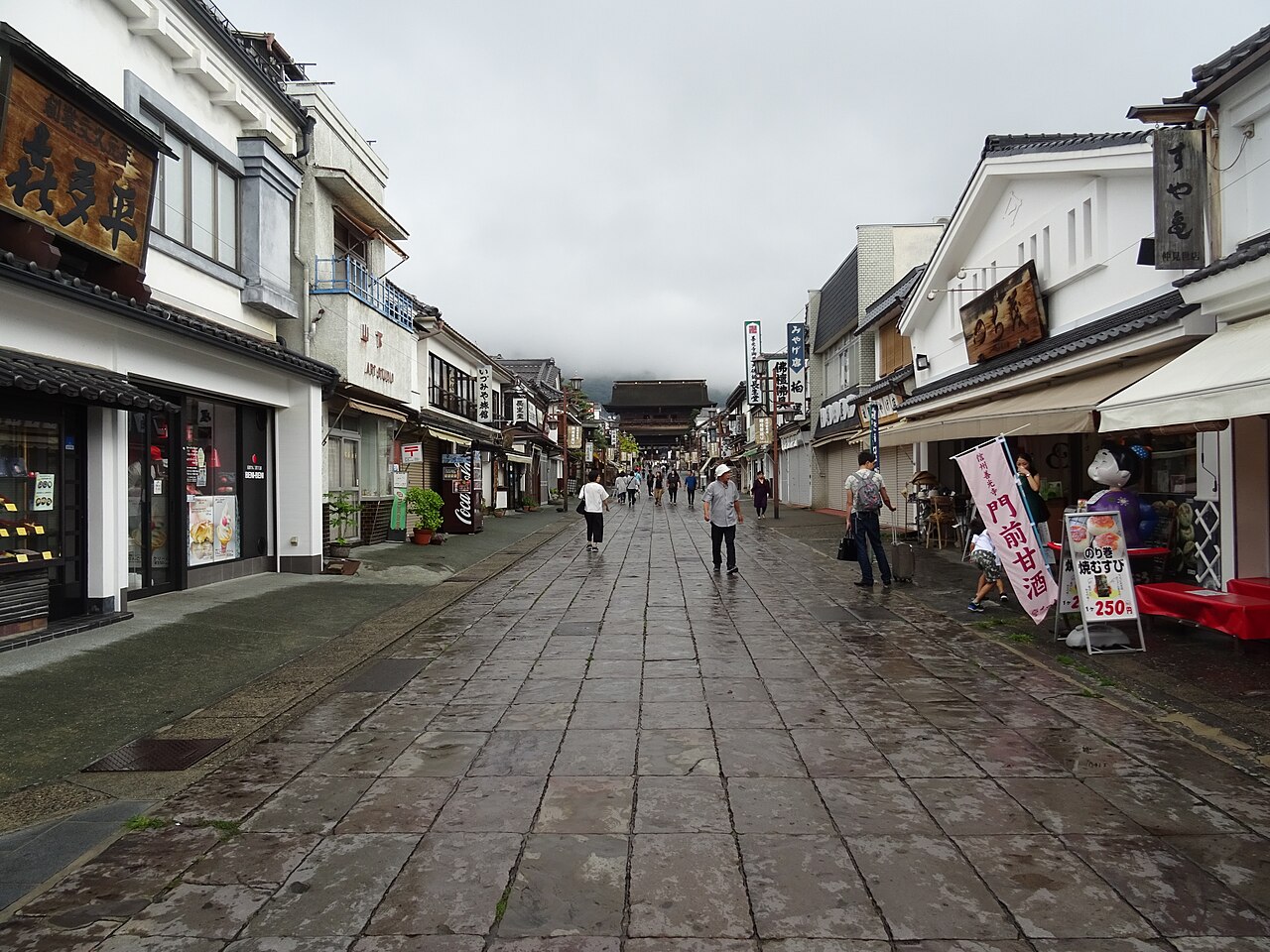
Half the joy of Zenkoji is the walk up to it. From around Nagano Station the road climbs gently for about 2 km, and the last stretch – Nakamise street – is a stone-paved slope lined with old wooden shopfronts, paper lanterns, and rows of stone and bronze lanterns leading the eye toward the temple. Steam rises from stalls grilling rice crackers and oyaki dumplings, the scent of incense drifts from the shops, and pilgrims, school groups and families all move together up the slope. Then the enormous Sanmon gate appears ahead, and you realise just how big this place is.
The mood shifts with the seasons, too. Cherry blossoms frame the grounds in spring, summer brings fresh green and festival energy, autumn sets the maples glowing red and gold, and in winter a dusting of snow leaves everything hushed and still. Any season is a good season – they just each feel completely different.
How to get there
From Tokyo: take the Hokuriku Shinkansen to Nagano. The fastest Kagayaki service reaches Nagano in about 80 minutes; the Asama, which stops at more stations, takes about 2 hours. A one-way reserved ticket is roughly 8,000 to 8,500 yen.
From Nagano Station to the temple (about 2 km straight up the main avenue):
- Bus: about 15 minutes to the Zenkoji-Daimon stop, then a 5-minute walk.
- Local train: the Nagaden line from Nagano Station to Zenkojishita Station (about 4 minutes; 210 yen one way for adults, per the Nagaden fare table revised December 1, 2025), then a 5 to 10 minute walk.
- On foot: a pleasant 25 to 30 minute walk straight up Chuo-dori and Nakamise street, lined with shops and food stalls.
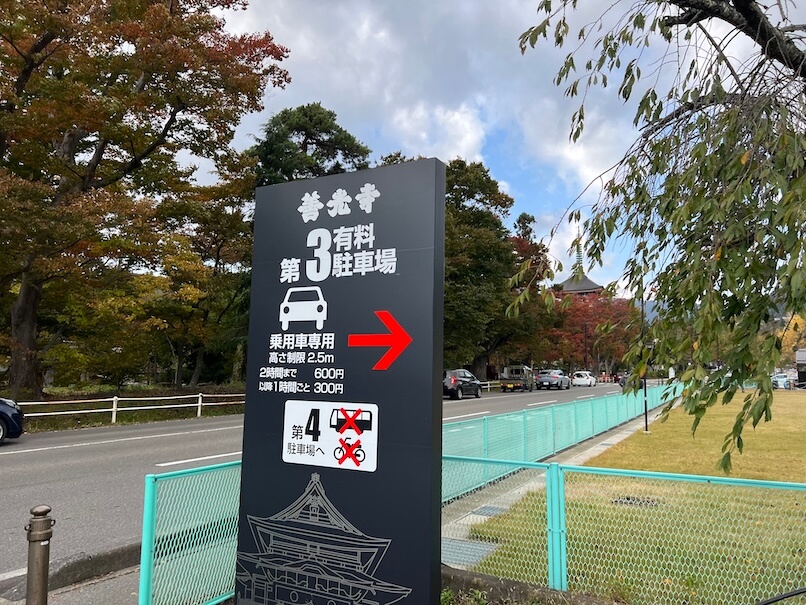
Driving? What worked for us: we arrived around 10 a.m. and the No. 1 parking lot had a long queue to get in. We looped around to Parking Lot No. 3, behind the Main Hall, and got in with no wait at all. The walking distance is about the same, so if Lot 1 is backed up when you arrive, Lot 3 is worth trying.
Hours, tickets, and the pitch-dark passage (do not skip this)
The Main Hall inner sanctuary opens one hour before the morning service (O-asaji), so its opening time changes with the season rather than being a fixed 9:00. It closes at 16:30 from April to October, 16:15 in March and November, and 16:00 from December to February. The Sanmon Gate, Sutra Repository and History Museum are normally open 9:00 to 16:00. Hours differ on some special days, so check before you go. The ticket prices and hours here were checked on the official Zenkoji ticket guide on September 29, 2026. The temple grounds themselves are free to walk around; you only pay if you go inside the paid areas.
- Combined ticket (Main Hall inner sanctuary, underground passage, History Museum, Sanmon Gate and Sutra Repository): 1,500 yen for adults.
- Main Hall ticket (Main Hall inner sanctuary, underground passage and History Museum): 800 yen for adults.
The highlight is the O-Kaidan Meguri, a pitch-black underground passage beneath the main altar. You feel your way along the wall in total darkness to touch the “Key to the Paradise,” said to form a sacred bond with the temple principal image. It only takes about 10 minutes but it is a genuinely unforgettable, slightly thrilling experience – great for kids and adults alike.
Some things you have to feel in person
You will notice this guide does not show photos of the sacred inner hall or the pitch-dark O-Kaidan passage. That is on purpose. The hush that falls the moment you step into the vast, dim Main Hall, the smell of incense soaked into centuries of old wood, the low golden light and the quiet weight of 1,400 years of prayer – that solemn, almost tangible air is something no photograph really carries.
It is the kind of atmosphere you can only truly understand by standing inside it. So rather than spoil it with pictures, I would simply encourage you to go, step through the great doors, and let yourself be still in it for a moment. That feeling is the real souvenir of Zenkoji.
What to eat on Nakamise Street
The approach to the temple, Nakamise street, is half the fun. We strolled and snacked our way up, and there is plenty to try:
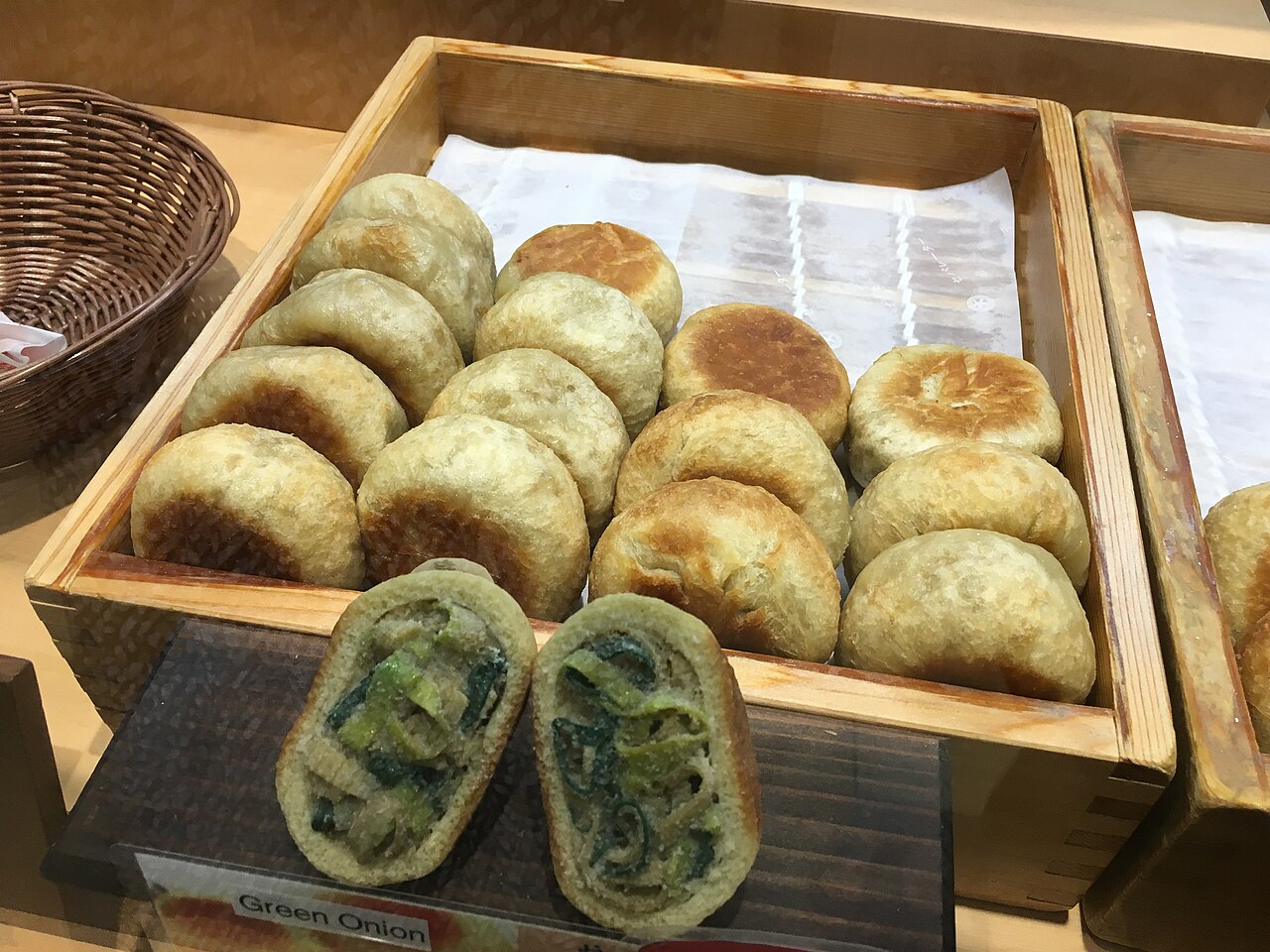
- Oyaki – Nagano soul food: a grilled/steamed wheat bun stuffed with fillings like nozawana (pickled greens), pumpkin, or sweet red bean.
- Shinshu soba – Nagano is famous for buckwheat; a warm or cold bowl of soba near the temple is a must.
- Soft-serve ice cream in local flavors like miso or roasted green tea, plus apple treats from Nagano apples.
- Senbei rice crackers grilled fresh – great to snack on as you walk.
A surprise on the grounds: BEAMS JAPAN
The thing that surprised me most was finding a BEAMS JAPAN shop right on the temple grounds. BEAMS is a well-known Japanese fashion label, so “why BEAMS at a temple?” was my first thought. Inside, though, it was full of Zenkoji-themed local goods alongside omamori charms, prayer beads (juzu), and other temple items – all laid out in a bright, easy-to-browse space. Honestly, a shop like this makes the items much easier to buy, and I thought it was a smart, win-win way for a historic temple to stay welcoming to younger visitors.
Souvenirs to bring home
A few things worth looking for:
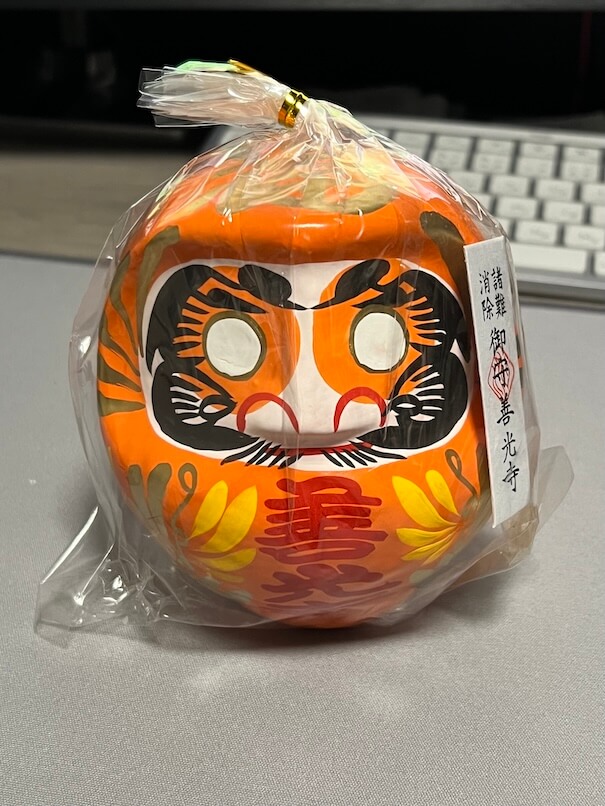
- Zenkoji daruma – a good-luck doll that comes in seven colors, each with its own meaning. I chose the orange one, whose meaning is “challenge,” to set my intentions for the year ahead. It makes a light, meaningful, very Japanese souvenir.
- Yawataya Isogoro shichimi – this Nagano spice shop, founded over 270 years ago, is one of the original makers of shichimi (Japanese seven-spice). The retro tins are lovely, and at the main store you can even blend your own custom mix.
- Omamori charms and incense – simple, packable, and meaningful gifts, available at the temple and along Nakamise.
I picked up my orange daruma at that BEAMS JAPAN shop to round off the visit.
A few honest tips
- We visited in November during Shichi-Go-San (a childrens rite-of-passage season), so the grounds were busy with families. Weekends and festival seasons get crowded – arrive earlier in the day if you can.
- If you are deciding between tickets, the 800-yen Main Hall ticket already includes the underground passage and the History Museum. The 1,500-yen combined ticket adds the Sanmon Gate and the Sutra Repository.
- Wear shoes you can slip on and off easily – you remove them to enter the Main Hall.
Thanks for reading. I hope this makes your first visit to Zenkoji a little smoother – it is well worth the trip.