Osu at 9 AM and at 12:30: The Same Nagoya Street, Twice in One Day
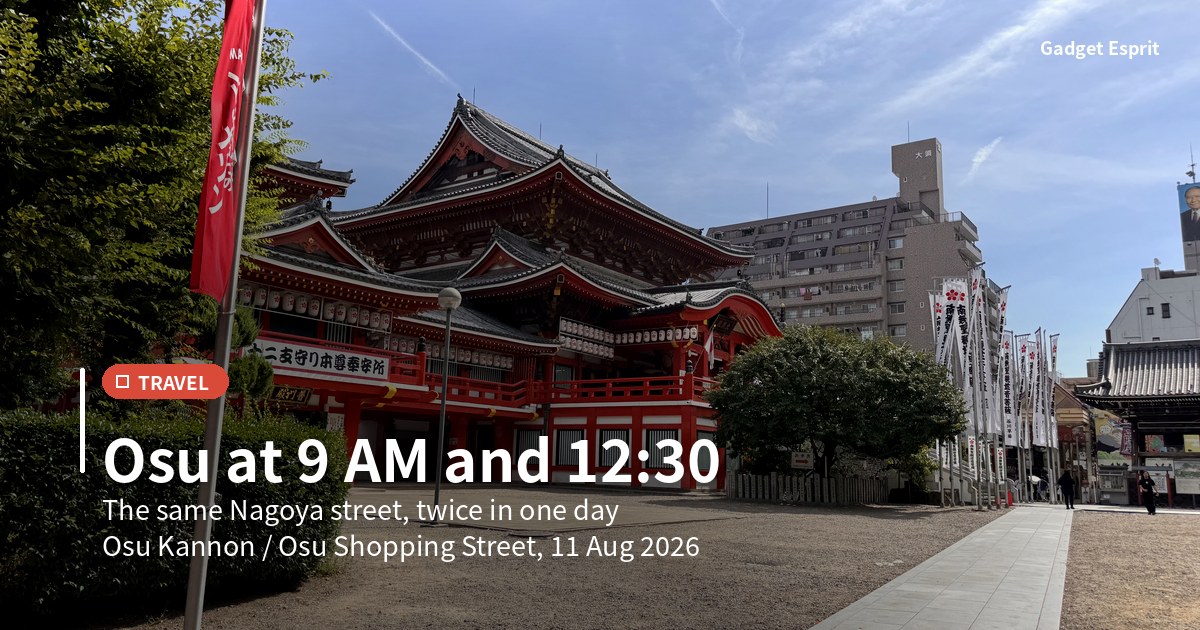
Most guides to Osu will tell you it is Nagoya’s most energetic shopping district: hundreds of shops, arcades you can walk for an hour, street food on every corner. That is true from late morning onward.
At nine in the morning it is a different place entirely.
I live in Aichi and went to Osu with my family on Tuesday 11 August 2026. We arrived just after 9, left for a couple of hours, and came back at lunchtime. Every time below comes from the timestamp on a photo I took, so this is a record rather than a suggested itinerary.
One thing to hold in mind before you read the crowd descriptions: 11 August is Mountain Day (Yama-no-Hi), a national holiday in Japan. So this was a day off for most people here, not an ordinary Tuesday. I only have this one day to go on, and I have no way of telling you how much of the lunchtime crowd was the holiday and how much is just what Osu is like at midday. Take the busy parts as an upper bound rather than a guarantee.
If you only have half a day in Nagoya, the question isn’t really whether to go to Osu — it’s what time.
The short version
- Osu Kannon temple itself opens early. The main hall is open from 6:00, and it is free. At 09:17 there was almost nobody in the grounds.
- The shops are not open yet. Most of the arcade seemed to start around 10, so a 9 AM visit means quiet streets and closed shutters.
- By 12:30 the same arcades were shoulder to shoulder — on a national holiday.
- Our answer: go to the temple early, leave, and come back for the shops and the food. Osu and Sakae are close enough to walk between, which makes that easy.
09:16 — the temple, with nobody in it
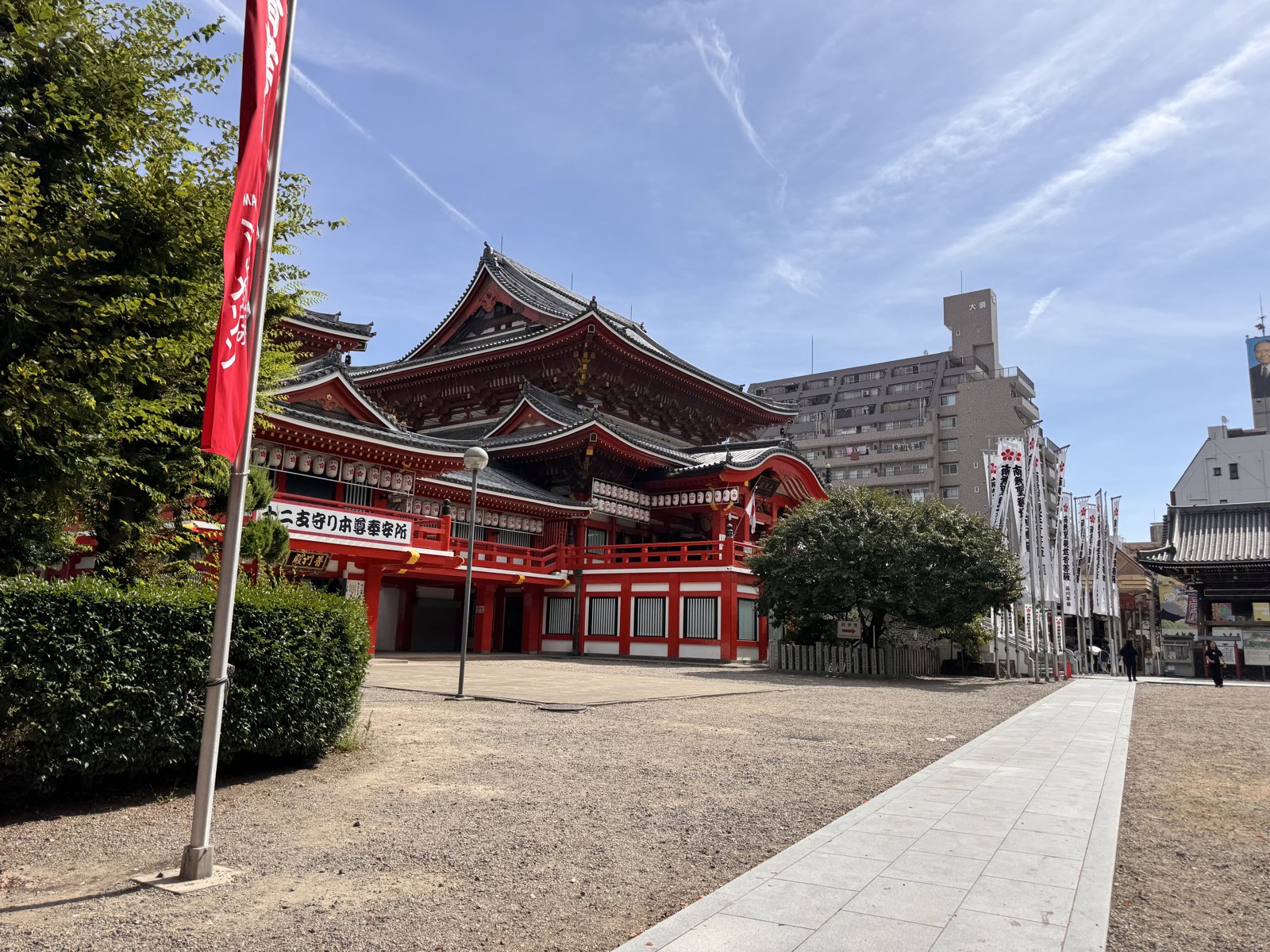
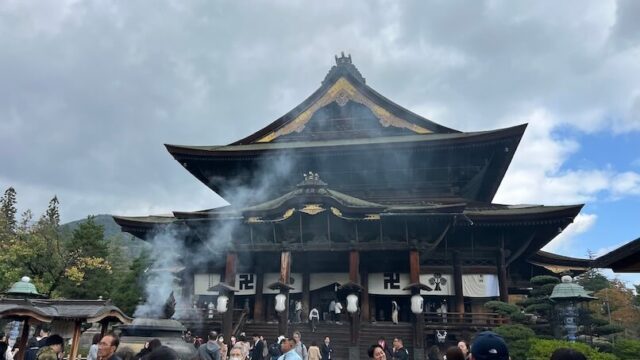
Osu Kannon — properly Kitanosan Shinpuku-ji Hosho-in — sits at the western end of the district and gives it its name.
We walked in a little after nine and there was almost nobody there. We went up and prayed at the main hall. There was no queue, no waiting, nobody behind us.
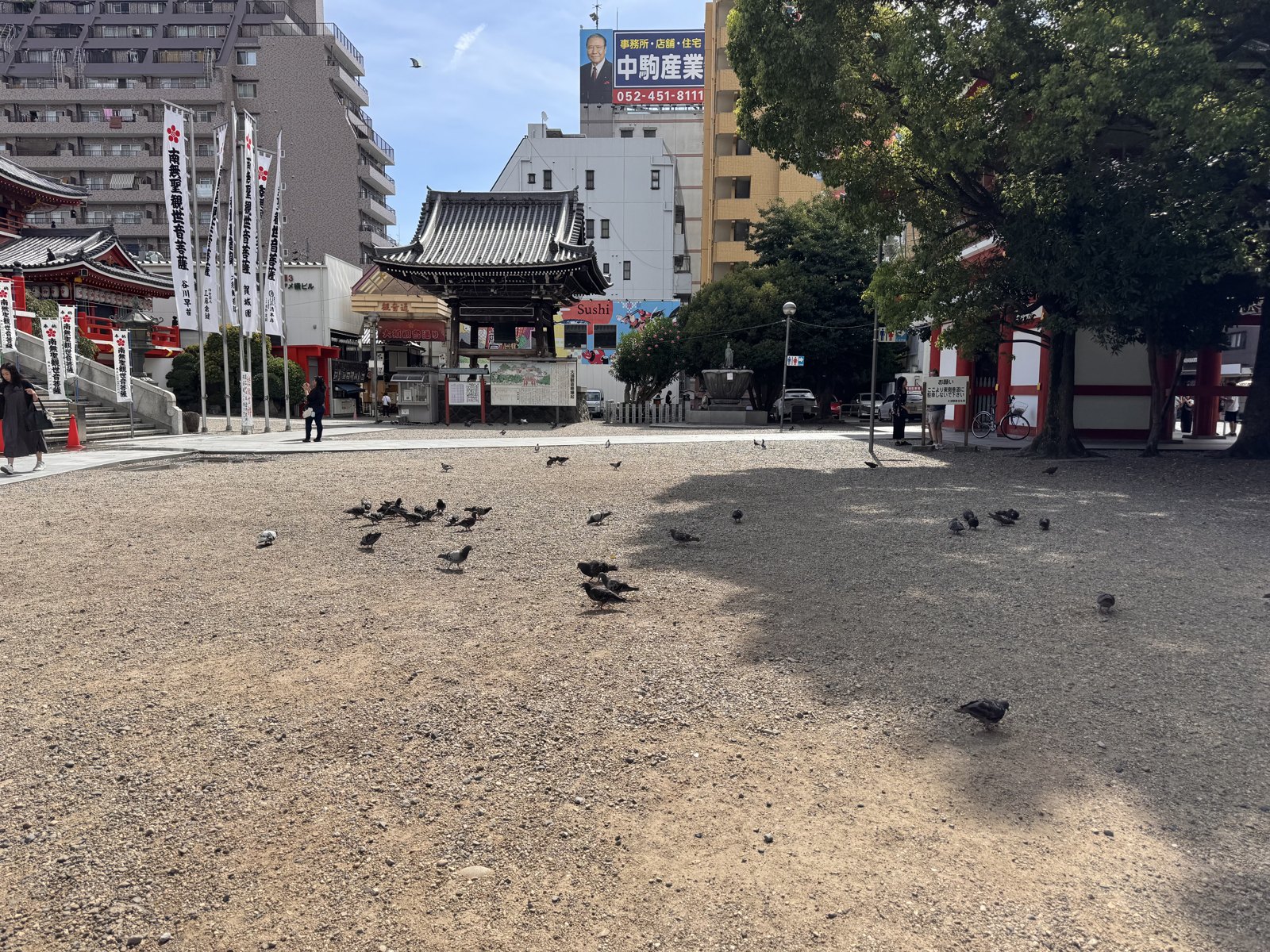
The pigeons are a well-known feature here and at that hour they had the place to themselves. If you have seen photos of Osu Kannon with a wall of people in front of the hall, that is the same spot later in the day.
Everything in this paragraph comes from the official Nagoya city tourism information, checked on 11 August 2026 — not from my own observation: the temple was moved to this site in 1612 by Tokugawa Ieyasu; the main hall burned in the war and the current one was rebuilt in 1970. The main hall is open 6:00–19:00, the temple office 9:00–17:00, admission is free, and it is open every day. The nearest station is Osu Kannon on the Tsurumai subway line, three minutes from exit 2. There is an antique market on the grounds on the 18th and 28th of each month.
We were not there on a market day, so I can’t tell you what that is like.
09:20 — the street with no one on it
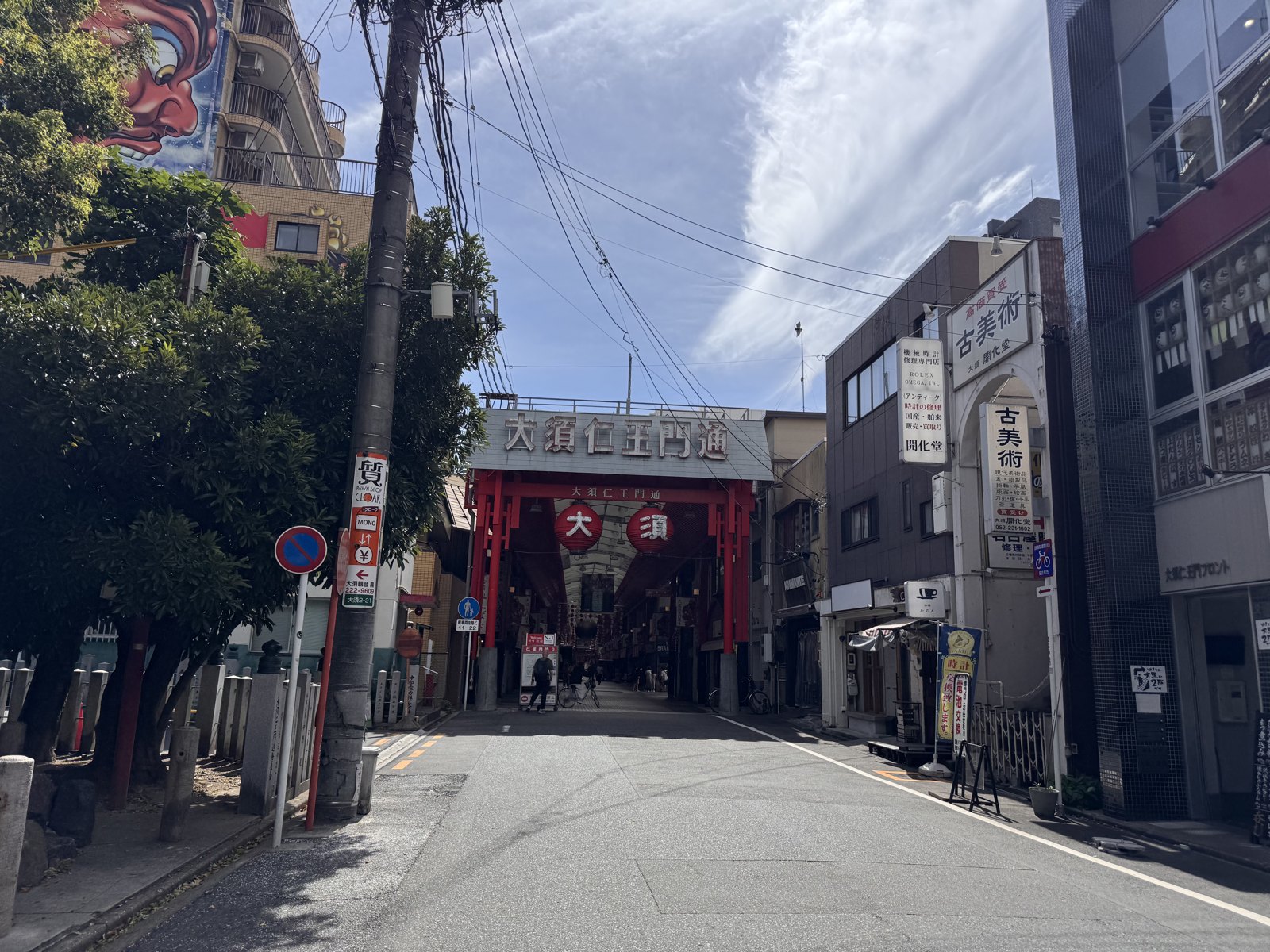
This is the entrance to one of the covered shopping streets, three minutes’ walk from the temple. At 09:20 I stood in the middle of the road to take this. Nobody was coming.
09:29 — the shutters are down
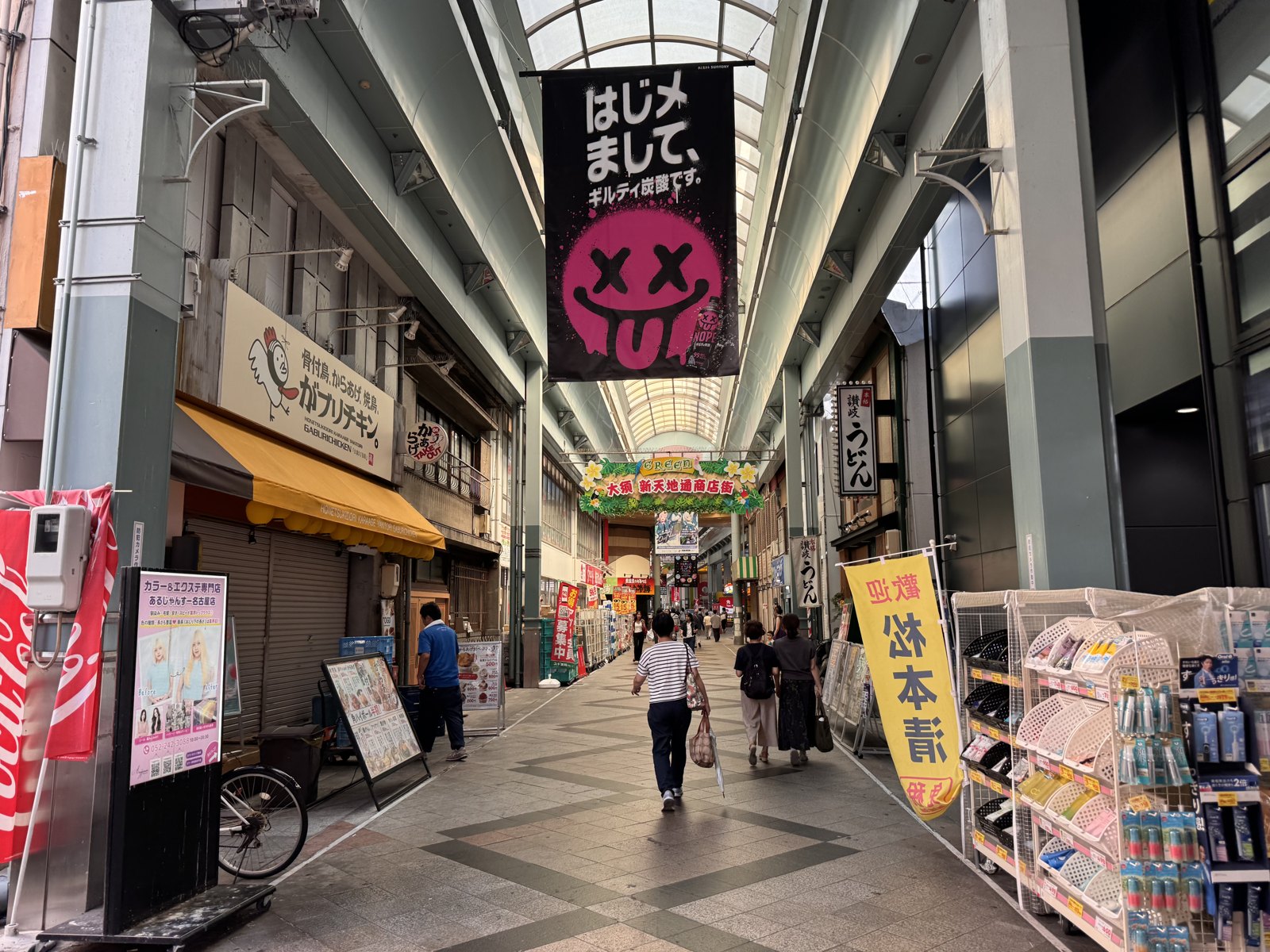
Inside the arcade it was cool and quiet and almost everything was shut. A few people were walking through, but they were walking through — nobody was shopping, because there was nothing open to shop in.
Note the shop on the left with the yellow awning and the folded-away signage. Remember it. We come back to it.
I don’t have official opening hours for the district as a whole, and they differ shop to shop, but from what we saw the arcade starts waking up around 10. So if you arrive at nine expecting street food, you will be an hour early.
What we did with the gap
Rather than stand around waiting for shutters to go up, we walked north to Sakae.
This is the part I’d actually recommend copying. Geographically the two districts are close — you cross Wakamiya-odori and you are there. Our own walk took twenty minutes, but that included stopping at a crane-game arcade and buying drinks at a convenience store, so treat it as “a short walk with room for distractions” rather than a timed route. I didn’t walk it directly, so I can’t give you a direct figure.
Up in Sakae we went to the Chiikawa shop in Nagoya PARCO, the JUMP SHOP in Nagoya Zero Gate across the road — my child wanted to go, and came away with a One Piece poster — and Alpen Nagoya in Nadya Park. Indoor, air-conditioned, and open earlier than the Osu arcades. On an August morning in Nagoya that matters more than it sounds. We found the same thing in Tokyo in summer: see Which Tokyo Walks Are Worth It in Summer.
We got back to Osu just after 12:20.
12:22 — the same district, unrecognisable
The crossing outside the arcade entrance now had people waiting at it. Inside, the arcade was shoulder to shoulder — not unpleasant, but you were moving at the pace of the person in front of you, and stopping to look at something meant stepping out of the flow.
Again: this was a national holiday. I don’t know what a normal Tuesday looks like here at the same hour.
If you want photographs of empty arcades, you have already missed your window by this point. If you want the district actually functioning — shops open, food being cooked, people around — this is when to come.
12:45 — the karaage we ate standing up
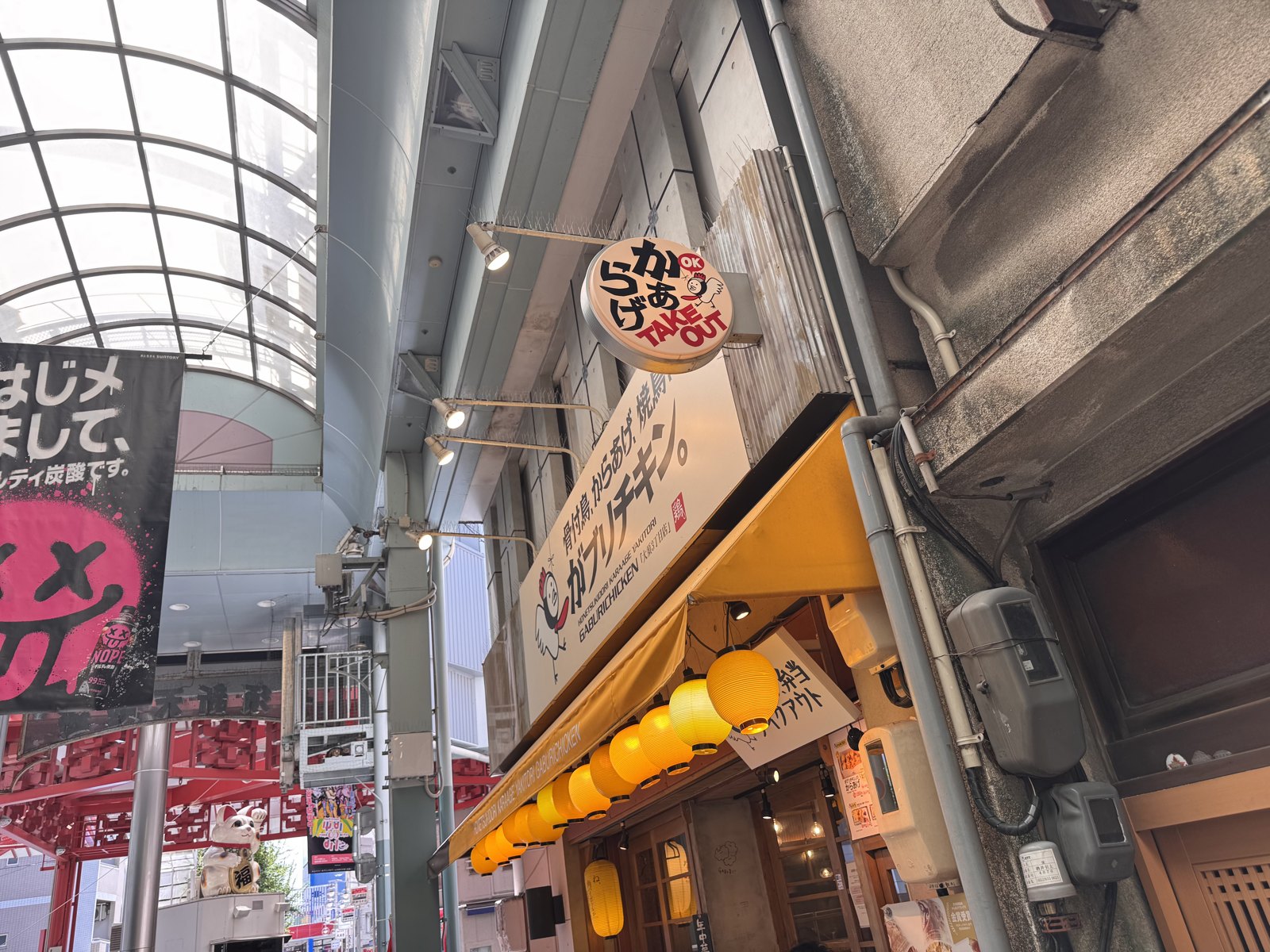
This is the shop from the earlier photo. Yellow awning, same black banner overhead, same spot in the arcade — open now, lanterns lit, and a round “karaage TAKE OUT” sign hanging out into the walkway that simply wasn’t there at half past nine.
It is Gaburi Chicken (がブリチキン。). The shopfront carries its own English: HONETSUKIDORI KARAAGE YAKITORI.
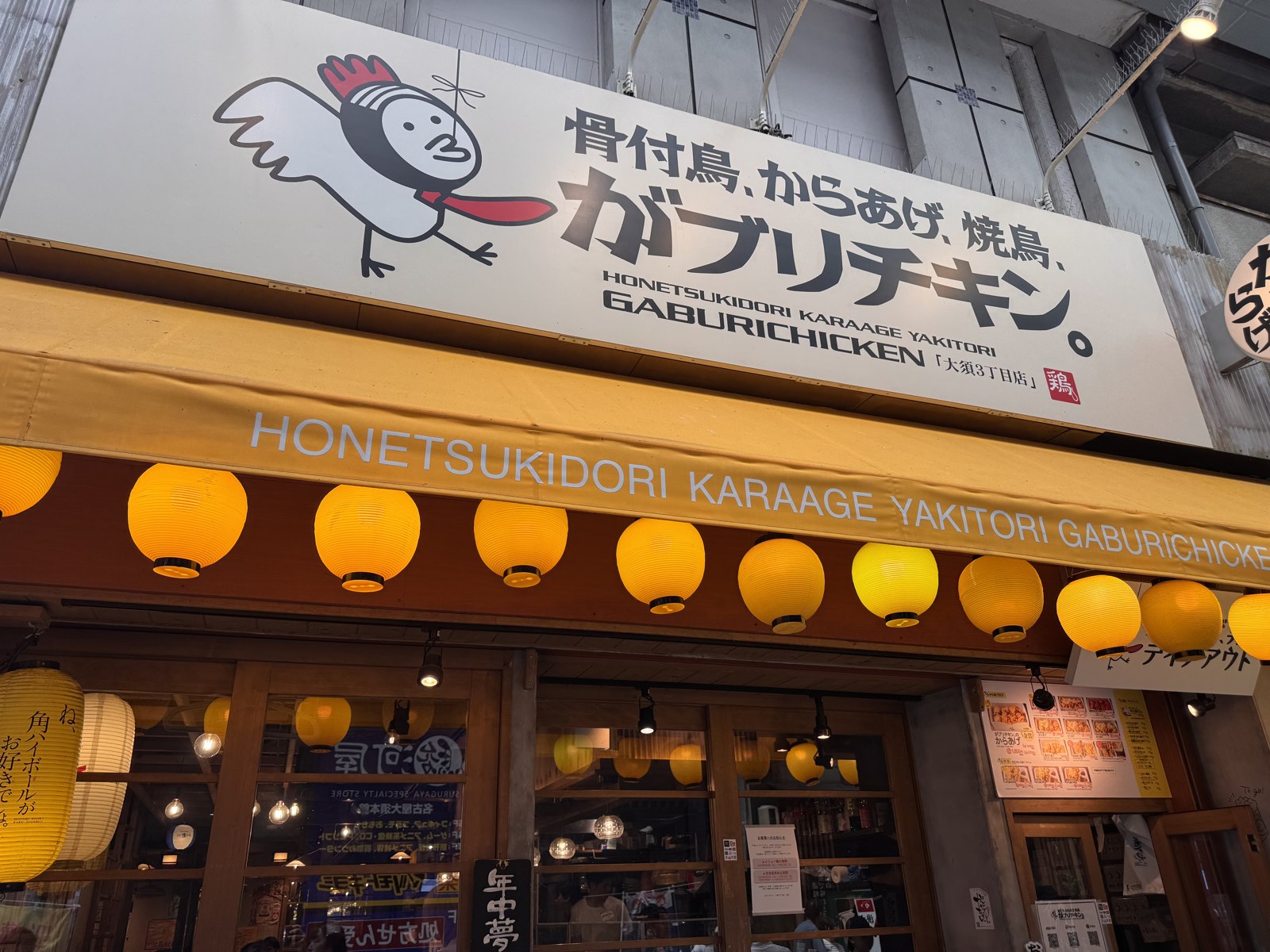
There is a separate takeaway menu and a takeaway window at the front of the shop — you do not need to go inside or get a table. We ordered there, paid there, and were handed the food there.
We got two:
- Prize-winning karaage (thigh) — ¥500
- Nanban tartare karaage — ¥600
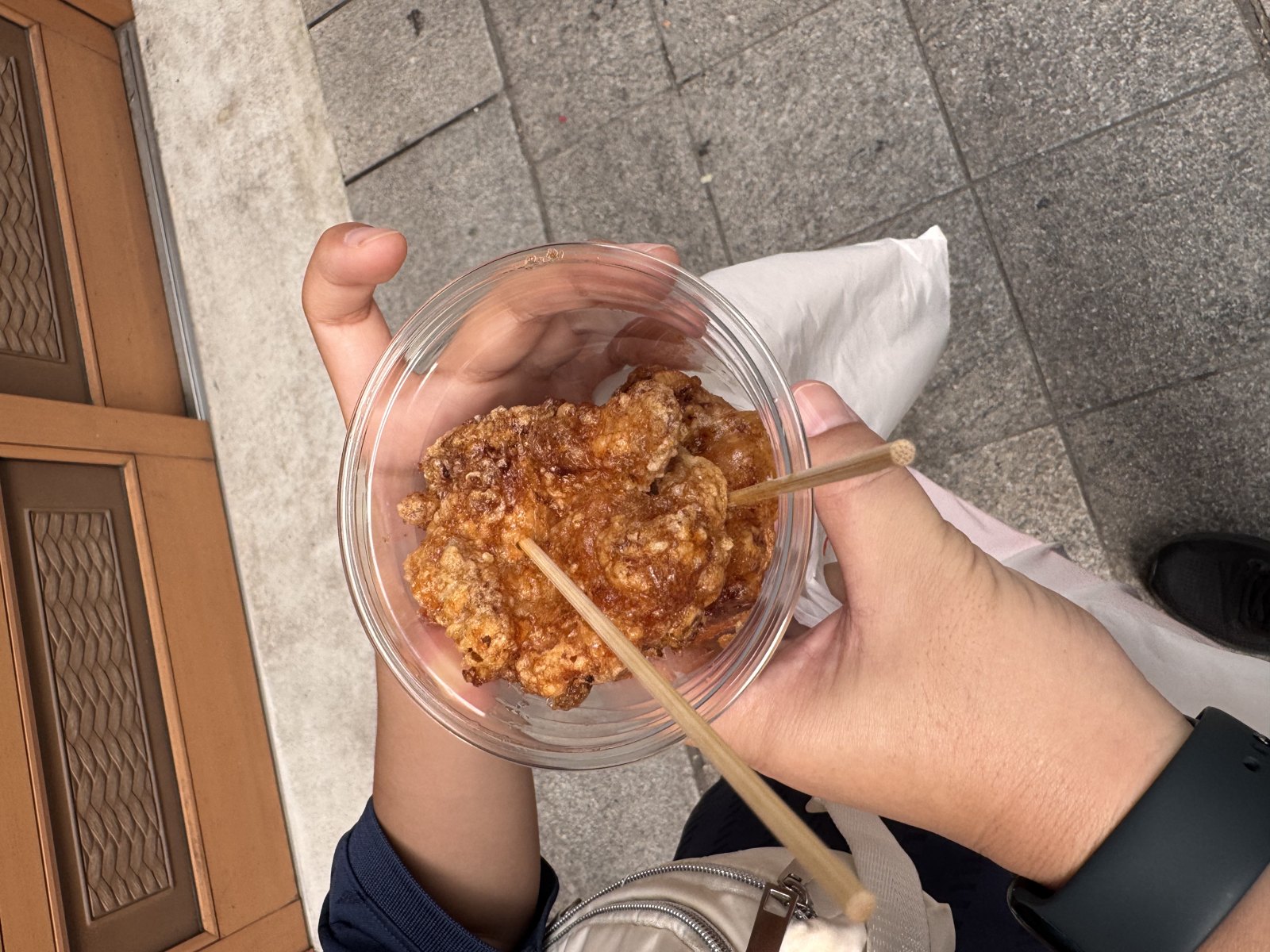
It arrives in a clear cup with a wooden skewer, which is exactly the right format for a covered arcade — one hand free, no tray, no seat needed. We ate standing just outside the shop.
We paid by card. I mention this because it is the single most useful thing I can tell a visitor about a food stall: cashless worked here.
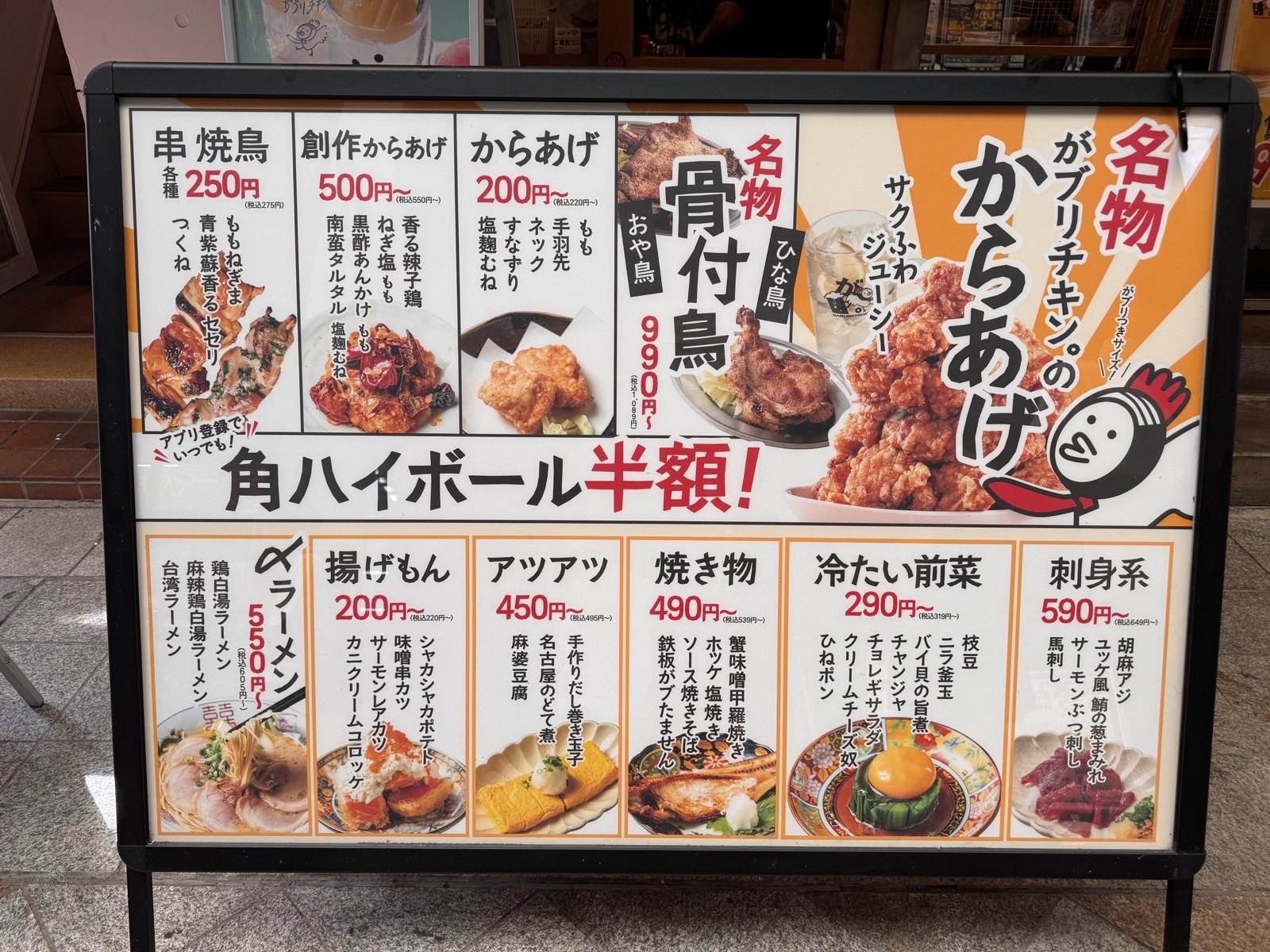
The board outside lists the sit-down menu — skewers from ¥250, karaage from ¥200, and the honetsukidori (bone-in chicken leg) the shop is named for at ¥990. I can only vouch for the two takeaway items we actually bought.
I’m not going to quote opening hours for this shop, because I could not find them stated officially and I don’t want to send you there on a guess. It was open and serving at 12:45 on a public holiday.
12:56 — the same gate as this morning
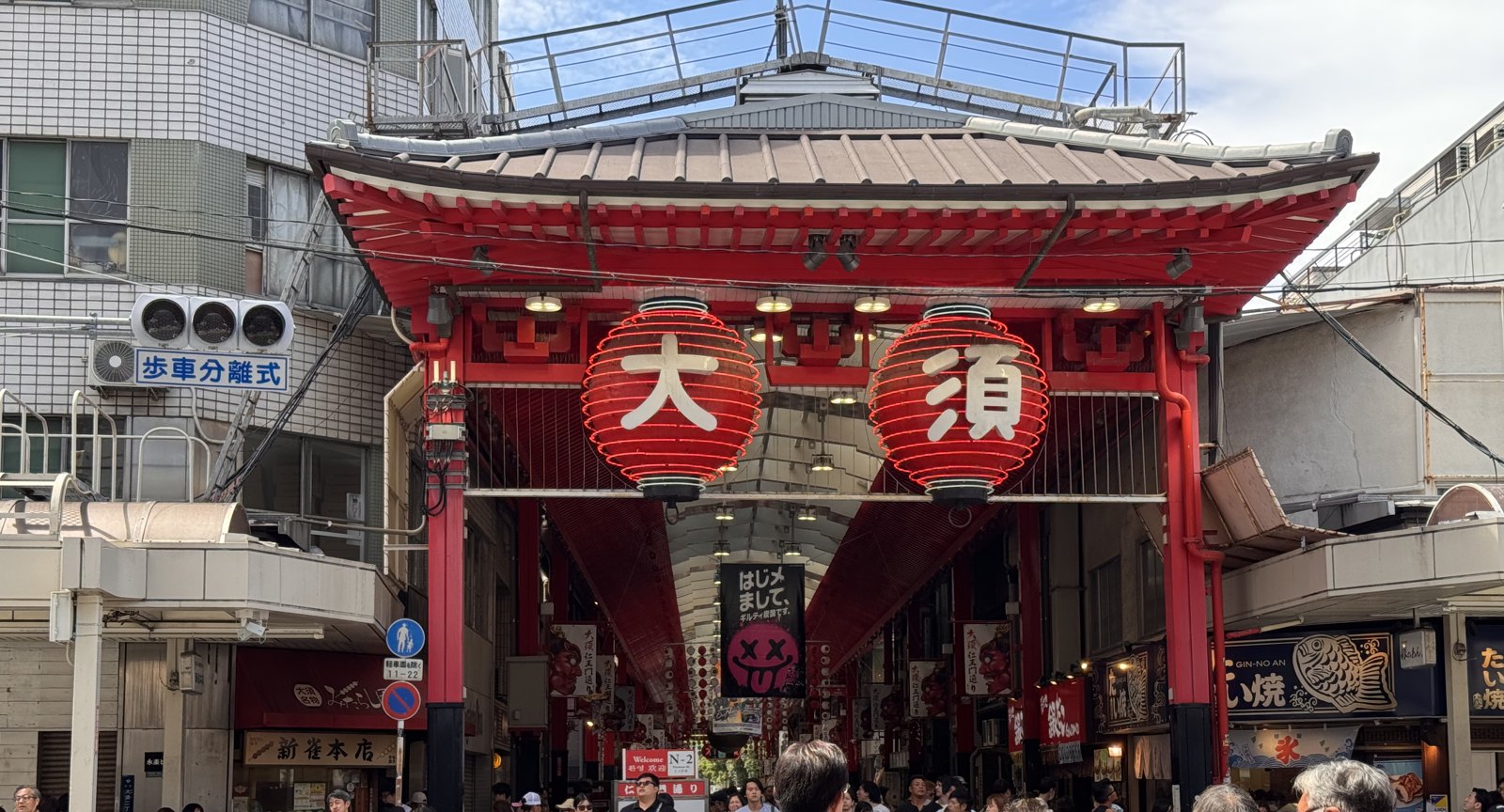
Scroll back to the 09:20 photograph, then look at this one. Same gate, same lanterns, three and a half hours apart.
Neither version is the “real” Osu. That’s the point.
So what time should you go?
Go at 9 if: you want the temple without a crowd, you want photographs of empty arcades, or you are travelling with someone who does not cope well with crowds. Accept that the shops will be shut and plan somewhere else for 10 to 12.
Go at 12–13 if: you came for the shopping and the food. In the stretch of arcade we walked, the shops were open and busy, and the takeaway food worked exactly as we hoped. I can’t speak for the whole district — it is bigger than what we covered in an afternoon.
Do both if you can. It costs you nothing except a walk to Sakae in the middle, and it is the only way to see that these are two different places.
A few questions we had
What time do the shops in Osu open?
It varies shop to shop and I could not find hours published for the district as a whole. What I can tell you is what we saw: at 09:29 almost everything in the arcade was still shuttered, and by 12:22 it was open and busy. Plan for around 10 as the earliest.
Is Osu worth visiting at 9 AM?
For the temple, yes — the main hall opens at 6:00 and we had it nearly to ourselves. For shopping and food, no. Go early for one and come back for the other.
Can you walk from Osu to Sakae?
Yes. You cross Wakamiya-odori and you are in Sakae. We took twenty minutes, but we stopped on the way.
Practical notes
- Getting there by train: Osu Kannon station, Tsurumai subway line, exit 2, three minutes on foot. Kamimaezu station is the other end of the district.
- Getting there by car: Osu Kannon has no car park of its own. We drove, and parked at a coin car park in Matsubara-cho, Naka-ku — a short walk away — because parking right next to Osu is expensive. If you are driving, walking a few extra minutes is worth it.
- The arcades are covered. In August that is shade; in wet weather it is shelter. This is a genuinely good rainy-day option in Nagoya.
- It was hot. We were there in the middle of August and the city’s own tourism site was running a heatstroke warning that day. Water first, sightseeing second.
- Cash vs card: cashless worked at the food stall we used. I can’t speak for every shop in the district.
Times and observations are from our own visit on Tuesday 11 August 2026, which was Mountain Day, a national holiday in Japan. Temple history, hours, access and admission were checked against the official Nagoya city tourism information on 11 August 2026, and the holiday date against the Cabinet Office list of national holidays. Shop opening hours change — check before you rely on them.