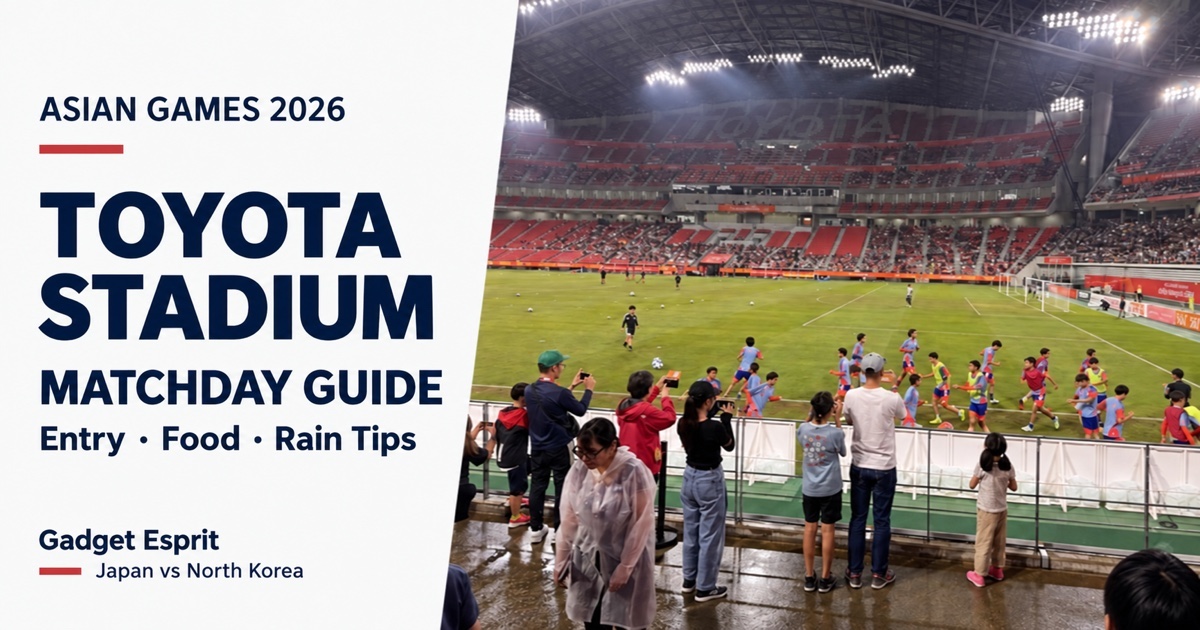
Toyota Stadium Guide: Asian Games 2026 Football in the Rain
Hi, I’m HACHIYA from Gadget Esprit. Thanks for stopping by.
On 26 September 2026, I went to Toyota Stadium to watch Japan play North Korea (DPR Korea) in the men’s football quarter-finals at the Aichi-Nagoya Asian Games.
I’d been to J.League matches before, but this was my first time watching a Japanese national team in person. Hearing the anthem and the familiar supporters’ chants in the stadium was a moving experience.
If you’re going to an upcoming match, though, there are a few practical things I’d want you to know first: allow time for security, sort out food before entering, and check your seating arrangements. It rained during my visit, so I’ll also share what the walk and the seats were like in wet weather.
Three things to know before you go
| What to plan for | What I experienced |
|---|---|
| Time for security | It took me about 15 minutes from joining the queue to entering. I also had to take a sip of the drink I was bringing in. |
| Food before entry | No food was sold inside on the day I visited. Bottled drinks were available. Plan to eat beforehand or arrange permitted food to bring with you. |
| Your ticket’s seating rules | Category A had unreserved seating within its designated area for this quarter-final. However, the official guide marks Category A as reserved for the final and bronze-medal match. |
These are my observations from Toyota Stadium on 26 September. Facilities and procedures may differ at another venue or on another match day.
The semi-finals and final are at different venues
Check the venue on your ticket before planning your trip.
| Match | Date and venue |
|---|---|
| Japan vs North Korea quarter-final — the match I attended | Saturday, 26 September 2026, 19:30 JST — Toyota Stadium |
| Men’s semi-finals | Wednesday, 30 September 2026 — Nagai Stadium, Osaka |
| Men’s final and bronze-medal match | Saturday, 3 October 2026 — Toyota Stadium |
The dates and venues are listed in the Japan Football Association’s official schedule (Japanese). The kick-off time for the game I attended is on the quarter-final match page (Japanese). All dates and times here are local to Japan.
The walking route and seating observations below are most useful if you’re heading to Toyota Stadium. If you’re going to a semi-final in Osaka, the security and packing tips may still help you prepare, but my Toyota experience doesn’t establish how Nagai Stadium will operate.
Getting to Toyota Stadium: the walk from the station area
Arriving by train: Toyotashi or Shin-Toyota Station
The two nearby stations are:
- Toyotashi Station (豊田市駅): Meitetsu railway. The official walking estimate is about 20 minutes from the east exit.
- Shin-Toyota Station (新豊田駅): Aichi Loop Railway. The official walking estimate is about 25 minutes from the east exit.
These estimates come from Aichi Prefecture’s event access guide (Japanese). The same guide says there is no spectator parking at the venue and asks visitors to use public transport.
From the Toyotashi Station side, head east along Prefectural Route 342 towards the stadium and cross the bridge. My own walk from the KITARA shopping complex near Toyotashi Station took about 20 minutes. That was walking time; the security queue came afterwards.
I parked at KITARA and walked
For this visit, I drove to KITARA, a shopping complex near Toyotashi Station, and used its car park before walking to the stadium.
When I visited, spending at least ¥500 at the Mister Donut inside KITARA qualified for three hours of free parking. At the regular daytime rate, that was equivalent to ¥900 in parking charges. If spaces are available, it’s an option worth knowing about.
It does get very busy on J.League match days, though 😥 Finding a space this time doesn’t mean there will be one next time.
The store operator’s page (Japanese) also lists the three-hour parking offer. The ¥500 purchase condition is what applied when I used it, so check with the shop before relying on it. Charges apply beyond the three free hours; see the official parking directory (Japanese) for current details.
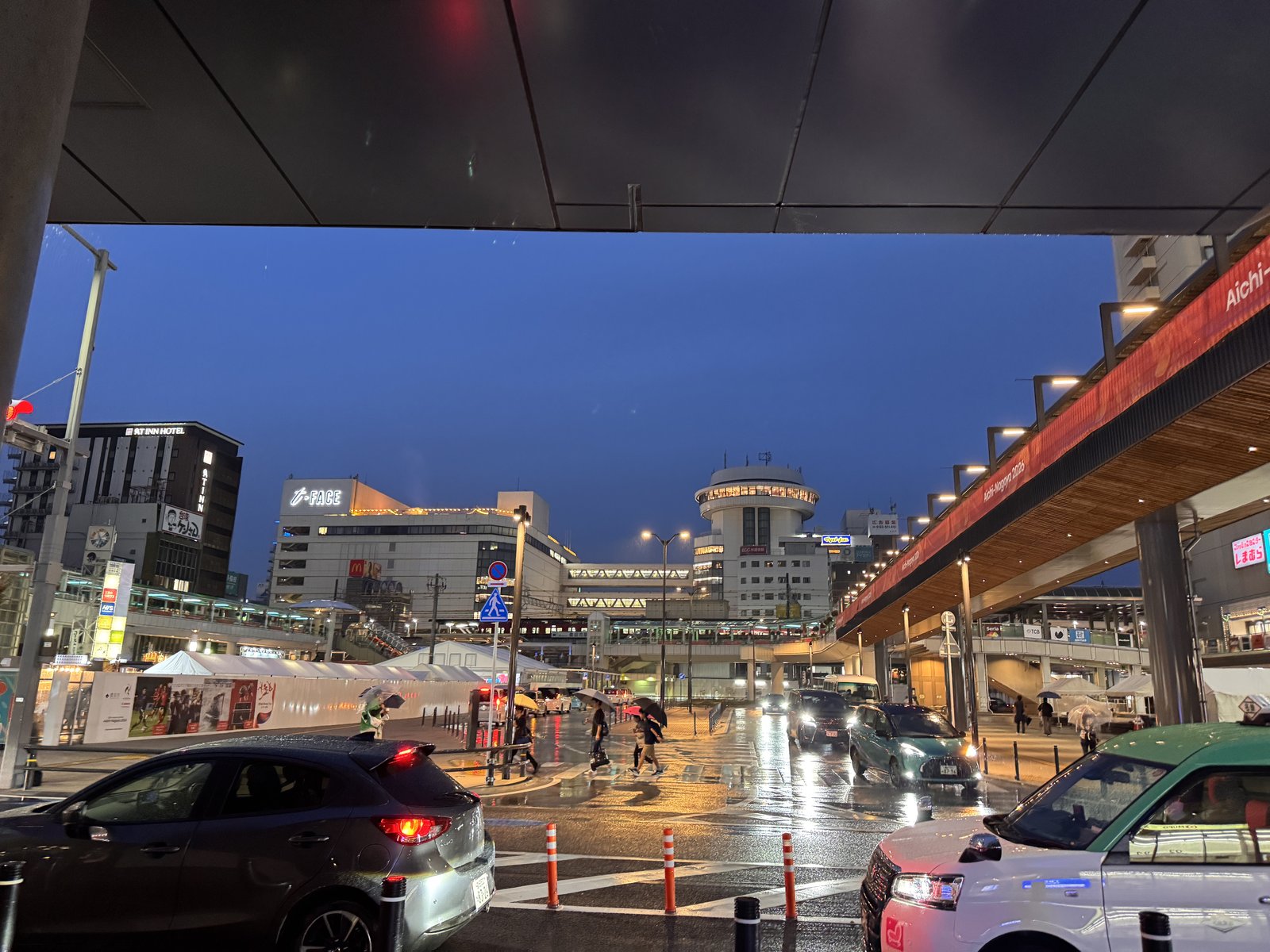
The left-hand pavement was less crowded that evening
As you walk east from the station, the stadium is on your right, to the south. Perhaps for that reason, more people were using the right-hand pavement.
There is a pedestrian crossing bridge near the stadium that lets you get across from the other side. I found the left-hand, northern pavement more comfortable to walk along that evening.
With everyone carrying umbrellas, the busier side felt particularly cramped. The quieter pavement made the walk easier. Follow any crowd-control instructions on the day, as routes may be managed differently.
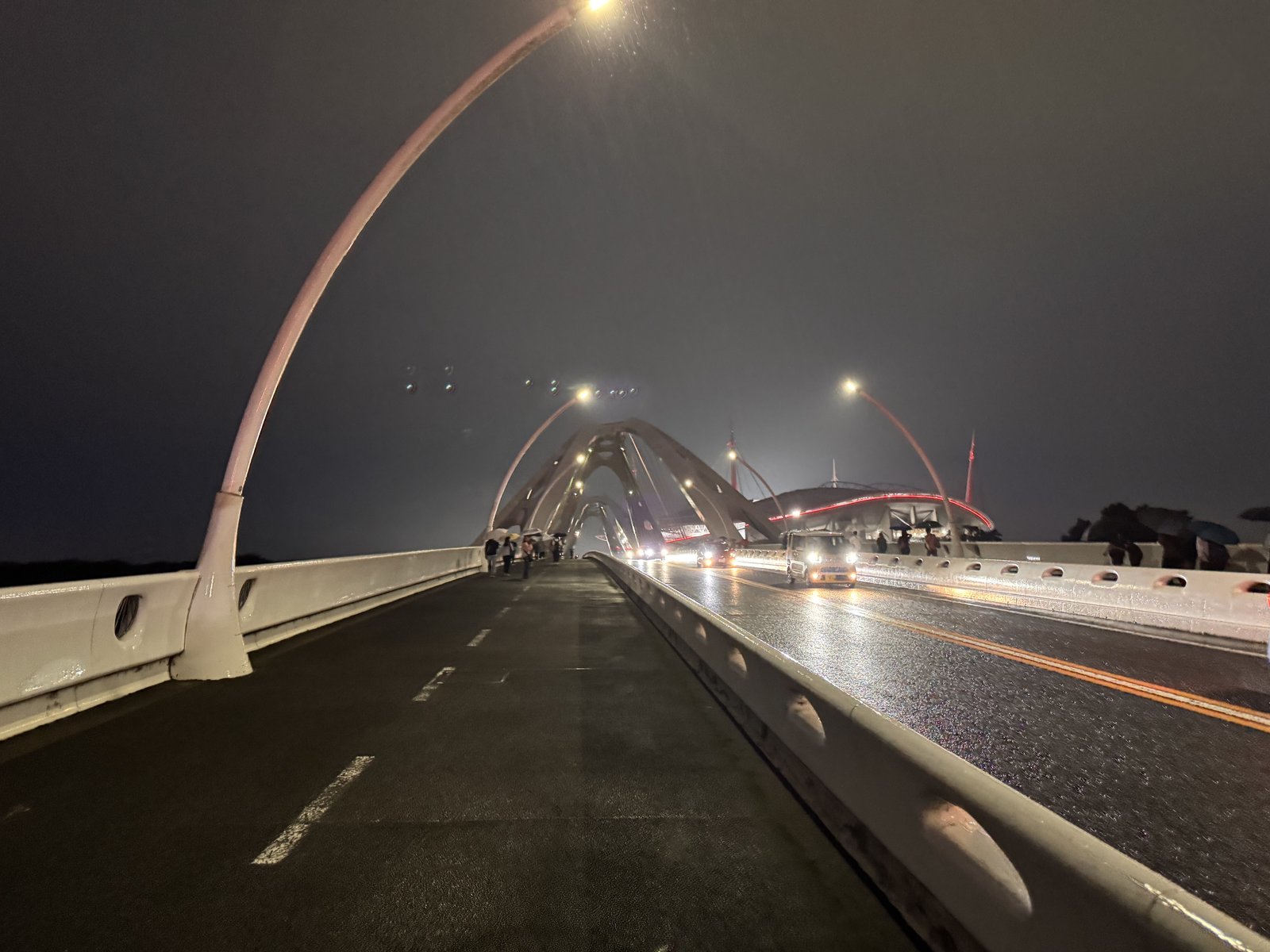
Security took me about 15 minutes: expect an airport-style check
Reaching the stadium didn’t mean going straight to my seat. There was a long queue for security first.
This was the process when I went through:
- Put belongings, including items such as a watch and keys, in a tray.
- Open your bag so staff can inspect the contents visually.
- Take a sip of any drink you are bringing in, as requested by staff.
- Walk through the metal detector.
- Have your ticket checked just beyond security, then enter.
An airport security checkpoint is a useful comparison.
I forgot to take off my Apple Watch before walking through, and it set off the detector 😥 Having your watch and keys ready to remove when staff ask should make things easier.
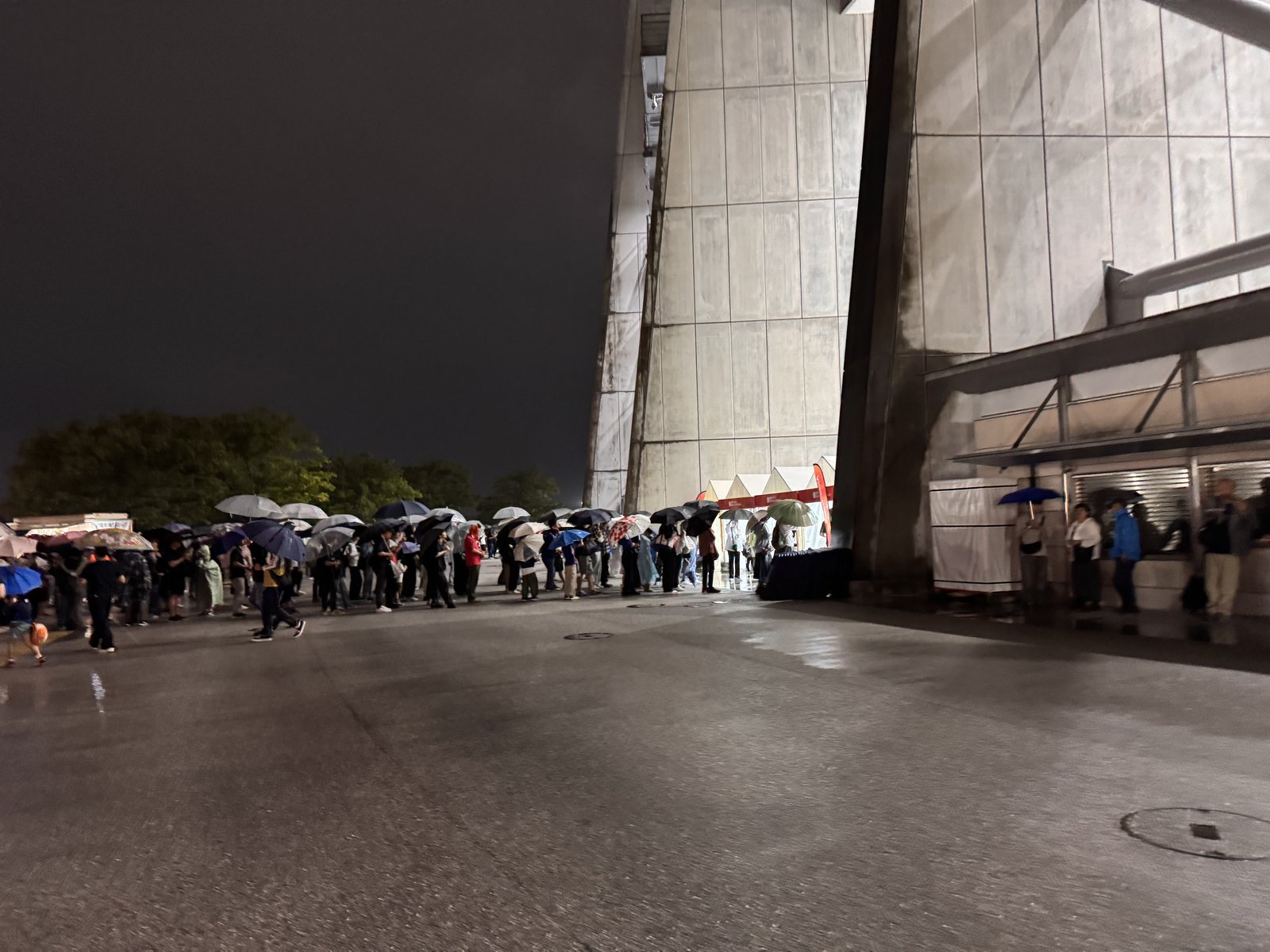
Fifteen minutes may not sound long, but standing in the rain while the queue barely seemed to move made it feel much longer!
That was my wait at that particular time. It isn’t a reliable estimate for the next match. Allow time for the security queue as well as the walk from the station.
The organisers’ security notice (Japanese) limits plastic drink bottles or reusable water bottles to one per person, with a capacity of 750 ml or less. The drink-sampling requirement is also included in the official venue rules (PDF, with English text).
Category A seats: close to the pitch, but prepare for rain
Our quarter-final had unreserved seating within Category A
My Category A ticket gave access to a designated area, with seats available on a first-come, first-served basis within that area.
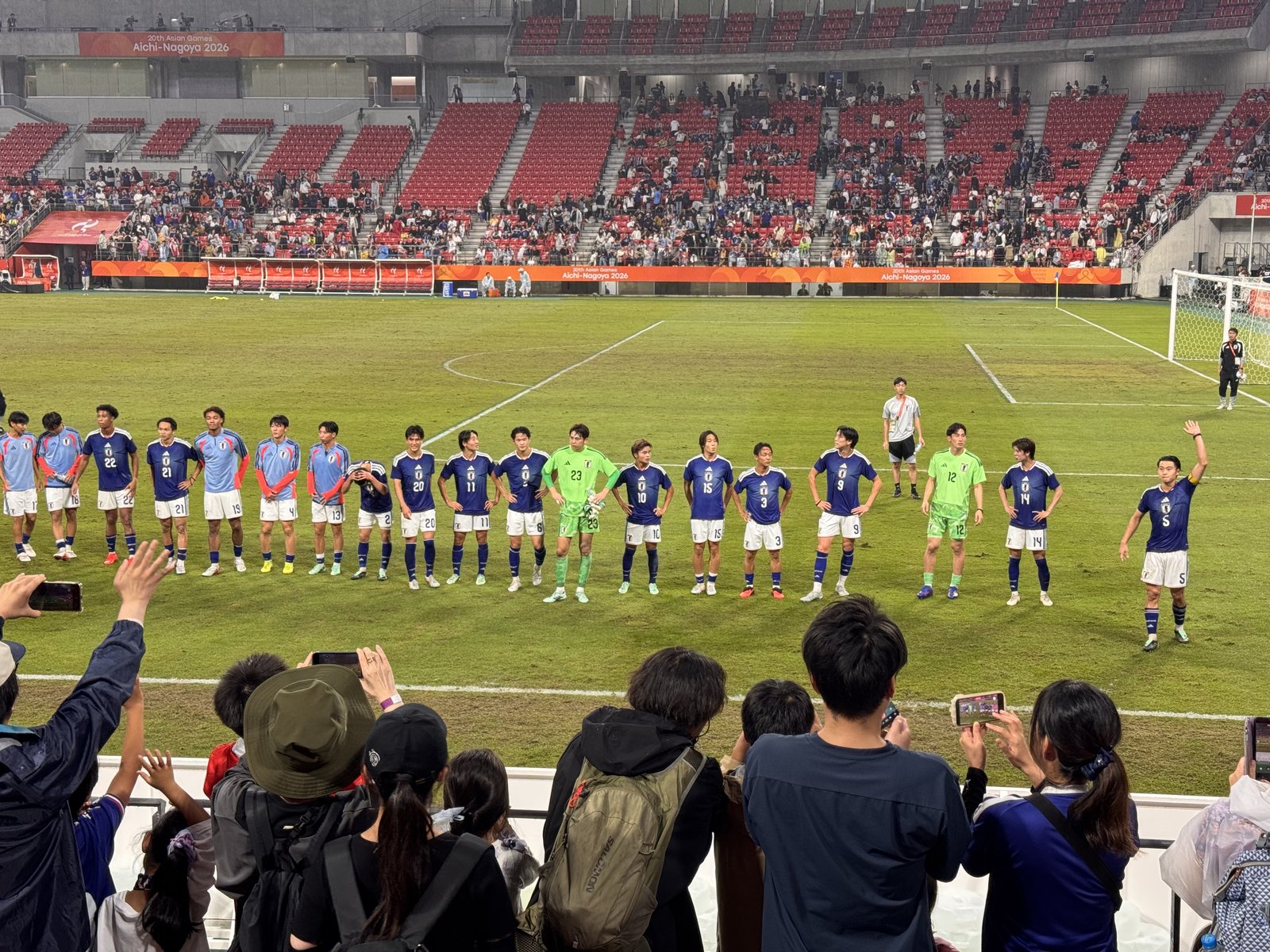
Outside the sections allocated to Category AA, some Category A seating extended all the way to the front row. The pitch felt very close, and watching the action from that distance was exciting!
For a match with unreserved seating, arriving earlier gives you more choice. That matters whether you want to be near the front or further back where there may be more shelter. Remember to include the security queue in your plans.
Do not assume the same first-come, first-served arrangement applies to Category A for the final or bronze-medal match. On the Toyota Stadium page of the official ticketing guide (Japanese PDF, page 62), the Category A legend specifically notes reserved seating for those matches. Check your ticket for a seat number and the instructions for your session.
If your ticket uses Japanese, 自由席 means unreserved seating and 指定席 means an assigned seat. Unreserved seating still applies only within the area your ticket permits.
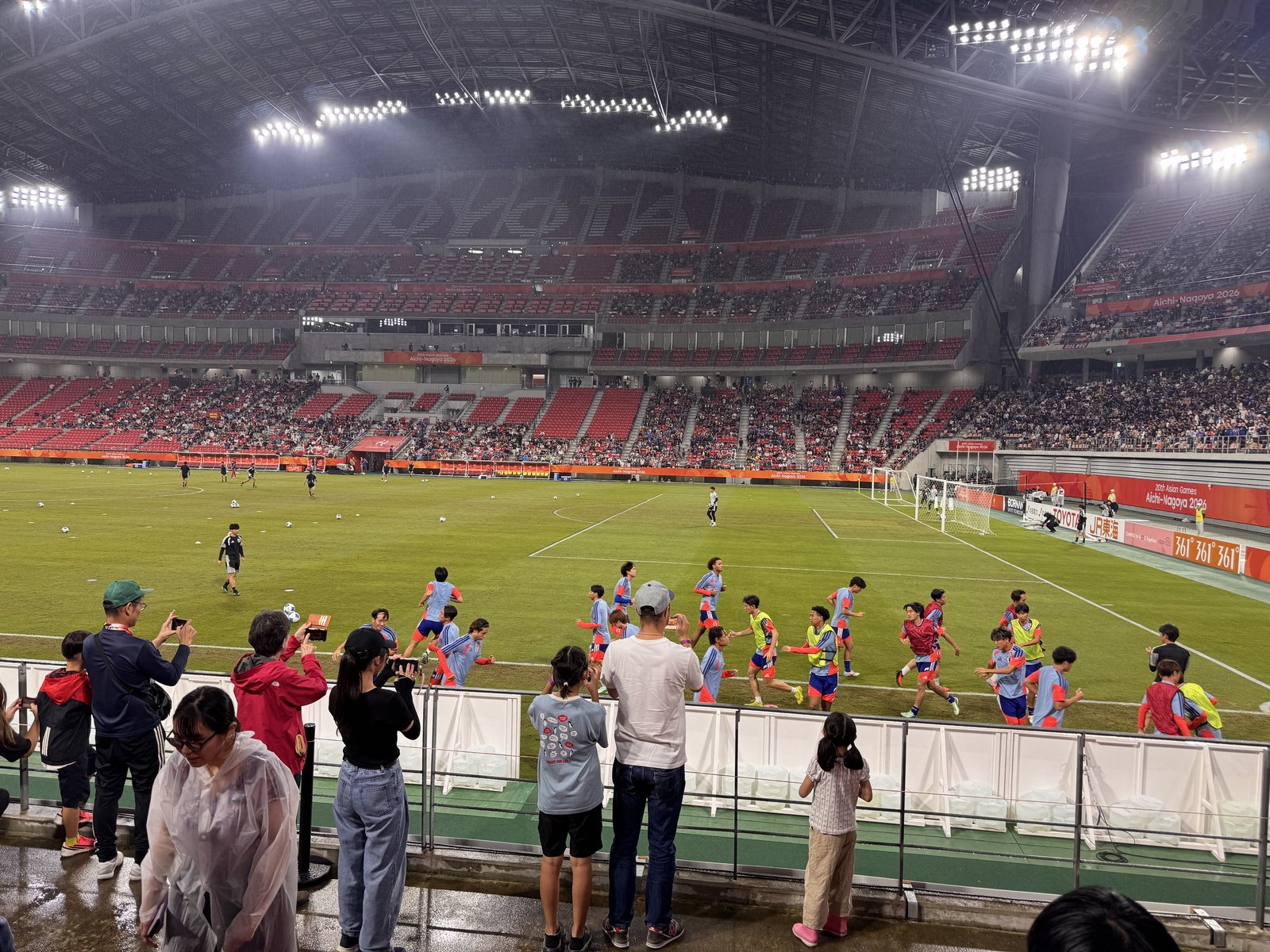
Rain reached the fifth row of the E Stand
We sat in the fifth row from the front of the E Stand.
Rain reached us intermittently, possibly as the wind changed. There was light rain on and off during the match, but a rain jacket made it manageable. I was glad I’d brought one.
If avoiding rain were my priority, I’d consider the rear half of Category A. That’s my preference based on this visit, though; I can’t promise that a seat further back will stay dry. Wind direction and rainfall make a difference.
There are also uncovered areas in the southern S Stand, so plan for rain if you’ll be sitting there.
I’d bring:
- A raincoat, poncho or waterproof rain jacket.
- A towel for wiping down wet surfaces.
Think about all three parts of the evening: walking to the stadium, waiting outside at security, and watching from your seat.
Food and drinks: arrange your food before entering
There was no food on sale inside the stadium during my visit. Bottled drinks were available.
If you’re expecting to buy a meal once you’re inside, that could catch you out. There were food stalls around the stadium, so consider buying something before entry or preparing permitted food in advance.
Food could be brought through security that day, but that doesn’t mean every food item is allowed. The official venue rules include food liable to spoil among the prohibited items. Check the latest guidance when deciding what to bring.
If you plan to go back outside for food after entering, ask staff before leaving. The organisers’ re-entry notice (Japanese) says that, at venues allowing re-entry, you generally need both your ticket and a wristband issued when you leave.
Personally, I think it’s easier to sort out food before going through security in the first place.
There were queues for the toilets, too
I didn’t use the toilets on this visit, but I saw substantial queues while walking around inside.
I can’t report an actual waiting time. It’s something to allow time for, especially if kick-off is approaching.
My first Japan match: the anthem, the chants and the players
The practical details matter, but the match itself is what made the evening special.
I’d heard Japan’s anthem and supporters’ songs on television for years. Being in the stadium as those familiar sounds filled the stands really got to me.
This was Japan’s U-21 team. Seeing players I recognised from sports coverage—playing in the J.League or pursuing careers overseas—right in front of me was a thrill in itself.
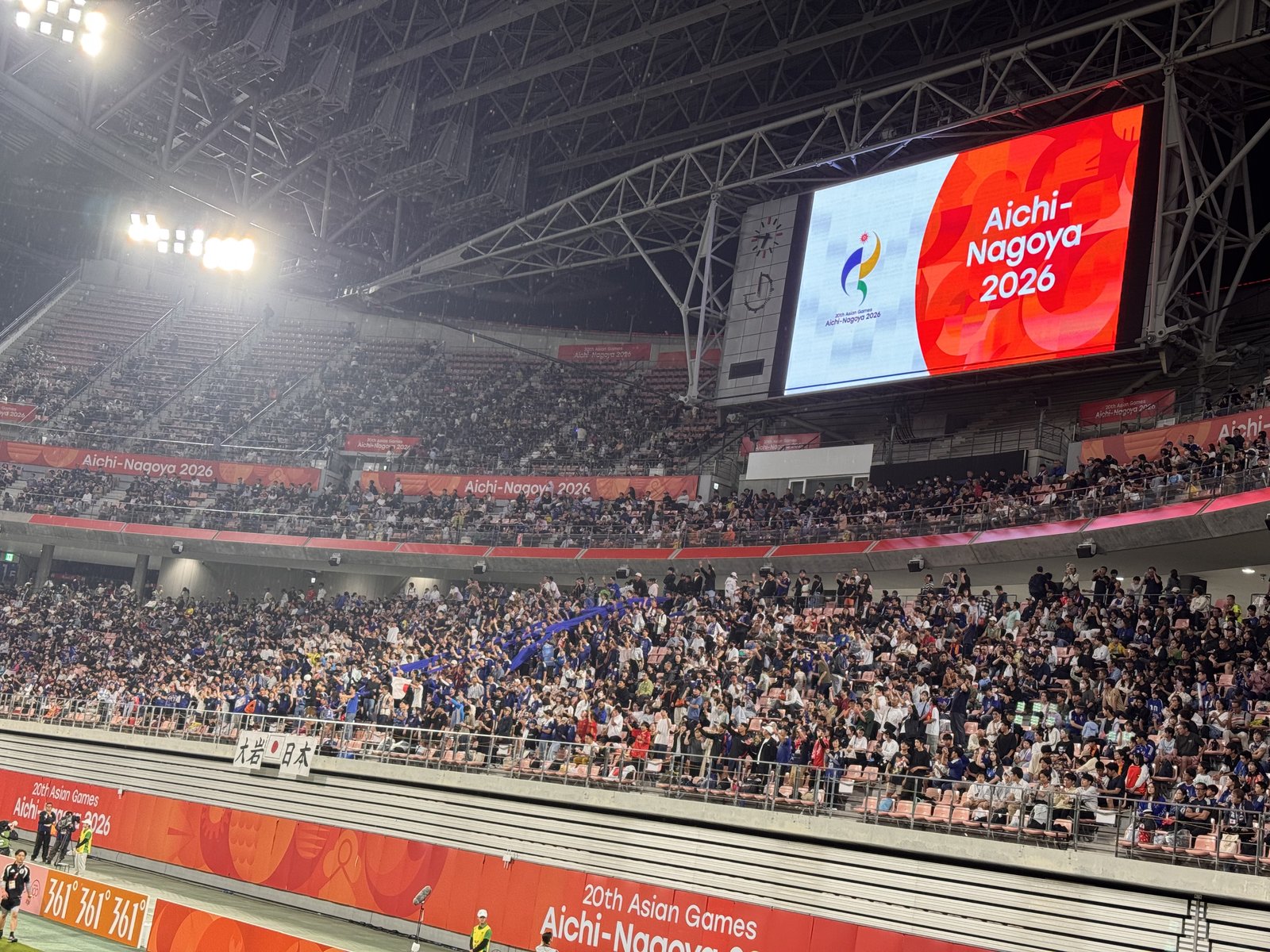
North Korea’s No. 14 stood out
There were moments when I felt North Korea’s late challenges stood out. At the same time, one of the players who impressed me most for his football was on their team.
Their No. 14 kept taking players on down the right. He was a very skilful player, and watching him in person surprised me.
Nwadike’s hold-up play and Yokoyama’s runs got the crowd going
For Japan, No. 19 Nwadike stood out for his ability to receive and hold the ball up front, while No. 11 Yumeki Yokoyama caught the eye with his attacking runs. Those moments really lifted the crowd.
No. 9 Yutaka Michiwaki, who came on as a substitute, looked even taller in person than he had on television! He also contributed with his hold-up play.
Player names and shirt numbers are listed on the JFA’s official squad page in English.
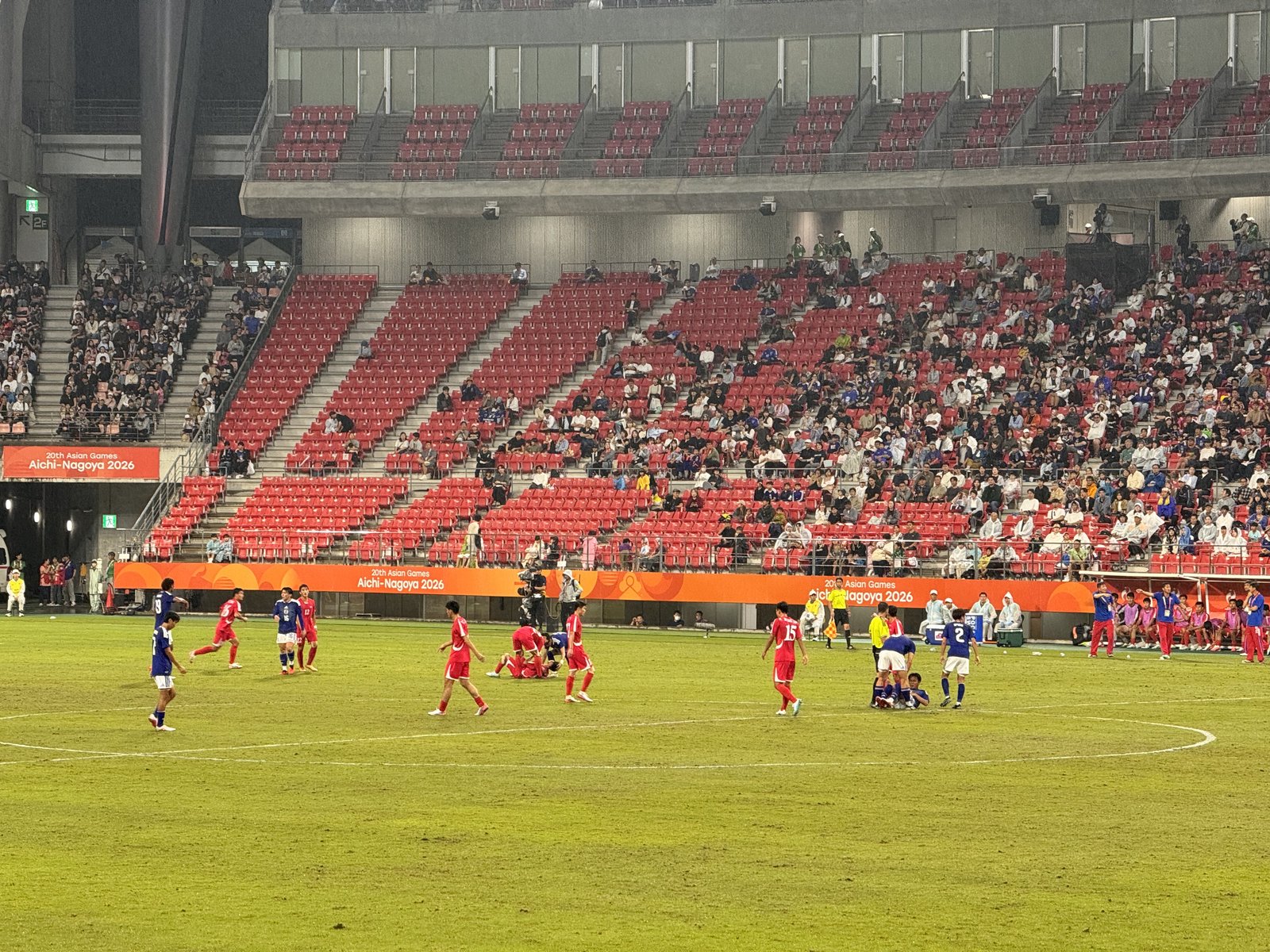
The supporters behind the goal kept the atmosphere going from start to finish. Hearing those chants live, and seeing Japan win, made this a very satisfying first visit to a Japan match.
Leaving the stadium: crowds heading towards the stations
The return walk followed the route back towards the station area. With so many people leaving at once, a long stream of spectators filled the way.
We sometimes had to stop at traffic lights, but the crowd continued to move. It felt easier to accept the pace and leave plenty of time than to try to hurry through it.
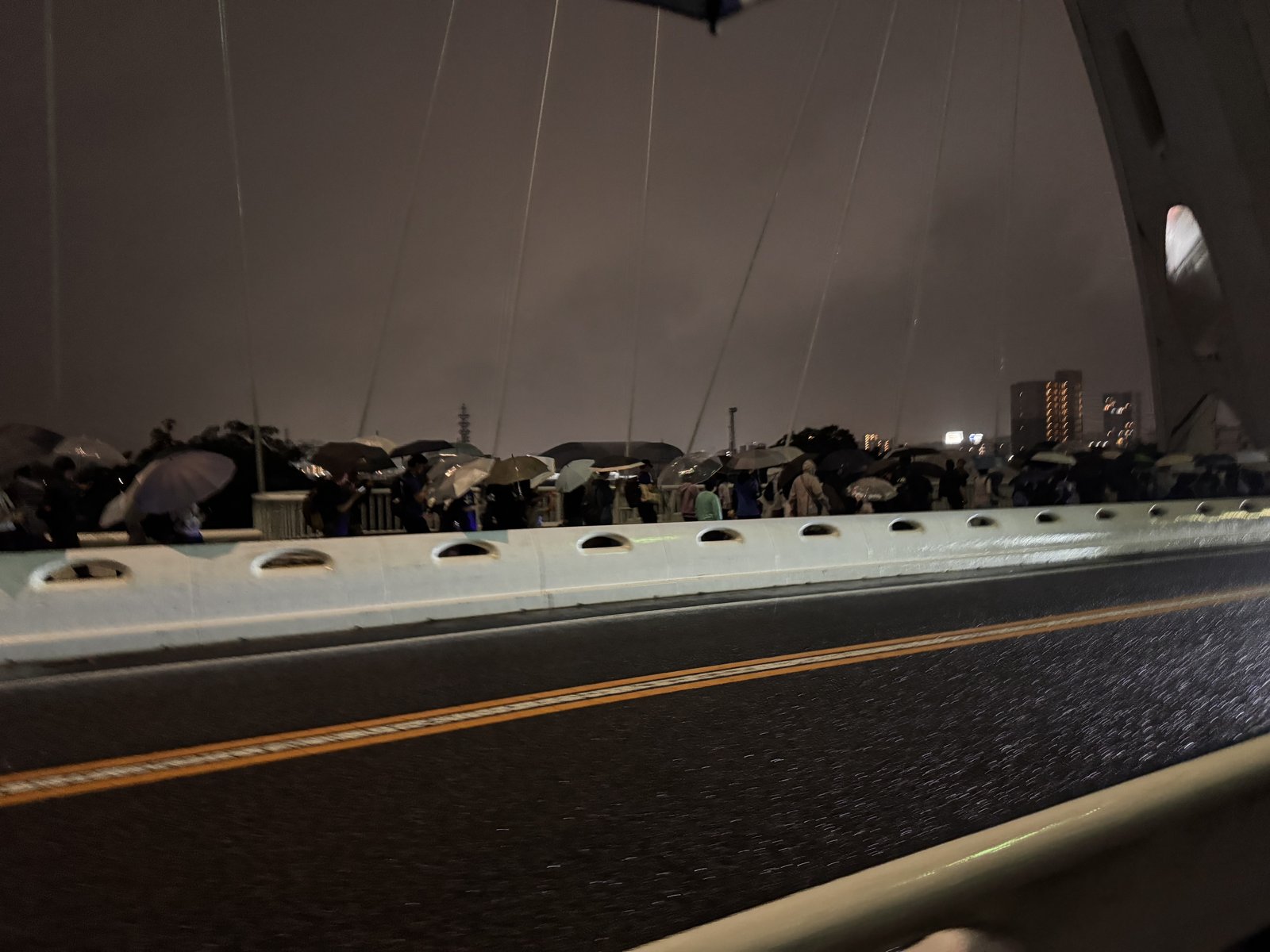
Because I had driven, I didn’t check the queues at the station gates or how crowded the trains were. If you’re travelling by rail, allow extra time to board as well as to walk back.
Give yourself time before kick-off
My main advice is to allow for security, arrange food before entry, and check both your seating rules and your rain gear.
For an unreserved-seat match, your preferred view may influence how early you arrive. For the final or bronze-medal match, check whether your ticket gives you an assigned seat, then leave enough time for food and entry regardless.
Waiting outside in the rain wasn’t the easiest part of the evening, but I was very glad I went. I hope these observations help you enjoy your own visit to Toyota Stadium.
Visit: 26 September 2026. Information checked for this article: 27 September 2026. Venue procedures and food or drink availability may change. Check the latest official guidance and your ticket before travelling.
Read the original article in Japanese.