Asakusa at 5 AM: What Senso-ji Looks Like Before the Shops Open
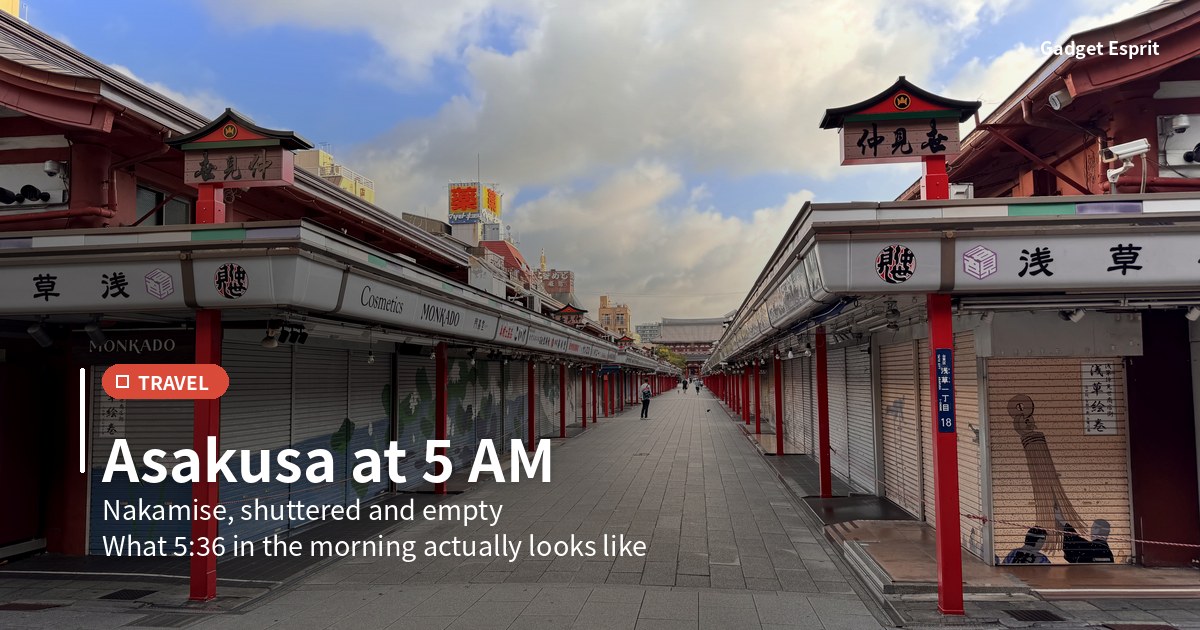
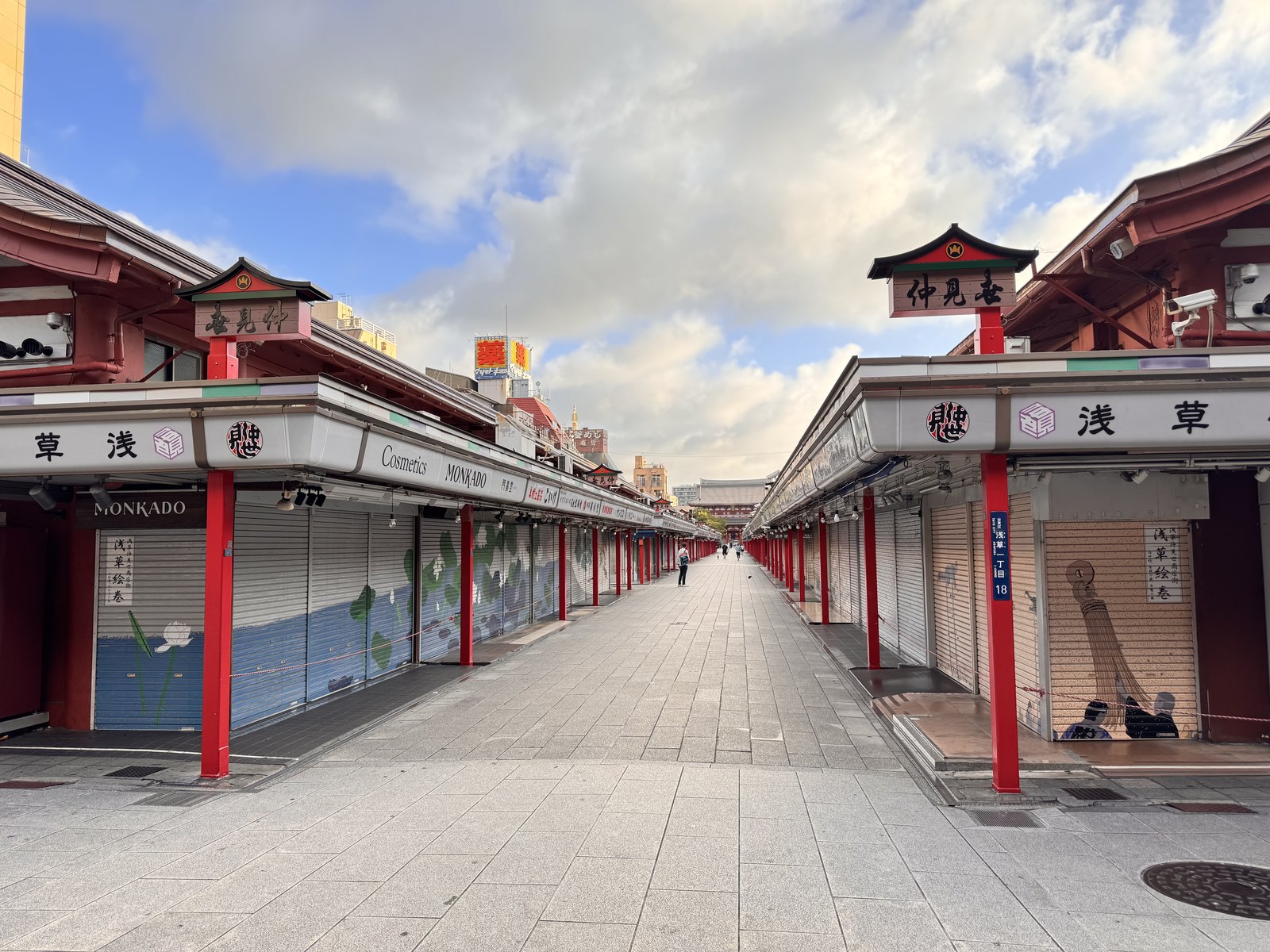
Almost every photo you’ve seen of Nakamise — the shopping street leading up to Senso-ji — has people in it. Usually a lot of people.
On Saturday 8 August 2026 we walked down it at 5:36 in the morning and there was nobody on it at all.
This is a short guide to doing that yourself: what’s actually open at that hour, what you can’t do, and whether it’s worth setting an alarm for. We were there as a family with school-age kids, so this is the version with the practical bits left in.
The short version — what each hour actually gets you. We saw two of these three ourselves on the same morning:
| What we found | |
|---|---|
| 5:30 | Nakamise effectively empty. Kaminarimon with nobody in front of it. Main Hall closed. |
| 6:00 | Main Hall opens (official). We’d already walked to the river by then — this is the one we’d do differently. |
| 8:13 | Clearly more people, still easy to walk. Main Hall open. Shops still shut. |
If you only want photographs, 5:30. If you want to go inside Senso-ji (Sensoji Temple), you can’t before 6:00.
First, the honest part about the heat
I’ll start here because it’s the thing I got wrong.
We went out at 5:25 assuming that August at dawn would be cool. It was hotter than I expected. Not brutal, but not the crisp early-morning air I had in my head when I set the alarm.
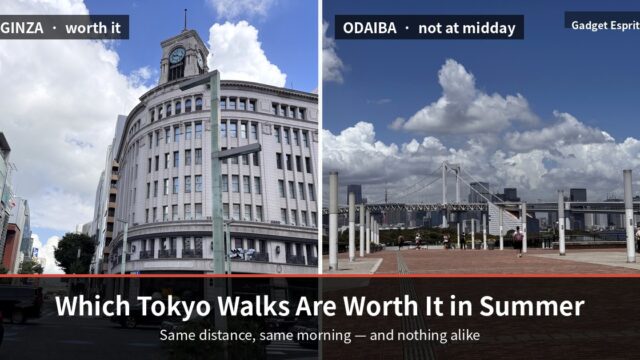
What I’d say instead is this: it was much better than the alternative. We had a direct comparison — the previous day we’d spent a morning walking around Odaiba in full sun, and that had taken a real toll on all of us. Against that, 5:30 in Asakusa was manageable.
So the case for going early isn’t that it’s cool. It’s that it’s the least hot the day is going to get, and you get the streets to yourself as a bonus.
Bring water anyway. More on where to get it below.
Where we walked from
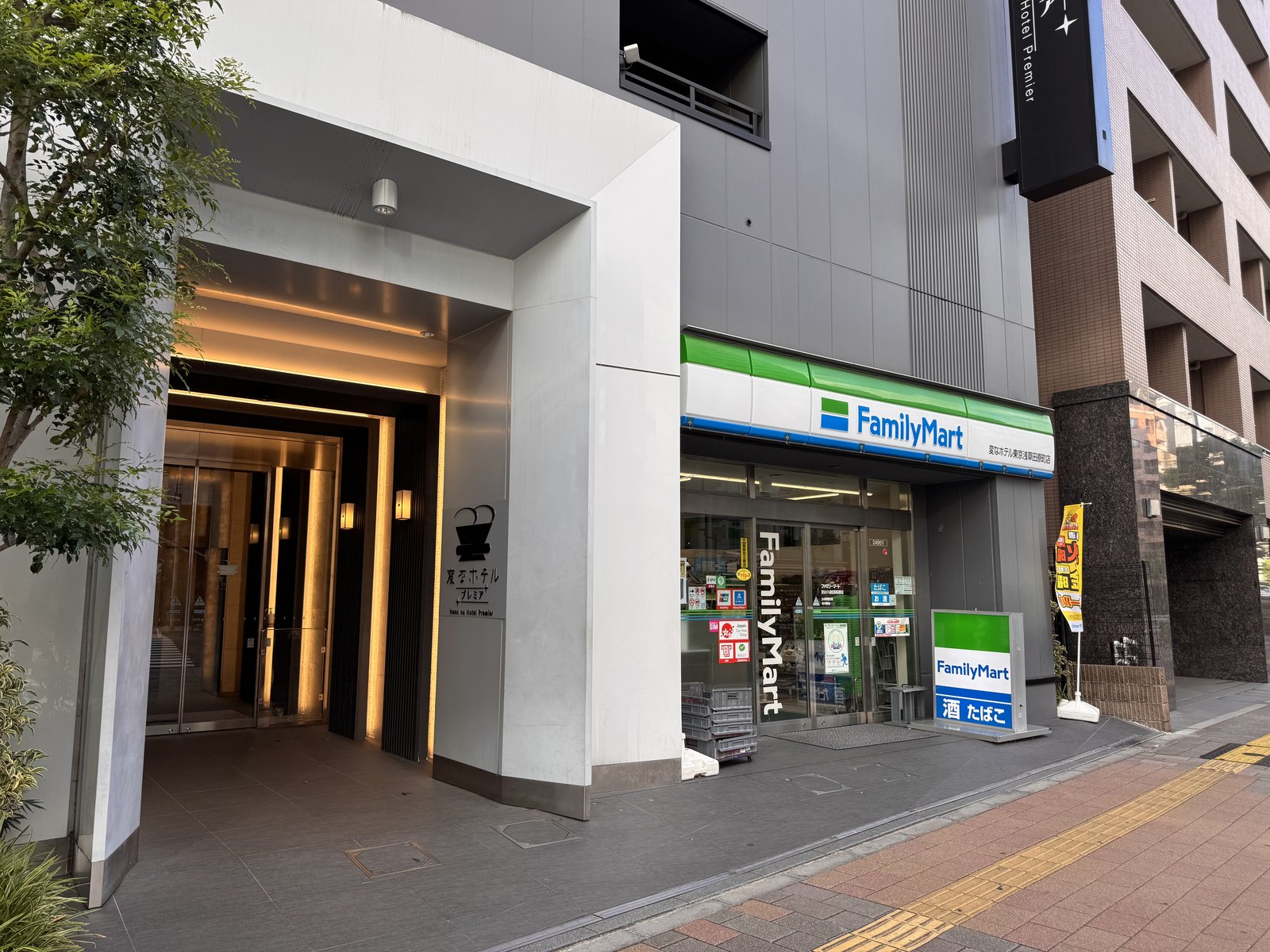
We stayed at Henn na Hotel Premier Tokyo Asakusa Tawaramachi, in Tawaramachi, one area over from Asakusa proper.
From the hotel to Kaminarimon took about 10 minutes on foot. We left at 5:25 and were at the gate by around 5:34. Close enough that the early start costs you nothing in travel.
If an early Senso-ji visit appeals to you, that ten-minute walk is a good argument for booking in Asakusa or Tawaramachi rather than somewhere better connected. Being able to walk out of the lobby and be at the gate in ten minutes is what made it easy — it cost us nothing to go out early, and nothing to come back later in the morning. Crossing Tokyo at 5 AM to do the same thing would be a bigger commitment, since the trains aren’t running the way they do at midday.
One thing worth checking before you book a hotel here
Ours had a roof deck open to any guest, and Tokyo Skytree is lit up and clearly visible from it. We went up at about 8:45 on the first evening and that was the view — no ticket, no queue, and no second trip out into the heat.
It was listed on the floor guide in the lift lobby, in English as well as Japanese: Roof Deck, top floor. It is not the kind of thing that appears in a hotel’s headline description, and it turned out to be one of the better parts of the stay.
So: when you’re comparing places to stay in Asakusa, look for roof access. In August especially, a view you can reach in a lift beats a view you have to walk to.
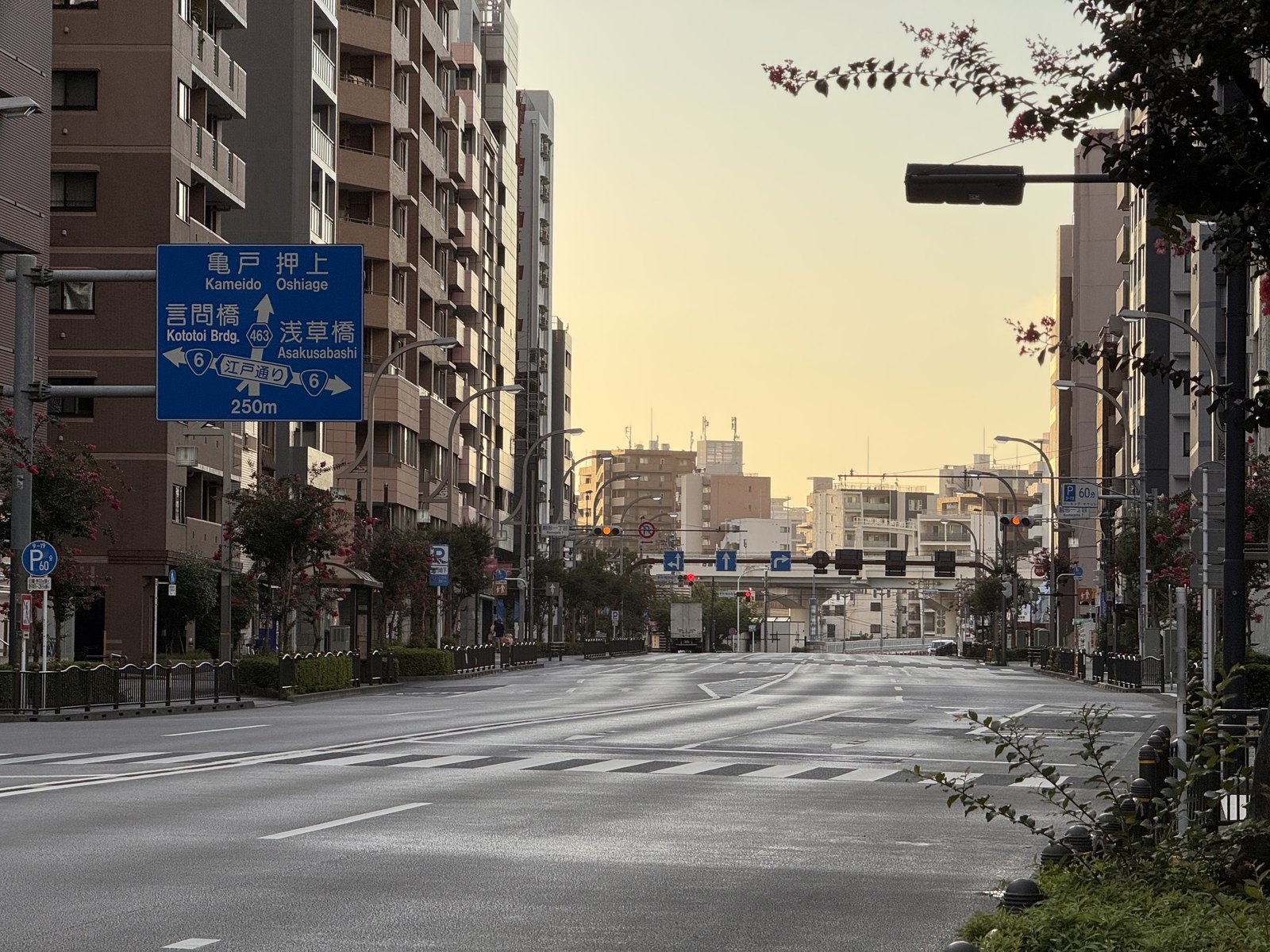
One honest note on finding your way. The route is simple in principle — head north and you’ll get there. But there aren’t really landmarks until you’re almost on top of it. At that hour the streets are quiet and everything looks similar, and I checked Google Maps as I walked, despite living in this country and reading every sign around me.
I mention it because if you’re worried about navigating an unfamiliar city before dawn: you’ll be fine, and you should also just use your phone. I did.
What’s actually open at 5 AM
This is the question that decides whether an early walk is comfortable or miserable, so here’s what we could actually use:
A convenience store. There’s a FamilyMart on the ground floor of our hotel, open through the night. If you’re staying anywhere in this area you will not be far from one. This is your water, your breakfast and your toilet backstop, all at once.
Vending machines. Working and stocked, as they are everywhere in Japan. In August this matters more than it sounds.
Public toilets. We used the ones in the Senso-ji precinct and the ones along the river and in the parks. Both were available at that hour.
So: drinks, toilets and a shop, all covered. What you don’t get is food that isn’t from a convenience store, and you don’t get any of the shops that make Nakamise Nakamise.
What we actually did about breakfast: bought onigiri — rice balls — at the convenience store the night before, so it was already sitting in the room when the alarm went off. It’s a small thing, but it means you’re out of the door in five minutes instead of standing in a shop deciding.
One thing not to plan around: Tawaramachi has a well-known old bakery, Pelican, and it is not the answer here. They make two things, loaf bread and bread rolls, and they’re closed at that hour anyway. It’s a shop for people with a kitchen, not a takeaway breakfast on the way to a temple.
Then, on the way back, having sweated through the walk and a jog, we bought instant miso soup and hot coffee — both hot, in August, at seven in the morning.
That probably reads as odd if you’re not from here. Japanese convenience stores sell hot drinks and hot soup year-round, including through the summer, and plenty of people buy them in the heat. On that particular morning, after a sweaty walk, hot and salty was exactly what I wanted — more than a cold drink would have been. The miso soup is a paper cup you fill with hot water from a dispenser in the shop. It costs very little and it’s one of the more quietly excellent things about a Japanese convenience store.
The closed shutters are the point
Here’s the thing I didn’t anticipate liking as much as I did.
When the shops are shut, you can see the street itself. During the day, Nakamise is merchandise and crowds and signage at eye level, and you don’t really register what you’re standing in. At 5:30 in the morning it’s just architecture — you can see how old some of the buildings actually are, how they’re built, how far the street runs.
The shutters themselves are worth looking at. They’re painted and decorated rather than blank, so the street doesn’t read as “closed” so much as changed into something else.
And a few streets over there’s Shin-Nakamise, the covered arcade, shuttered end to end. Once the shops open it becomes one of the busiest streets in the area — at 5:33 in the morning it’s an empty corridor with the lights off.
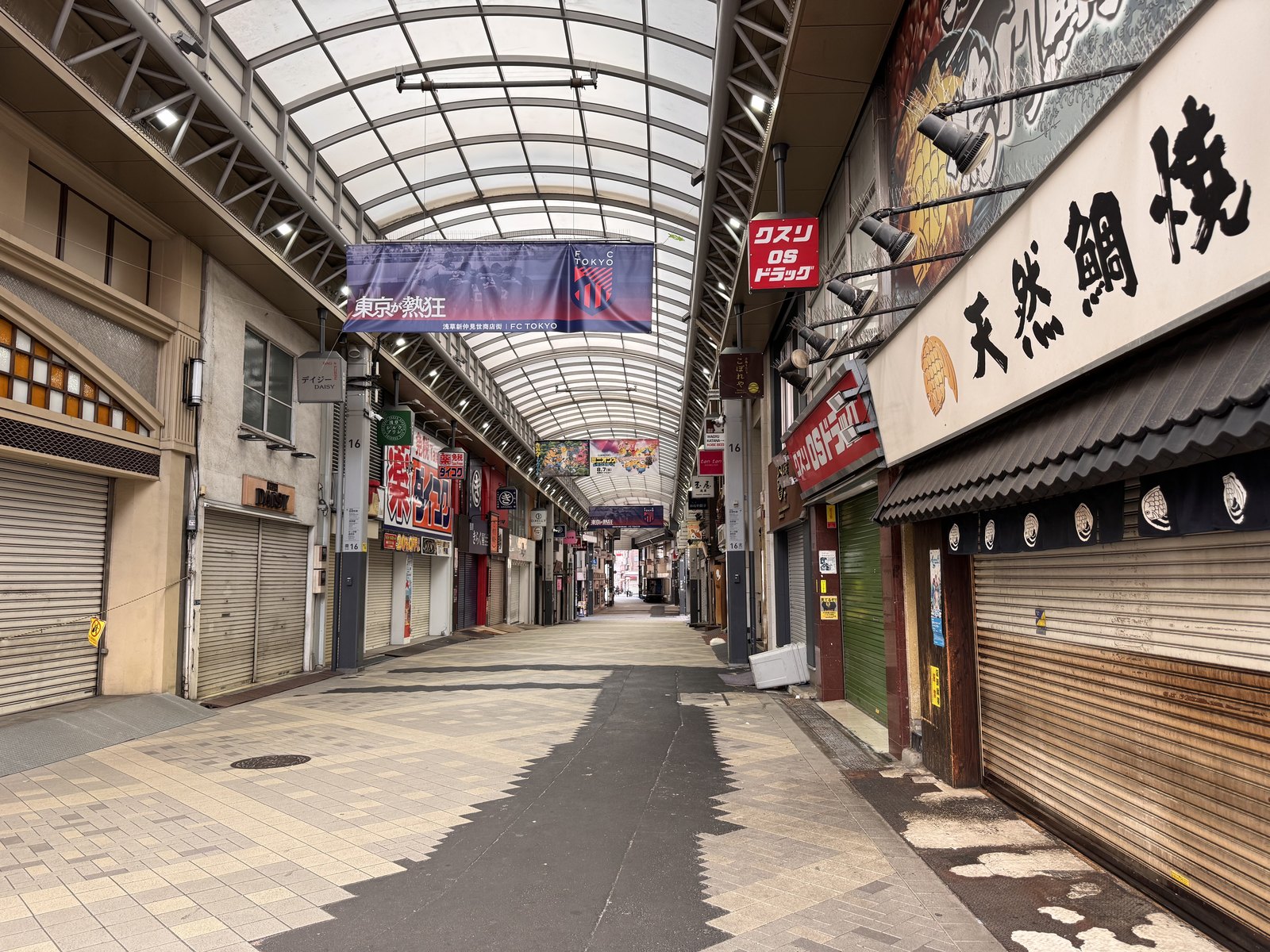
The way I’d put it: the calm is the attraction, not the emptiness. It’s not that you get the place to yourself for photos, although you do. It’s that a street you can only ever experience as a crowd becomes something you can just stand in.
What you can’t do before 6 AM
One clear limitation, and it’s worth planning around.
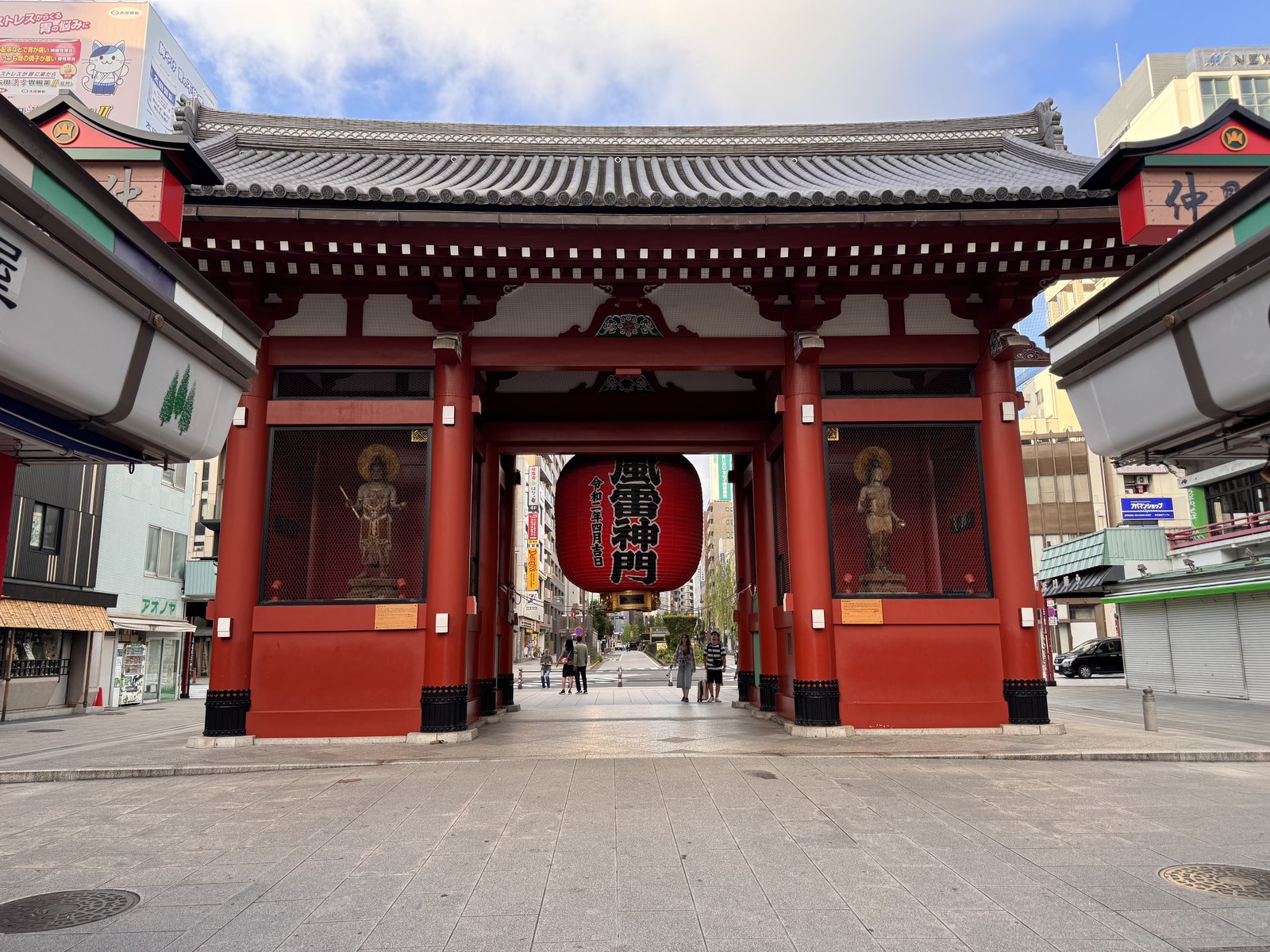
The precinct is open, but the Main Hall is not. At 5:30 we could walk the grounds freely — Kaminarimon, Nakamise, Hozomon, the five-storey pagoda, the whole approach. The Main Hall itself was shut.
Official (as of August 2026): the Main Hall is open 6:00–17:00. From October to March it opens at 6:30 instead.
So if going inside the Main Hall matters to you, 6 AM is your real earliest, not 5. What we did instead — and I’d do it again — was walk the grounds early, go elsewhere, and come back later for the inside.
The one thing I’d change: I didn’t know about the 6:00 opening at the time. We were down at the river by 6:07, so we never saw the Main Hall open — and given how quiet the precinct still was at 5:50, staying the extra twenty minutes is what I’d do next time. I can’t tell you how busy it is at 6:00, because we weren’t there. But it’s the gap in our morning I’d most like to have filled.
You weren’t the only person awake
I want to be accurate about this, because “completely deserted” would overstate it.
There were a few other tourists around, including visitors from overseas out walking. And there were runners — enough of them that this is clearly a regular running route for people who live here. It’s a real neighbourhood at that hour, not a film set.
But nowhere near crowded. You are never queuing, never waiting for a gap, never asking someone to step out of frame. For walking around, it’s about as good as central Tokyo gets.
Keep going: the river and Skytree
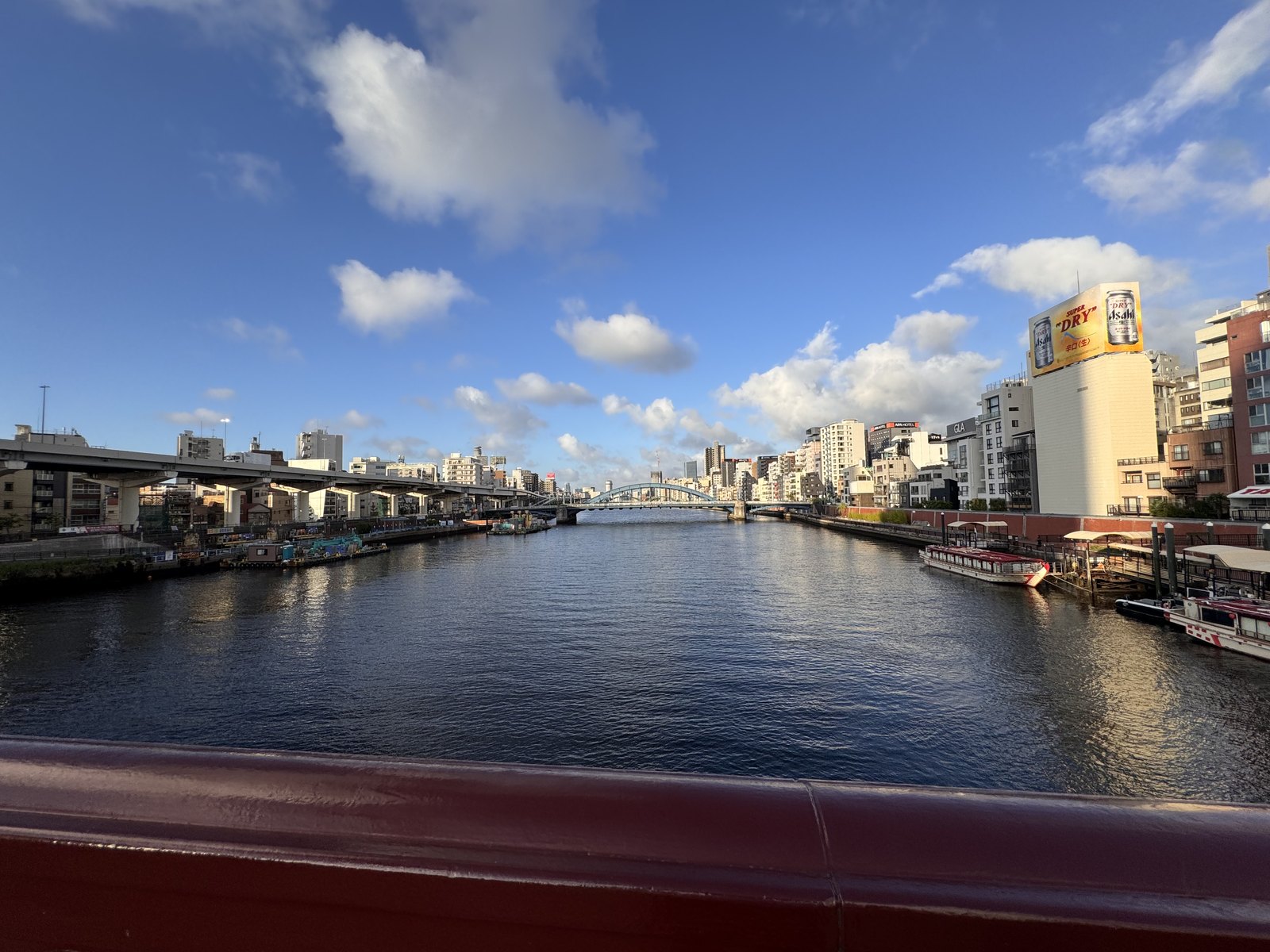
Don’t turn back at the temple. Carrying on to the Sumida River from Senso-ji is worth the extra walk, and it’s the part of the morning I’d least want to cut.
We were at the river by about 6:07, walked past the Asahi building, and were over near Tokyo Skytree by 6:22.
The riverside was the best stretch of it. Early light on the water, the bridges, and enough space to not be thinking about anyone else.
It’s also worth saying what happened on the way back: we jogged part of it. At 5:30 I’d been noting how many locals were out running; by half past six we’d turned into two of them. The riverside and the streets around Asakusa are quiet, flat and pleasant at that hour, and if you’re someone who runs while travelling, this is a very good place to do it.
One thing to set expectations on: Tokyo Solamachi, the shopping complex at the base of Skytree, was still closed when we got there. You can walk up to the tower and look at it, and the area around it is pleasant and empty, but there’s nothing to go into yet. Treat it as the turnaround point of a walk, not a destination.
What changes by 8 AM
We came back to Senso-ji at 8:13, which turned out to be a useful natural experiment.
More people, clearly — but still walkable. It hadn’t tipped over into the crush you get later. You could still move around the precinct without planning your route through it.
The shops still weren’t open. So the 8 AM version gives you neither the emptiness of 5:30 nor the life of a working Nakamise. It’s an in-between state.
The one place it had visibly changed was in front of Kaminarimon, where there were a lot of overseas visitors taking photos. If photographs are what you came for, 5 AM is the better hour, and it isn’t close.
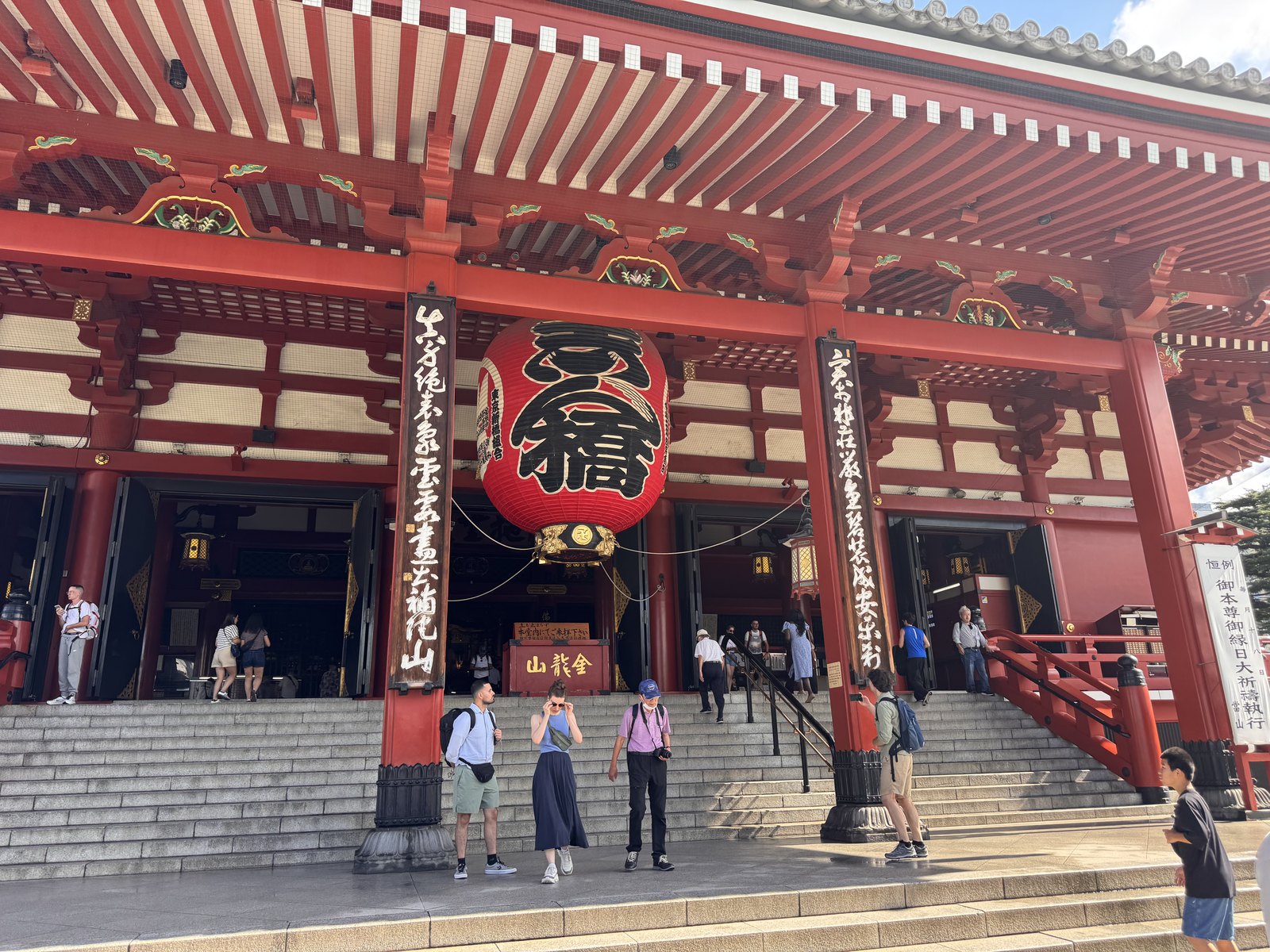
What 8 AM does give you is the Main Hall. It was open, and we went inside. So the two-visit approach — early for the streets, back after 6 for the temple interior — got us both halves of the place.
Omikuji: the fortune slips
While we were back at the temple in the morning, we drew omikuji.
It’s self-service. There’s no one to talk to and nothing to ask for — you put your money in the box yourself, shake a container, take the numbered stick, find the matching drawer, and take the slip. There was an English explanation available, so it works fine without any Japanese. For anyone nervous about accidentally doing something wrong at a temple, this is a low-stakes place to start.
Bring coins. It’s ¥100, cash, into an unattended box. Nobody is going to give you change, and there was nowhere nearby to break a note — we didn’t see anywhere to change money in the area at all. If you’re travelling mostly on IC cards and credit cards, which works fine for almost everything else in Tokyo, this is one of the moments it stops working. Get a few ¥100 coins before you go, at the convenience store if nowhere else.
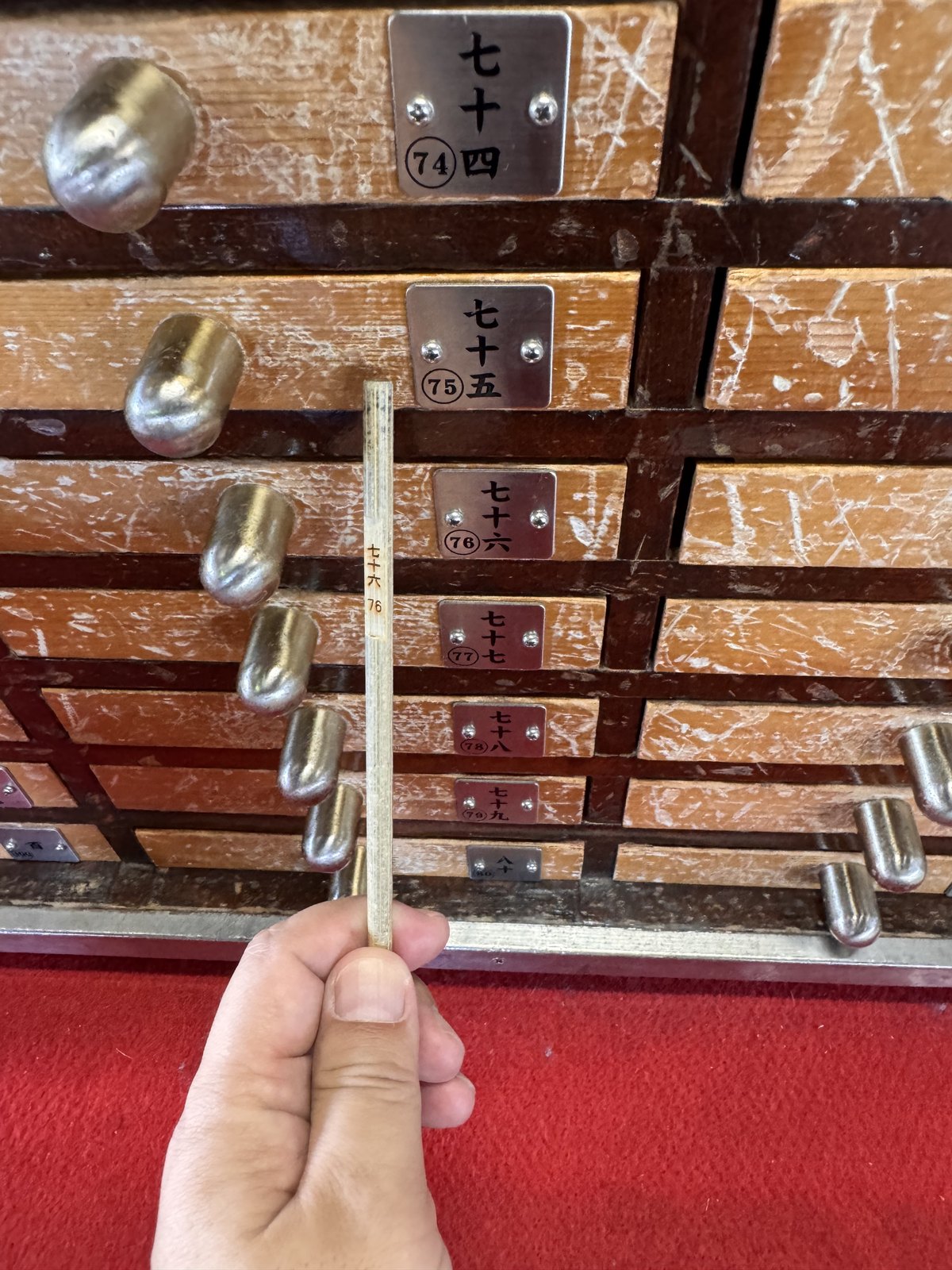
Senso-ji has a reputation for handing out a high proportion of kyō — bad fortunes. I’ve heard it explained, but I can’t verify it, so treat it as a story.
What I can tell you is that both of our children drew kyō.
They were fine about it. If you get one, the convention is to tie it to the rack provided and leave it at the temple rather than take it with you.
Through Asakusa Shrine, on the way out
Asakusa Shrine sits immediately beside Senso-ji, and we walked through it rather than stopping — we were heading somewhere else.
Two things I’d pass on anyway.
In August there were wind chimes hung up through the grounds — hundreds of small glass ones strung under a reed canopy, each with a coloured paper strip. They look good and they sound better, and it’s the kind of thing you only catch if you’re there in the right season. We stopped to photograph them despite being on our way somewhere else.
There were also market stalls set up in the grounds that morning, selling antiques.
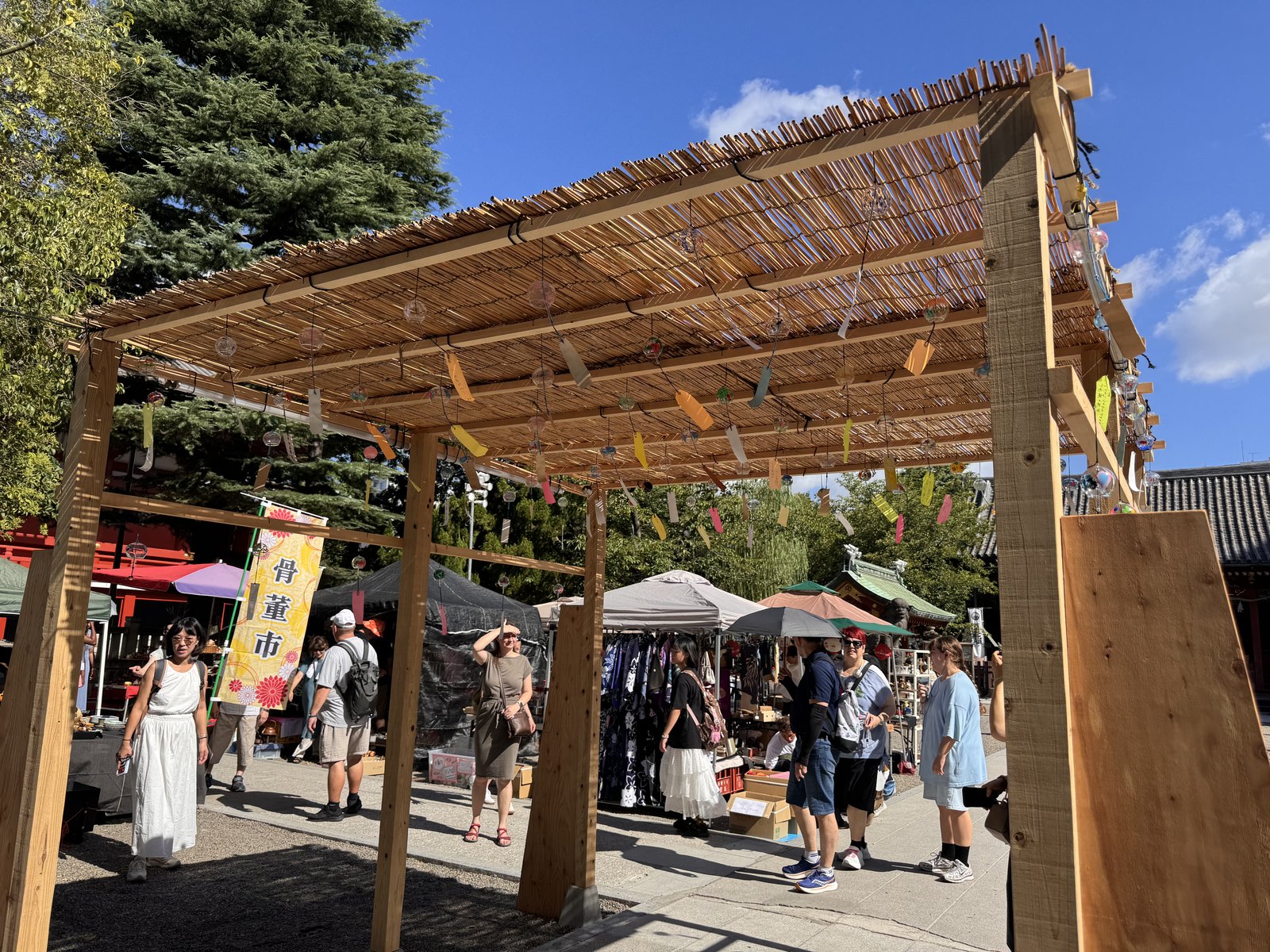
There was a line of people, which I walked straight past without understanding. I worked out afterwards that they were queuing for goshuin — the calligraphy-and-seal stamps that people collect in dedicated books. If that’s something you want, it has a queue and you should budget for it. I didn’t know, so I didn’t.
Fifteen minutes further: the radish temple
This is the part of the morning I’d most want to pass on, and it happened almost by accident — my wife wanted to go, so we went.
Matsuchiyama Shoden — formally Honryu-in — is about 15 minutes on foot from Senso-ji, northeast, near the Sumida River. It’s far enough out that it’s quiet, and close enough that it’s an easy add-on to an Asakusa morning.
Official background: it’s one of Senso-ji’s branch temples, sitting on a hill about 10 metres high. Two symbols appear all over the grounds — a daikon radish and a money pouch. The daikon represents physical health and harmony between married couples; the pouch represents wealth and fortune. The radish is treated as the essential offering here, symbolising the deity’s work of purifying body and mind. The temple’s best-known event is the Daikon Festival on 7 January, when radishes that were offered over the new year are cooked and shared with worshippers.
Which brings me to the thing I did not expect.
When we visited, on the morning of 8 August 2026, the offered radishes were being left out to take home, free. So I walked back through Asakusa carrying a whole daikon.
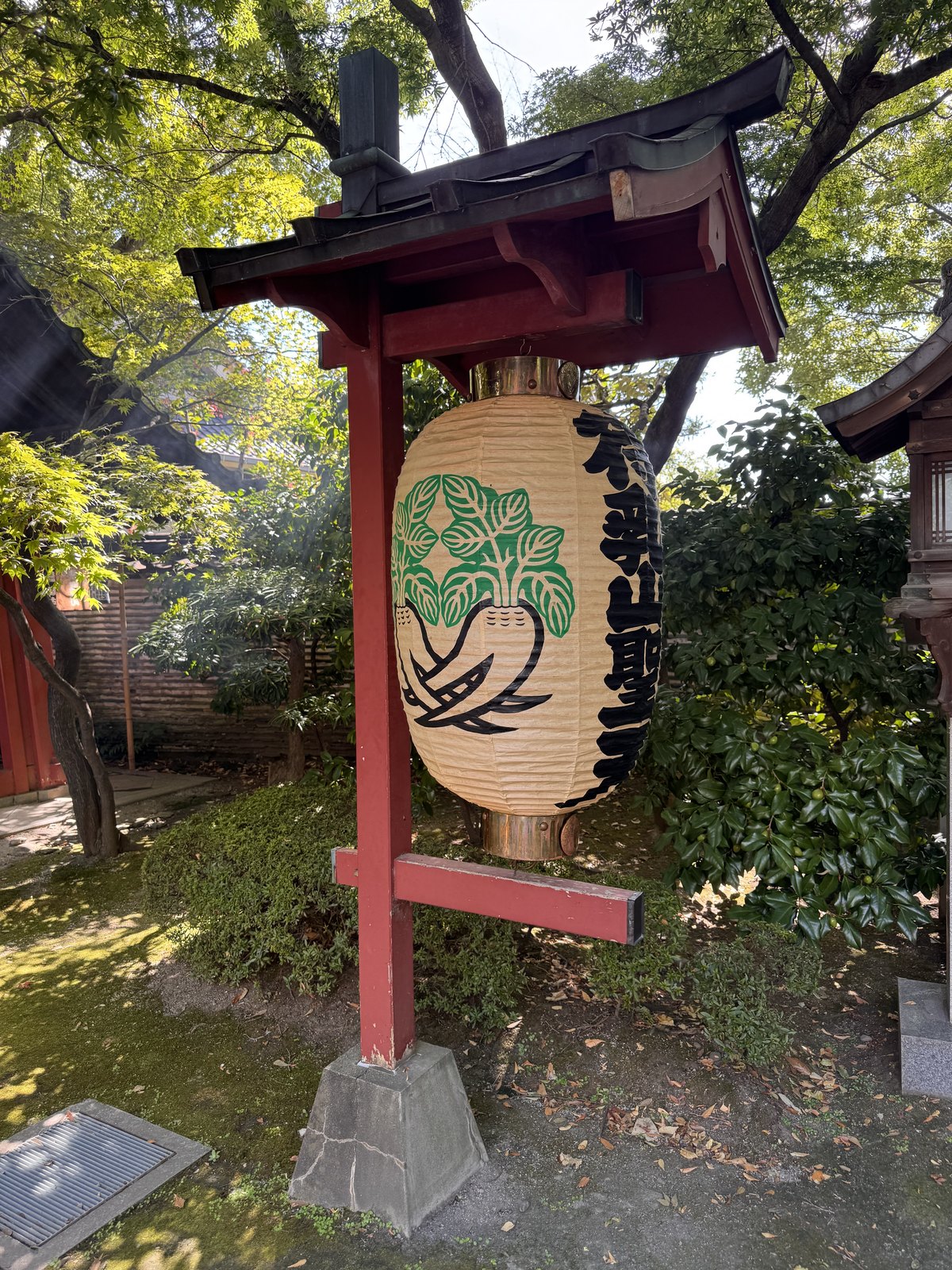
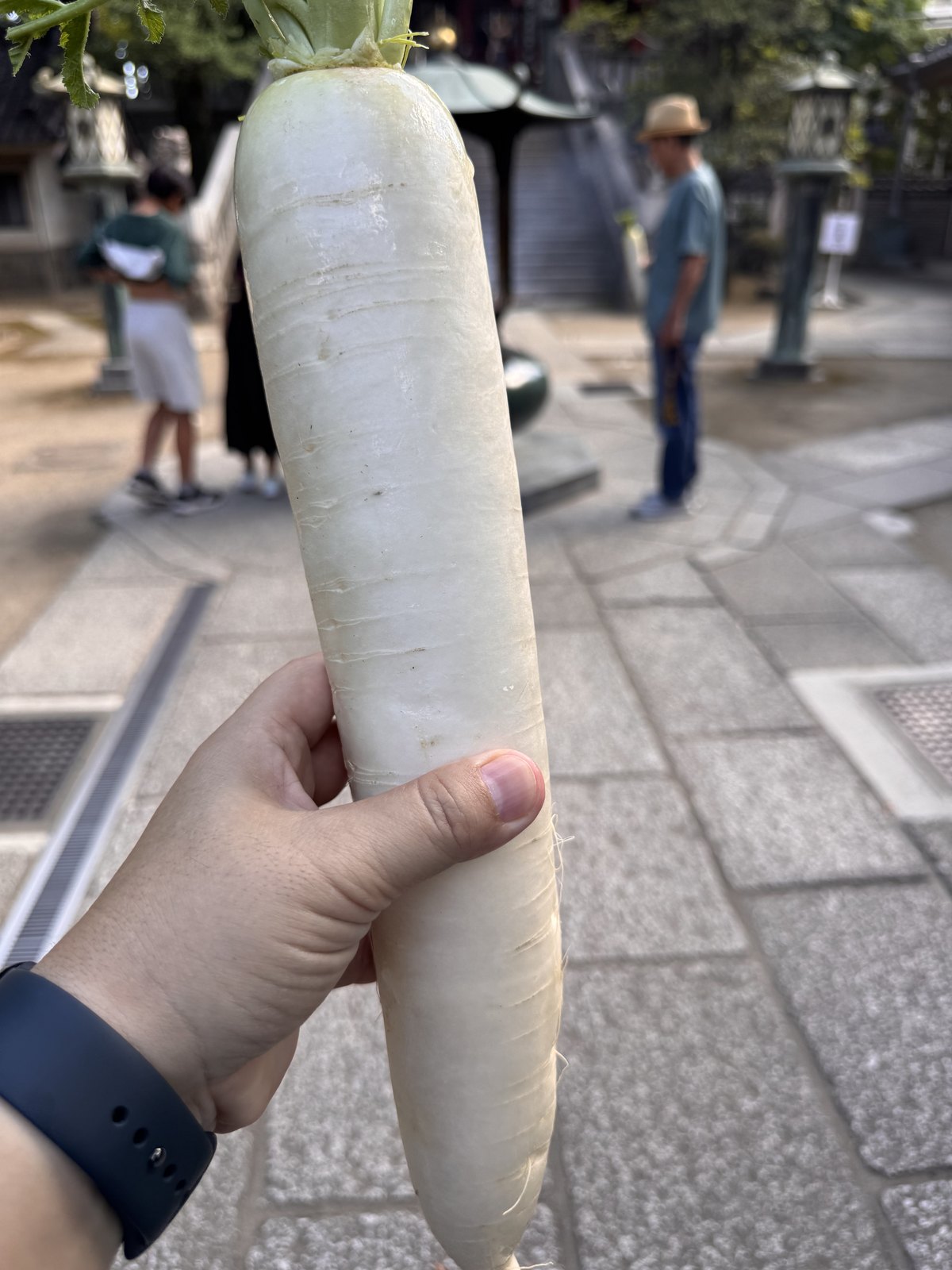
I want to be careful here: that was one particular morning. I don’t know how often it happens or whether you’d find the same thing on your visit. Don’t go expecting a free vegetable. Go because it’s a genuinely quiet, strange, specific little temple fifteen minutes from one of the most crowded places in Tokyo — and if there are radishes, that’s a bonus.
One caution on timing: we were there at about 8:50 in the morning and the grounds were open. I wasn’t able to confirm the opening hours from the temple’s own site, and the hours shown at the bottom of Senso-ji’s page for it are Senso-ji’s own, not Matsuchiyama’s. Various listing sites quote an early opening similar to Senso-ji’s, but I’d rather not state a time I can’t verify. Check before you plan an early trip specifically for this one.
The facts
I’ve split this by where the information comes from, because they don’t carry the same weight.
Official — from the temples’ own pages, as of August 2026
Senso-ji
- Main Hall: 6:00–17:00(6:30 opening, October–March)
- Address: 2-3-1 Asakusa, Taito-ku, Tokyo
Matsuchiyama Shoden (Honryu-in)
- A branch temple of Senso-ji, on a hill about 10 metres high
- Daikon radish and money pouch are its symbols — physical health and marital harmony, and fortune
- Daikon Festival: 7 January
Opening hours and prices change. Check the official pages before you go.
What we observed on 8 August 2026 (a Saturday)
- The precinct grounds were open before 6:00 — we walked Kaminarimon, Nakamise and the approach at 5:30 with the Main Hall shut
- Convenience store, vending machines and public toilets all usable at 5:30
- Nakamise and Shin-Nakamise still shuttered at 8:13
- Matsuchiyama Shoden’s grounds were open at about 8:50
- Omikuji: ¥100, cash, into an unattended box — no attendant, no change given, English explanation available
- About 15 minutes on foot from Senso-ji to Matsuchiyama Shoden
Not verified
- Matsuchiyama Shoden’s opening hours. Listing sites quote an early opening, but I couldn’t confirm it from the temple itself.
- How busy Senso-ji is at 6:00, when the Main Hall opens. We weren’t there.
Our timings on 8 August 2026
- 05:25 left the hotel in Tawaramachi
- 05:34 Kaminarimon — no queue, no crowd
- 05:36–06:00 Nakamise and the precinct, shops shuttered, Main Hall closed
- 06:07 Sumida River
- 06:22 Tokyo Skytree area — Solamachi not yet open
- 08:13 back at Senso-ji — busier, Main Hall open, shops still closed
- 08:21 omikuji
- 08:34 through Asakusa Shrine — wind chimes, a queue for goshuin
- 08:47–09:01 Matsuchiyama Shoden
Questions you might have
Can you visit Senso-ji at 5 AM?
The grounds, yes. We walked Kaminarimon, Nakamise, Hozomon and the approach at 5:30 with no restriction. The Main Hall itself was closed — officially it opens at 6:00, or 6:30 during October to March.
Is Nakamise open at 5 AM?
No. Every shop was shuttered, and they were still shut when we came back at 8:13. If you want to buy something on Nakamise, an early visit isn’t the one.
Is 8 AM early enough to avoid the crowds?
Partly. At 8:13 it was noticeably busier than 5:30 but still comfortable to walk around — the crush hadn’t started. The exception was in front of Kaminarimon, which already had a lot of people photographing it. For photographs, 5:30 was much better.
Would I tell someone to do this?
Yes — with the expectations set properly.
Do it if you want to see what the street is actually like, you’re staying within walking distance, and you’d rather walk in the least-hot part of an August day than the worst of it.
Don’t do it expecting cool air, an open Nakamise, or an empty city all to yourself. None of those are what you get.
And don’t do it as your only visit to Asakusa. The early walk and the daytime version are two different places. We got more out of seeing both than we would have from either one — and going back at 8 cost us nothing, because we were staying ten minutes away.
If I had to compress the whole morning into one line: walk the empty streets before 6, come back after 6 for the Main Hall, and if you’ve got another fifteen minutes in you, spend them on the radish temple rather than a third lap of Nakamise.
Where this fits in the trip
This early morning was the second day of a two-day family trip to Tokyo in August 2026. The day before had been the bay side — Odaiba, Toyosu and teamLab Planets.
→ Two Days in Tokyo, With Timestamps: What We Actually Did — the full two-day record, every time taken from a photo.
→ Which Tokyo Walks Are Worth It in Summer — why the same distance felt easy in Ginza and hard in Odaiba.
→ Monjayaki in Tsukishima — dinner on the first evening, and whether you have to cook it yourself.