Ise Jingu Travel Guide for First-Time Visitors
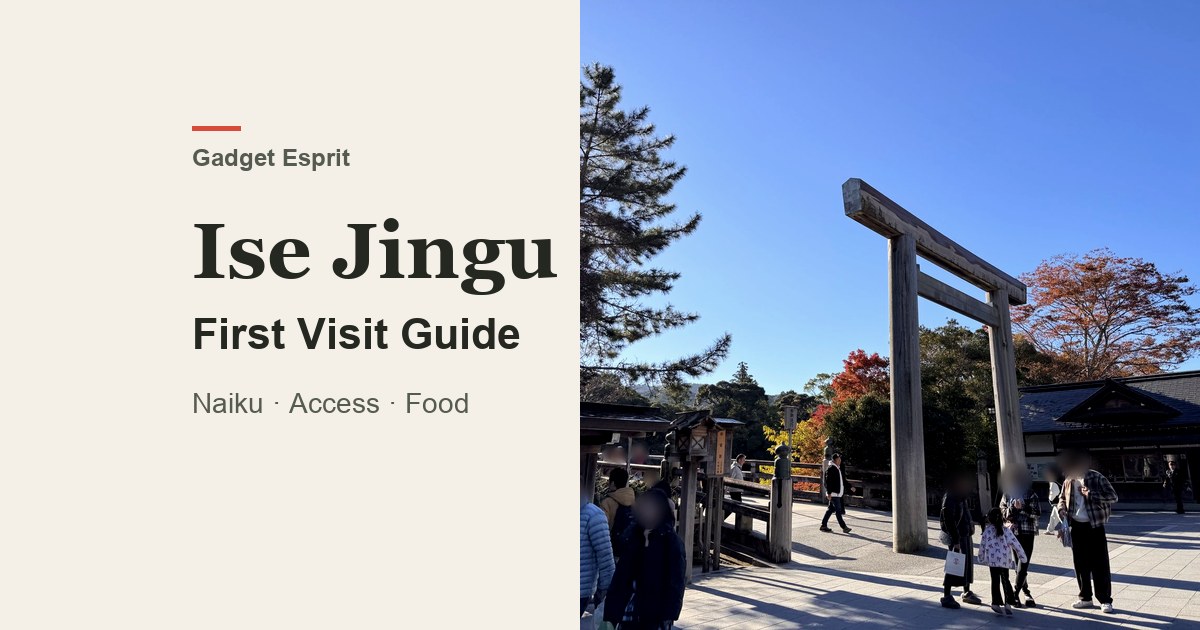
For a first trip to Ise Jingu (Ise Grand Shrine) in Mie Prefecture, start at Iseshi Station. The Outer Shrine, Geku, is a short walk from the station. To reach the Inner Shrine, Naiku, take a bus to Naiku-mae, where you can cross Uji Bridge into the shrine grounds. Leave time afterward for the food shops along Oharaimachi.
I visited Naiku with my family in late November. I’d spend the first part of the morning on the shrine walk, then head into town for something to eat. If you have half a day in Ise, Naiku and the streets around it are enough for a relaxed visit. With a longer day, you can start at Geku and see both.
Geku and Naiku are in different parts of Ise
- Geku (外宮, Outer Shrine) is near Iseshi Station. Use the JR-side South Exit for the approach to Geku. The walk takes about five minutes.
- Naiku (内宮, Inner Shrine) is farther south. This is where you’ll find Uji Bridge, the Isuzu River and the streets of Oharaimachi just outside the shrine grounds.
If you plan to visit both, the shrine recommends going to Geku first and then Naiku. For a Naiku-only visit, take the bus straight from the station. Ise Jingu’s official access guide · Ise City’s station and bus guide
How to get to Ise Jingu by train and bus
Getting to Iseshi Station
- From Nagoya — Take a Kintetsu Limited Express from Kintetsu-Nagoya to Iseshi. The city’s guide puts the rail journey at about 1 hour 20 minutes. JR’s Rapid Mie is another option from Nagoya.
- From Osaka — Look for a Kintetsu Limited Express from Osaka-Namba to Iseshi. A direct train takes about 1 hour 45 minutes. Check the departure station and stops when booking, as services vary.
- From Tokyo — Take the Tokaido Shinkansen to Nagoya, then follow signs for Kintetsu to continue to Ise.
Kintetsu Limited Express trains have reserved seating. You’ll need a basic fare and a Limited Express ticket. The rail estimates above leave out transfers and the bus ride. Ise City’s access times · Kintetsu’s English ticket guide
The last leg to Naiku
At Iseshi Station (伊勢市駅), head to the South Exit bus area and look for Naiku-mae (内宮前). Ise City lists stop 10 for buses going that way. If you start at Geku, board a Naiku-bound bus at Geku-mae (外宮前), stop 3. The shrine lists Mie Kotsu routes 51 and 55 for the Geku–Naiku connection. From Geku, plan on 15–20 minutes on the bus plus time waiting at the stop. Get off at Naiku-mae for Uji Bridge.
You can pay the local bus fare with a transit IC card or cash. If paying cash, take a numbered ticket as you board and pay on the way out. If your train stops at Isuzugawa Station (五十鈴川駅), it’s a short bus ride or a 25–35 minute walk to Naiku. For the return trip, check that your bus from Naiku-mae stops at the station you need. Ise City’s bus stop photos and directions · Naiku access from Isuzugawa
Driving to Naiku and choosing a parking lot
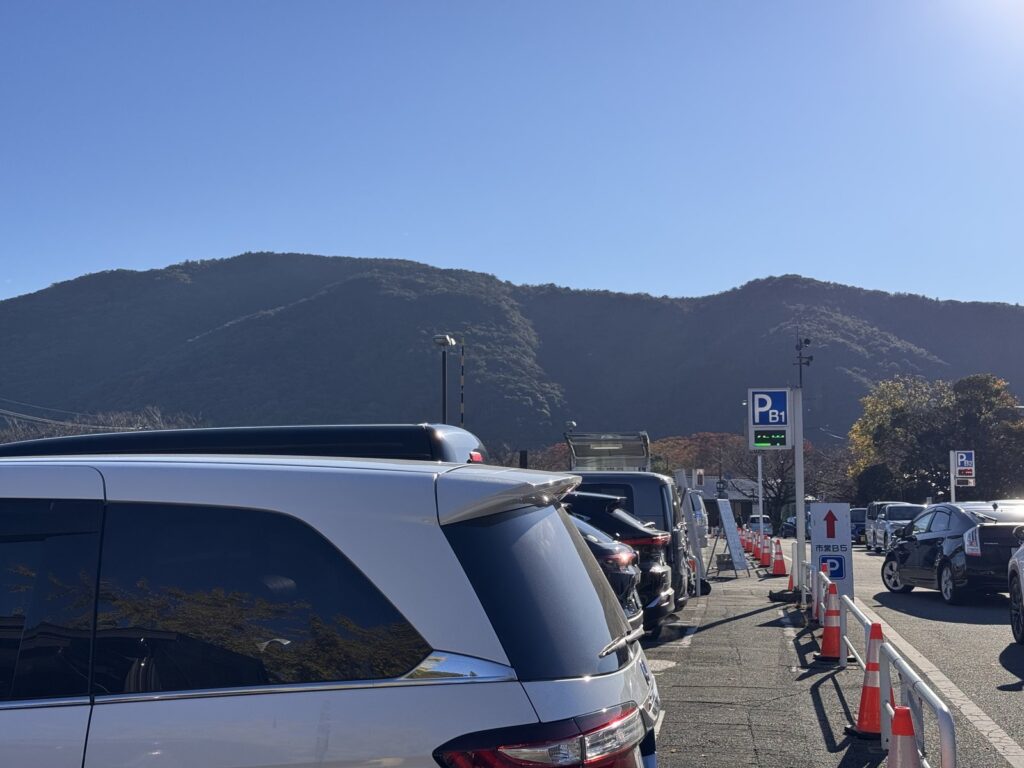
The city lists several public lots in the Naiku A and B areas. The A lots are near the shrine entrance. B1 (内宮B1駐車場) is farther away, on the Oharaimachi side. Check the live status of the A and B lots before getting in line. The parking map uses 満車 for full and 空車 for spaces available. Ise’s official parking and traffic information
What happened on our visit. We reached B1 around 8:45 a.m. on November 23, 2026. The line extended back to Route 23, but there were spaces farther inside the lot when we got in. From our parking spot it took us about 15 minutes on foot to Uji Bridge. For a weekend or holiday drive, I’d build in time for both the queue and the walk.
For entry at B1 between 7 a.m. and 5 p.m., the published rates are free for up to one hour, ¥500 for up to two hours, then ¥100 for each additional 30 minutes (checked November 24, 2026). That works out to ¥700 for a three-hour stay at the daytime rate. Bring ¥1,000 notes or change for the payment machine. Official B1 parking details
What to see on the Inner Shrine walk
Uji Bridge, the Isuzu River and the forest approach
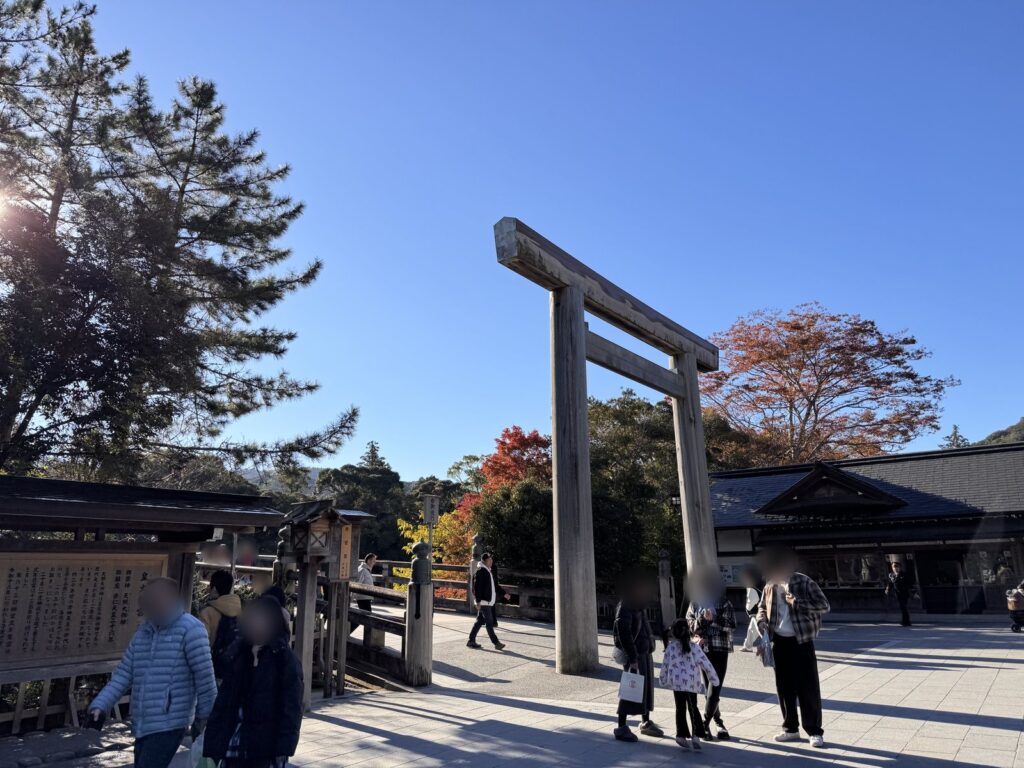
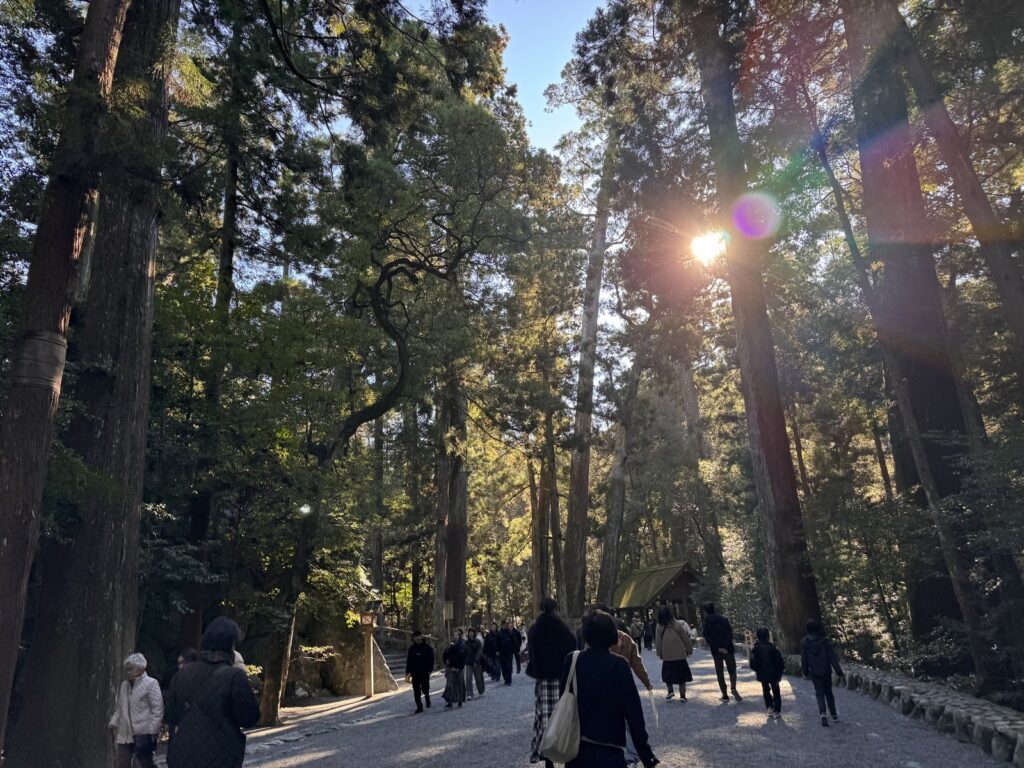
Uji Bridge (宇治橋) is the wooden bridge through the torii gate at Naiku’s entrance. The change in atmosphere always strikes me after I cross it. The street gives way to tall trees and gravel paths, and I find myself standing a little straighter.
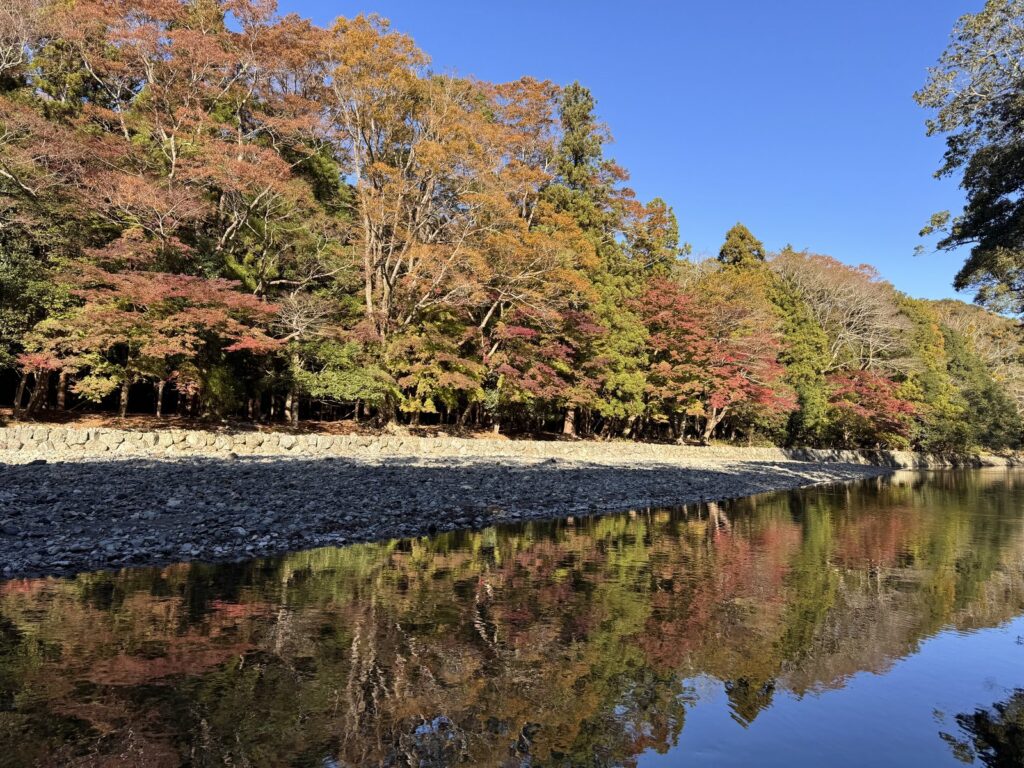
Follow the path into the grounds and look for Mitarashi (御手洗場), the riverside purification spot marked on the shrine map. In late November, we saw red and gold leaves reflected in the Isuzu River. I’d leave a few minutes to stop there instead of walking straight to the main sanctuary. Official English map of Naiku (PDF)
Main sanctuary, etiquette and visiting hours
Naiku’s main sanctuary is dedicated to Amaterasu Omikami, an important Shinto deity. At the worship area, put your camera away and follow the signs. If you’d like to pray, the standard sequence here is two bows, two claps, then one bow. Wear shoes you’ll be comfortable walking in on gravel and stone steps. Ise Jingu’s English etiquette guide · Naiku overview from Ise City
Admission to the shrine grounds is free. Naiku’s regular hours, checked November 24, 2026, are:
- January–April and September: 5:00 a.m.–6:00 p.m.
- May–August: 5:00 a.m.–7:00 p.m.
- October–December: 5:00 a.m.–5:00 p.m.
Check the shrine and city notices for any special hours or traffic arrangements around New Year or major holidays. Shrine hours · Admission information · Ise traffic notices
Where to eat in Oharaimachi and Okage Yokocho
Oharaimachi (おはらい町) is the shop-lined street outside Uji Bridge. Okage Yokocho (おかげ横丁) is a small shopping and dining area partway along it, across from Akafuku’s main shop. You can walk through both after leaving the shrine. If you arrive very early, visit Naiku first and check individual shop hours for food stops. Ise City’s Oharaimachi and Okage Yokocho guide
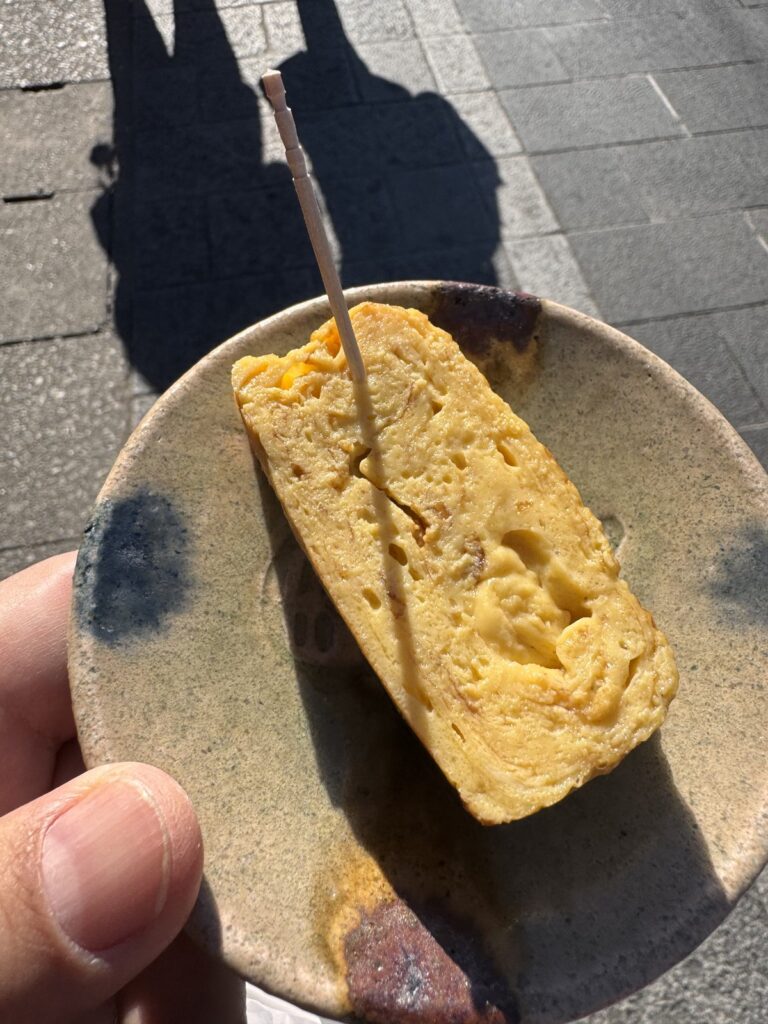
- Kawanishiya tamagoyaki (川西屋) — I tried a slice of the freshly cooked Japanese omelet. It was still hot, with a sweet flavor that made me want another two or three slices. It was especially good on a cold morning.
- Akafuku mochi (赤福餅) — The local specialty is soft mochi topped with sweet red bean paste. There was already a line outside the main shop before 9 a.m. on our visit, so we kept walking. Akafuku main shop information
- Henba mochi (へんば餅) — We bought these to take home. Henbaya’s version has sweet red bean paste inside and a lightly browned surface. There’s a shop on Oharaimachi. Henbaya’s shop and directions
- Ise udon (伊勢うどん) — For a sit-down meal, look for these thick, soft noodles served with a dark soy-based sauce. Ise City’s guide to local udon shops
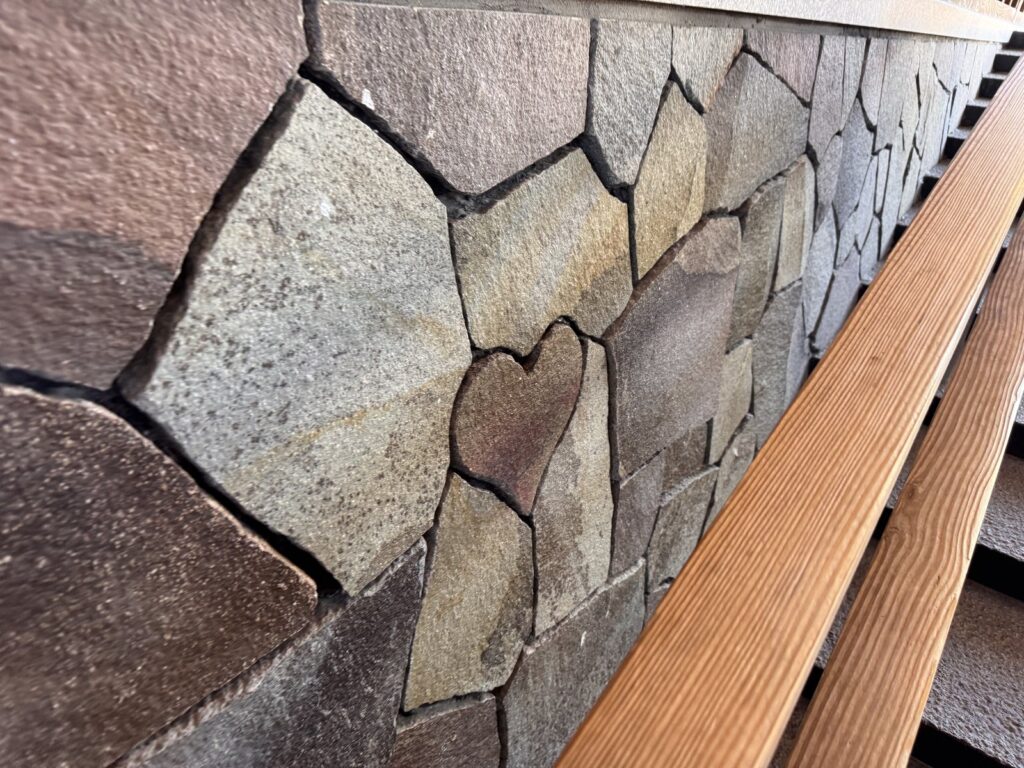
A small detour from the B lots. If you’re walking from B1 through the Naiku Okage Sando underpass, look for the heart-shaped stone set into the wall. I spotted other visitors stopping for a photo there too. Heart Stone location
How much time should you allow?
For Naiku and Oharaimachi, I’d set aside about three hours in the area, plus travel time to and from Ise. That gives you time for the shrine walk, a stop by the river and lunch or a few snacks. To visit Geku as well, allow roughly four to five hours locally, including the bus between the shrines. On crowded days, add time for the return bus or parking queue.
If you’re spending time in Nagoya too, see my walk through Osu in the morning and at lunchtime.