teamLab Planets with Kids: What We Wish We’d Known Before Going

We went to teamLab Planets in Toyosu on Friday 7 August 2026, on a 13:00 entry slot, as a family with kids of elementary and secondary school age.
Most of what’s written about this place is about the artworks. That part you can see for yourself in about five seconds of scrolling. What actually decided how our afternoon went was much more boring: when we bought the tickets, what we were wearing, and how much water there turned out to be.
So this is the practical version.
The short version, from our visit:
- Tickets — bought a week ahead, and every slot from 14:00 onwards was already gone
- Clothes — the water came above our children’s knees; wear something that dries
- Bags — everything but your phone goes in a locker, and lockers are free
- Time — 13:03 in the queue, 15:51 back outside; budget three hours

Book earlier than you think you need to
This is the single thing I’d tell anyone.
I bought our tickets one week before the visit. Even a week out, every slot from 14:00 onwards was already sold out for our date, which is why we ended up on a 13:00 entry.
Out of curiosity I checked the availability again on the day itself. Everything was sold out until after 18:00.
That was a Friday in August — school holidays in Japan — so it won’t be that tight every day of the year. But it does mean the “we’ll decide in the morning and go” approach that works for a lot of Tokyo is not going to work here.
Official (as of August 2026): tickets are not sold on site. There is no ticket window you can turn up to. You buy online in advance, and the entry time is fixed to the slot on your ticket.
One thing that helped: tickets bought through the official teamLab Planets ticket store can be changed up to 3 times, no later than 2 hours before your admission time. So booking early doesn’t lock you in as hard as it sounds — book a slot to secure it, adjust later if your plans move.
The queue is real, but it’s shaded
We arrived at 13:03 for a 13:00 slot and joined the line. We were through the gate about 15 minutes later, at roughly 13:15.
The useful detail for a summer visit: the waiting area is covered. It’s an outdoor walkway with a fabric awning over it, with planting on both sides. In August that difference matters — we’d walked from Odaiba earlier that day in full sun with basically no shade, and this was not that.
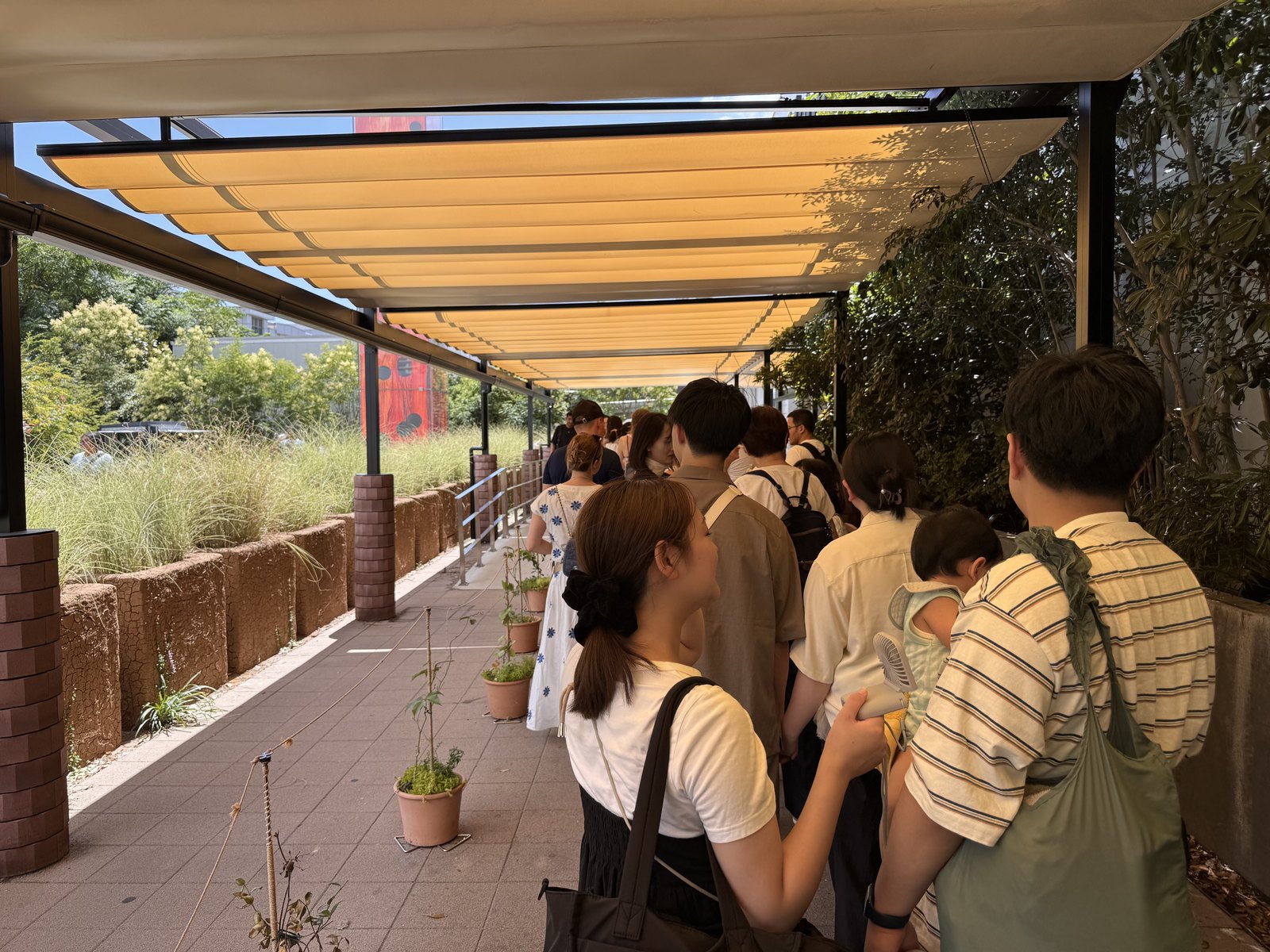
The time printed on your ticket is your admission time, not your total visit time, and official guidance notes you may have to wait in line at busy periods. Fifteen minutes was our Friday-afternoon experience in August — not a rule.
Have a drink with you for the queue, and finish it there. We’d brought a bottle of tea and drank it while we were waiting outside. That’s the window for it — once you’re through the gate your bag goes into a locker, and eating and drinking around the artworks isn’t permitted. So a drink is for the line, not for inside.
You will be barefoot, and you will be in water
If you take one thing from the official rules, take this one, because it changes what you should wear that day.
Official, as of August 2026:
- In the Water area you experience the artworks barefoot. Shoes come off at the locker area, and socks and stockings come off too.
- Water can reach knee height, even for adults.
- Some floors are mirrored. Shorts can be borrowed free of charge, sizes XS to 6L — you tell staff inside if you want a pair, and return them on the way out. Wraps are also provided.
- Sandals without a heel strap and high heels don’t work for some artworks. Rental shoes are available free.
- If your clothes get wet, staff will ask you to change before the next artwork. Towels can be rented. For small children they recommend clothes you don’t mind getting wet, or a change of clothes.
- There is a strongly lit area and a dark area.
The practical translation: trousers you can roll above the knee, or a skirt/shorts, and footwear you can get on and off in one motion. If you’re going to have to sit on the floor of a locker room unlacing boots while a queue builds behind you, you’ve picked the wrong shoes.
What actually happened to us
We knew about the water in advance, so our kids wore shorts and we came in trousers we could roll up. We still got it slightly wrong.
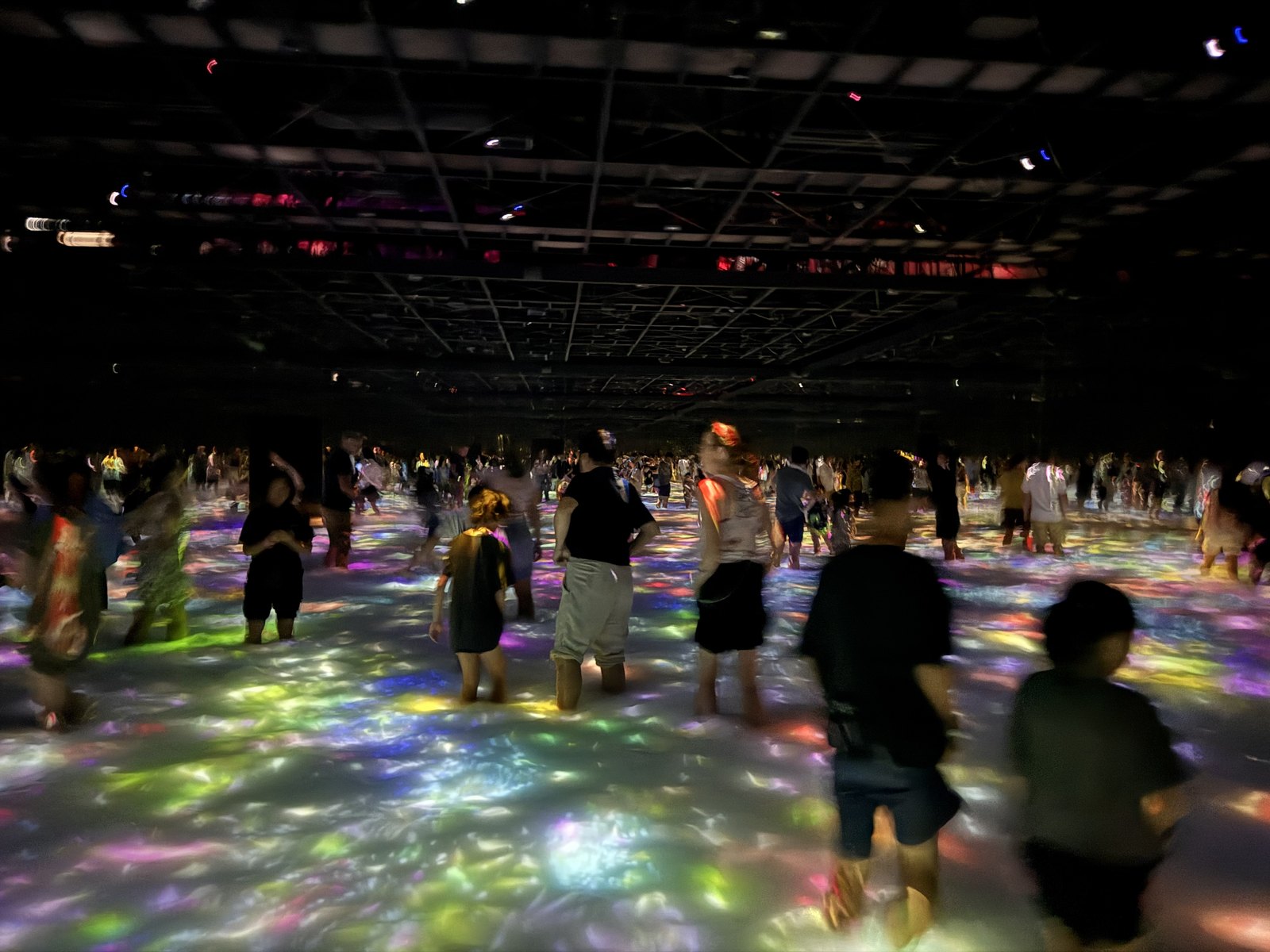
The water came up higher than we’d pictured — knee height for the adults, and above the knee for the children — so we ended up a bit wet despite planning for it. What saved us was fabric: we were in quick-drying material, and it was a hot August day, so everything dried off shortly afterwards and it stopped being a problem.
So: plan for the water, then assume it will be higher than you planned for, and wear something that dries. Cotton on a cool day would have been a different afternoon.
We didn’t borrow the free shorts, and didn’t need to.
The part almost nobody explains: you are not barefoot the whole time
This is the thing I’d most like to have understood before we arrived, because it changes how you move around the place.
A lot of what’s written about this place — including the official FAQ’s own summary line — describes it as somewhere you experience barefoot. That’s true of the Water area. It was not true of our whole visit.
What follows is how the venue worked on the afternoon of 7 August 2026, when we walked it. It isn’t a quoted rule, and the layout has changed before, so treat it as a report rather than a guarantee.
teamLab Planets is not one linear barefoot route. It’s a set of separate areas, and each area has its own bank of lockers at its entrance. You gear up for the area you’re about to enter, then come back out through the same lockers.
Here’s how it worked for us:
The Water area — barefoot. There are lockers before you go in. You take your shoes off there, and everything except your phone goes in the locker. You walk in on your own two feet. There was also somewhere around here to leave strollers and larger bags.
The Athletics Forest — shoes stay on. There are lockers at the entrance to this one too, for your bags, but you keep your shoes.
The Garden and outdoor areas — shoes on. You’ll see in our photo of the Floating Flower Garden that everyone is wearing shoes.
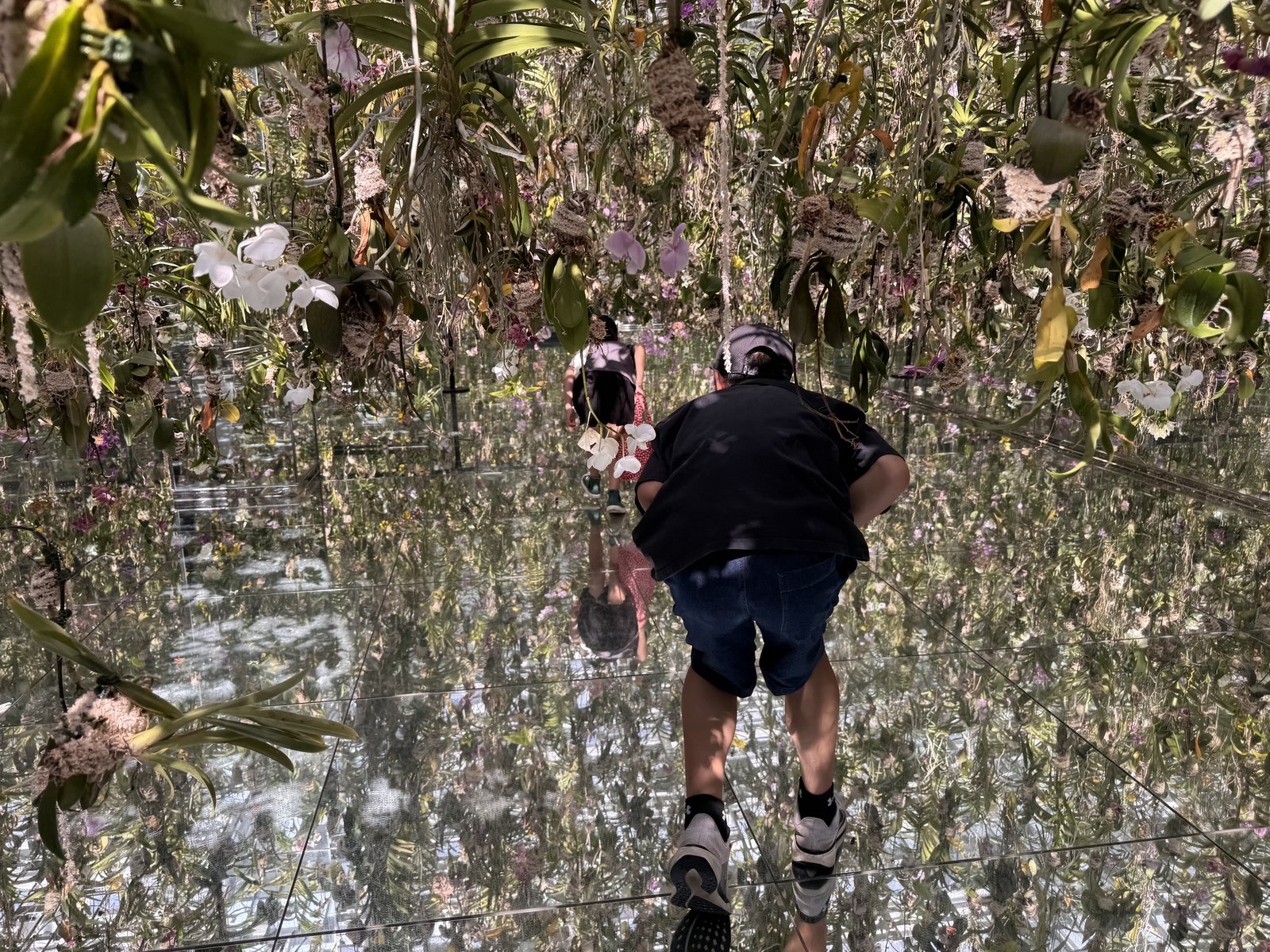
And because you enter and leave each area through its lockers, we were able to go back in. Collect your bag and shoes, walk to the next area, and — on the day we went — return to an earlier one afterwards if you want to.
That’s how we ended up doing the Water area three times.
One point of confusion worth clearing up: the official rules say no re-entry — that refers to leaving the venue. Once you’re out of the front gate, your ticket is done. Moving between the areas inside, and going back into an area you’ve already seen, is a different thing entirely.
Official on baggage: personal belongings can’t be taken into the artwork spaces — dark sections, uneven floors, water. Free lockers, 23 cm wide × 34 cm deep × 37 cm high. Suitcases larger than that are secured with a wire lock in the stroller storage area instead.
We were travelling light — just backpacks for the two of us — so none of this slowed us down. Phones come with you, since photography is allowed. No flash, and no selfie sticks, tripods or supports over 30 cm.
Going with children
Official rules worth knowing before you book:
- Children under 13 cannot enter without a parent or guardian aged 18+.
- One accompanying adult per three children, including children young enough to enter free.
- For Drawing on the Water Surface Created by the Dance of Koi and People – Infinity, visitors with an inseam under 40 cm can’t experience it on their own feet — they can go through carried, or in a front baby carrier.
- Detour routes exist. If there’s an artwork you’d rather skip with a child, you tell a staff member and they route you around it. This isn’t advertised prominently and it’s genuinely useful to know.
- Strollers are left before entry. Front baby carriers are allowed inside.
- Diaper-changing tables and a first aid room are available — the first aid room can be used for feeding or resting if you ask staff. Check the official FAQ for which restrooms have the changing tables, as the wording differs between teamLab’s pages and it matters if you’re the father doing the changing.
- No re-entry to the venue once you’ve left it.
What our kids actually did
The Water area was the whole visit for them. We went round it three times — not because we planned to, but because they didn’t want to leave.
The one that did it was Drawing on the Water Surface Created by the Dance of Koi and People – Infinity. You stand in water that comes to about knee height on an adult, higher on a child, with projections moving across the water and the walls and changing as you go. In August, the water temperature was pleasantly cool — which, after a morning walking around Odaiba in the sun, was doing a lot of work quite apart from the art.
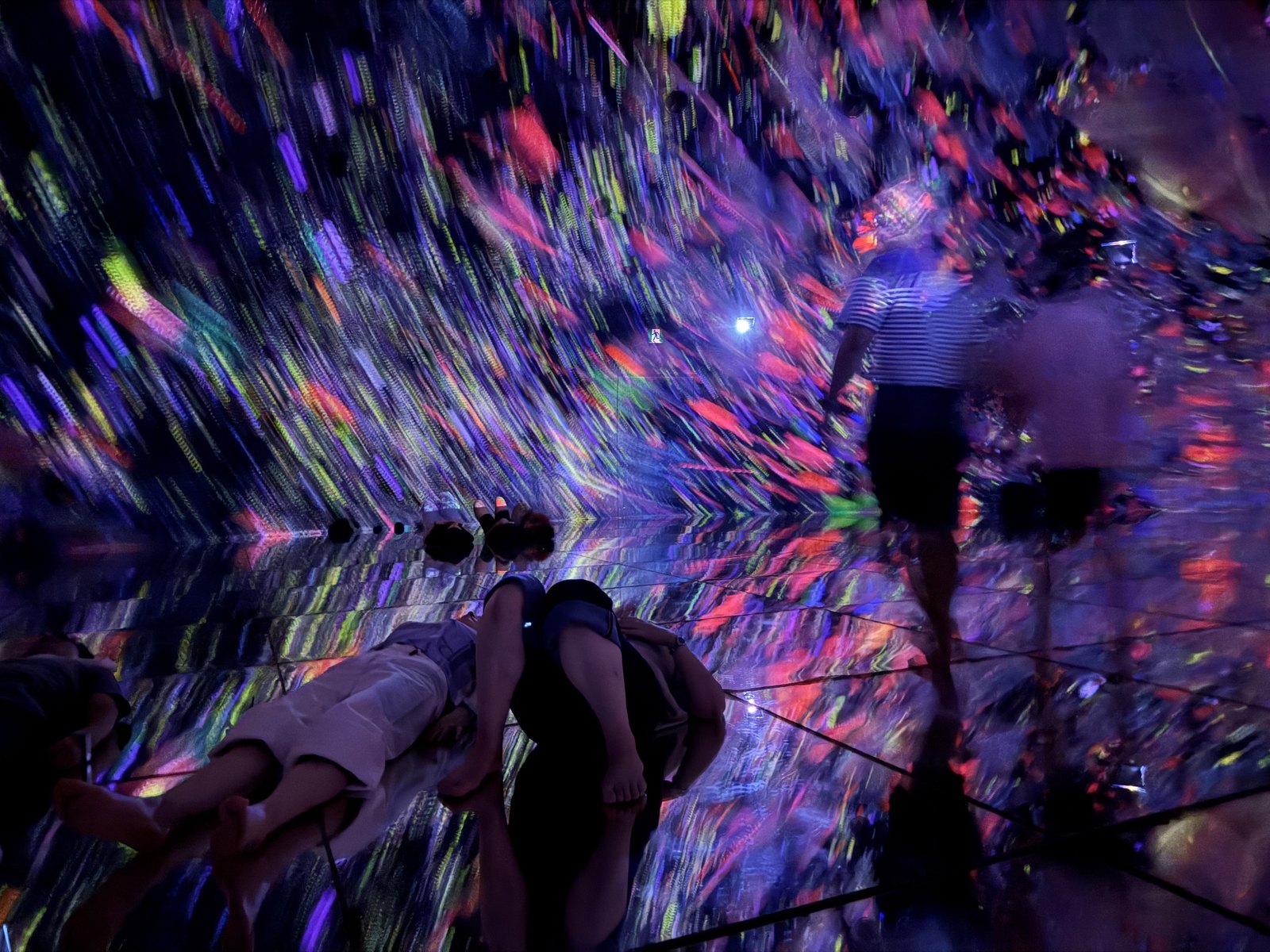
The other one worth planning around is Floating in the Falling Universe of Flowers, where you sit or lie down and watch flowers projected onto a dome above you.
This one has a practical value that isn’t obvious from photos. On our route through the venue, it was the one place indoors where we could sit down in air conditioning — everywhere else we stopped to rest was outside. On a hot day that makes this artwork double as your break, so you’re not choosing between seeing it and getting off your feet.
The Athletics Forest is where parents get to join in
The Water area was the favourite, but the Athletics Forest was the one that worked best as a family.
It’s a physical, body-based area — climbing, balancing, moving — and shoes stay on. Plenty of children were making full use of it. The reason it stood out for us is that it gives parents two options rather than one: you can stand back and photograph your kids, or you can do it with them. Both work. A lot of the venue is something you look at together; this is something you can actually do together.
The Garden area was hot
Nothing here upset our kids, but one area cut itself short: the Floating Flower Garden was very warm inside. I don’t know why, and I’m not going to guess. We looked, and moved on fairly quickly.
It’s worth saying that it’s a beautiful room, and plenty of people were stopping to take photos among the flowers. But if you’re visiting in summer with children who have already had enough of the heat, it’s not where your remaining patience is best spent.
How long to allow
Here’s our actual clock, from the photo timestamps:
- 13:03 — arrived, joined the queue
- about 13:15 — through the gate
- 15:51 — back outside
So: roughly two and a half hours inside, and just under three hours door to door once you count the queue.
The official guidance suggests around two to two and a half hours for the whole thing, so our visit landed right about where they say it will — and we weren’t rushing, and we did the Water area three times. Budget three hours from arriving to leaving, plus travel.
Eat before you go in
There’s a vegan ramen restaurant and a store on site, but there’s a catch in how they work: they’re only accessible after you’ve entered, and you can’t go in before the admission time on your ticket. So they’re not a solution to “we’ve arrived early and we’re hungry.”
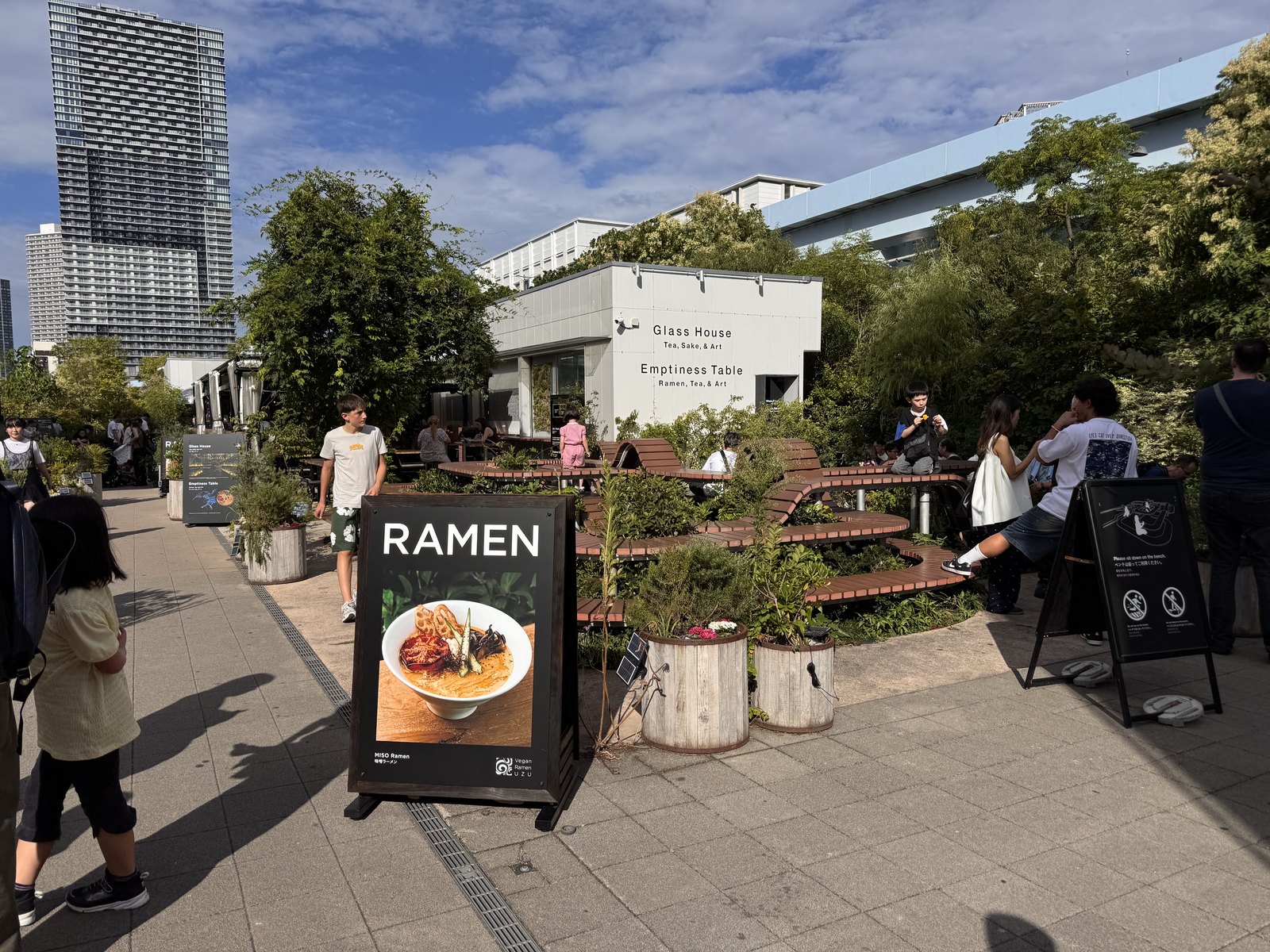
We didn’t use either of them, because we’d already eaten in Odaiba before coming over. That turned out to be the right call.
If you’re doing the same Odaiba-then-Toyosu run, our lunch stop was the food court at DiverCity Tokyo Plaza, a couple of minutes from the Unicorn Gundam statue. The one to order there is the chuka soba (kotteri — the richer version) at Tanaka Soba Ten, which was the best thing any of us ate that day. It’s a food court, so there’s no reservation and no language barrier to deal with. (As of August 2026.)
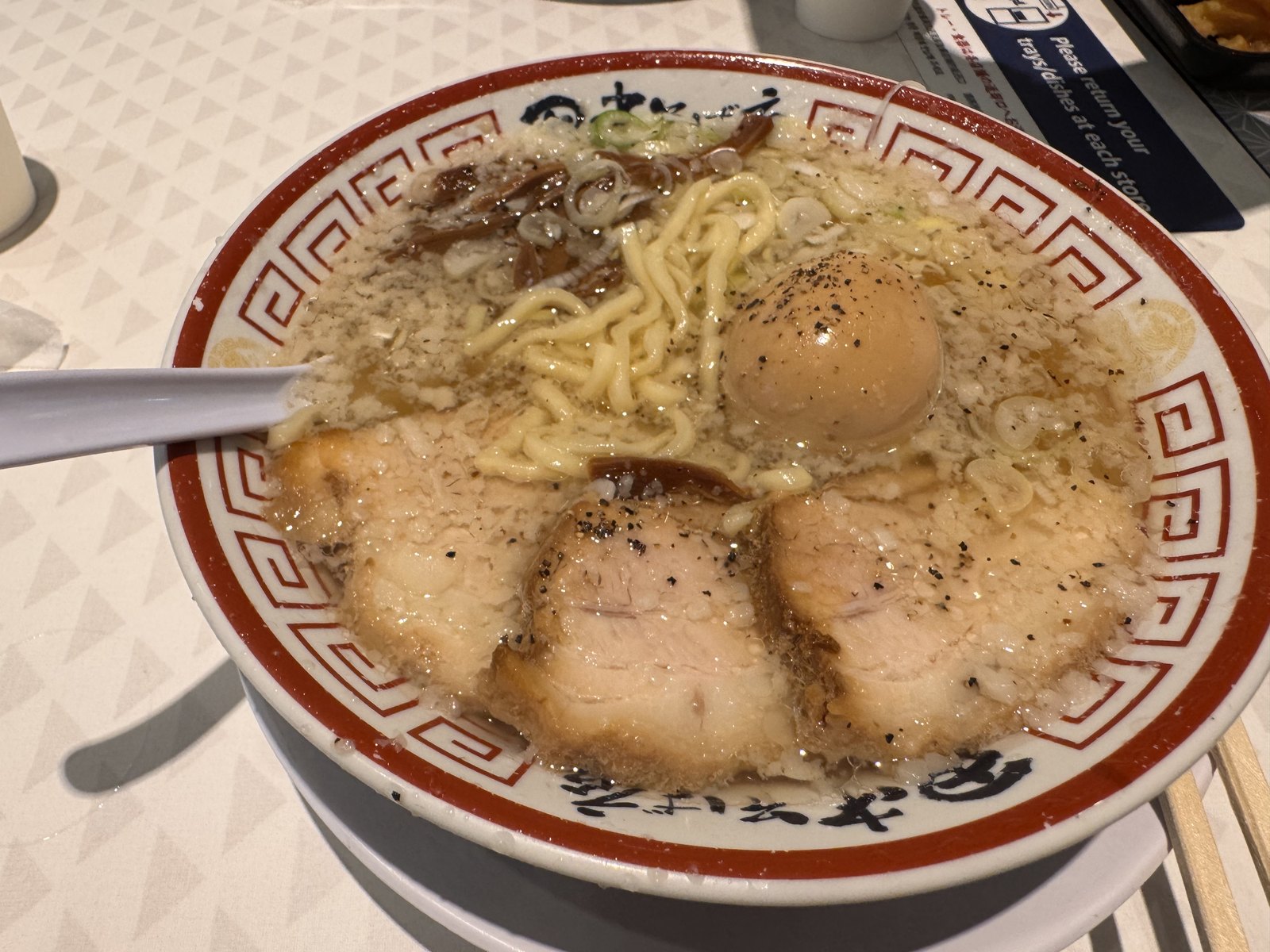
Eating first also solves a scheduling problem. Your entry slot is fixed, the on-site restaurant is behind the gate, and you’ll be in there longer than you expect — so the meal has to go before, not during.
Getting there
Official access (as of August 2026):
| From | Time |
|---|---|
| Shin-Toyosu Station, North exit (Yurikamome) | 1 min on foot |
| Shijomae Station / Toyosu Market (Yurikamome) | 5 min on foot |
| Toyosu Station, Exit 7 (Tokyo Metro Yurakucho Line) | 10 min on foot |
Address: 6-1-16 Toyosu, Koto-ku, Tokyo.
Shin-Toyosu is the one you want if you have a choice. One minute versus ten minutes from Toyosu — and in August those nine extra minutes are not free.
The route we took from Odaiba
If you’re combining this with Odaiba in the same day — which is an easy combination, and we’d recommend it — the connection is better than it looks on a map.
Daiba Station to Shin-Toyosu Station on the Yurikamome line: no transfer, about 15 minutes. One train, straight through.
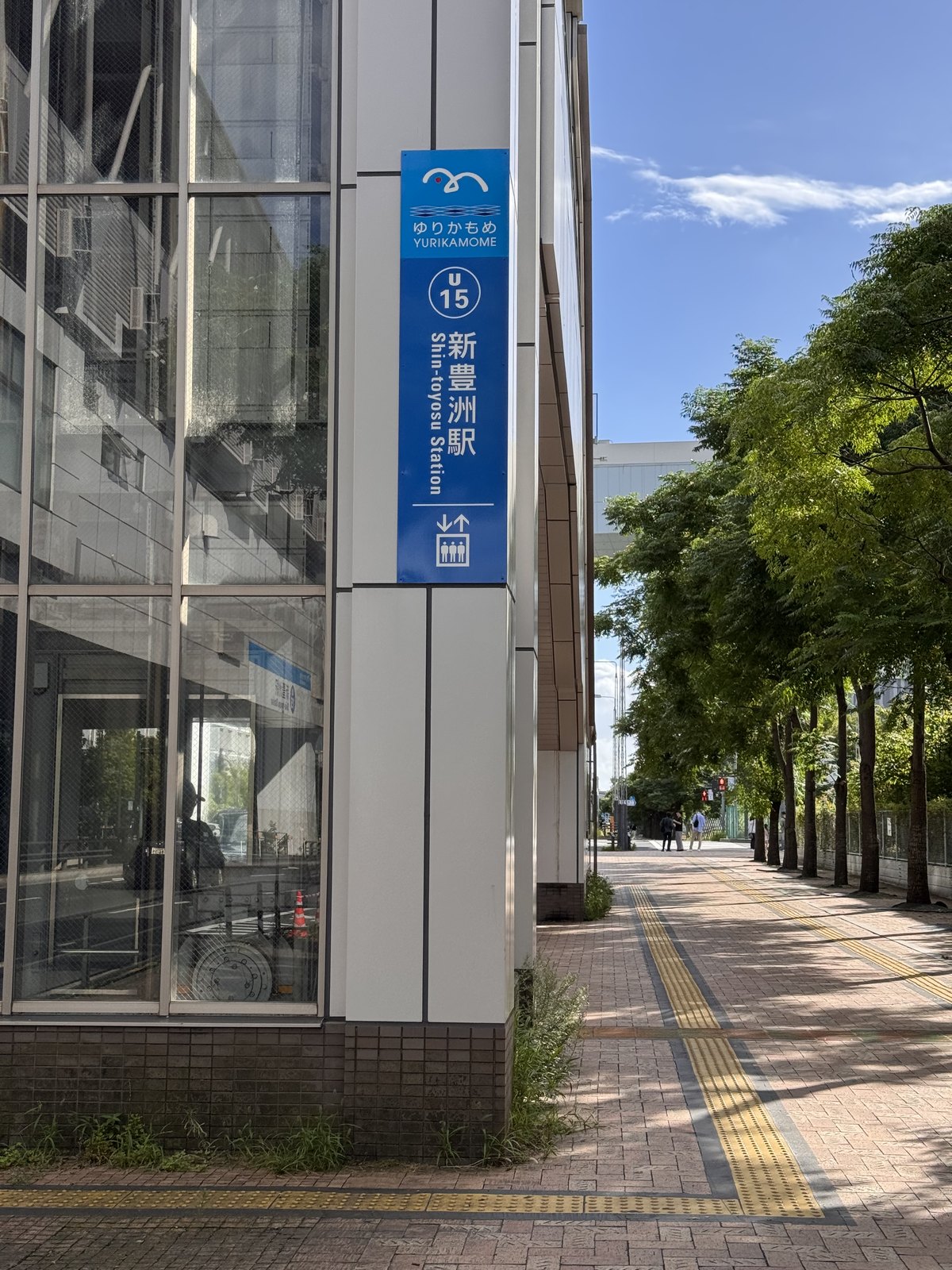
At Shin-Toyosu, we came out of Exit 1A. teamLab Planets is directly in front of you as you exit; walk to the right and you reach the entrance. There’s no navigating involved, which after a hot morning was welcome.
(The official site describes it as 1 minute on foot from the North exit. Exit 1A is the one we actually used and it put us straight in front of the building.)
One more official note: the Toei bus route To-05-2 from Tokyo Station, Ginza and Tsukiji toward Shin-Toyosu is currently flagged as heavily congested, and teamLab’s own site suggests using other transport. There is also a paid shuttle bus between GINZA SIX and teamLab Planets if you’re coming from that side.
The facts, in one place
All official information below is as of August 2026 and subject to change — check the official site before you book.
- Open: 8:00–22:00. Last entry one hour before closing.
- Closed (announced): 5 August, 3 September, 1 October 2026.
- Running until: end of 2027.
- Tickets: online only, not sold on site. Dynamic pricing.
- Entrance Pass: Adults (18+) from ¥3,600 · Junior/senior high school ¥2,800 · Ages 4–12 ¥1,500 · 3 and under free · Visitors with a disability certificate ¥1,800
- Premium Pass: ¥12,000, no fixed admission time, priority entry
- Ticket changes: up to 3 times, until 2 hours before your slot (official ticket store only)
- Lockers: free, 23 × 34 × 37 cm, past the entrance gate
- Refunds: none once purchased
Questions we had before going
Do teamLab Planets tickets sell out?
For our date they did. Buying a week ahead, everything from 14:00 onwards was already gone, and by the morning of the visit the whole day was sold out until after 18:00. That was a Friday in August during the Japanese school holidays — it won’t be that tight year-round, but tickets are online-only and there’s no window to turn up to, so book first.
What should kids wear at teamLab Planets?
Something that dries. Our children were in shorts and still got wet above the knee. Quick-drying fabric and shoes you can take off in one motion. Free shorts are available to borrow inside if you need them.
Can you take bags into teamLab Planets?
No — belongings go into free lockers, and only your phone comes with you. Lockers are 23 × 34 × 37 cm; anything bigger, like a suitcase, is wire-locked in the stroller storage area instead.
How long does it take with kids?
We were in the queue at 13:03 and back outside at 15:51 — about two and a half hours inside, just under three door to door. That included going round the Water area three times.
Would I send someone here?
Yes, with one condition: treat the ticket as the first thing you book, not the last. Everything else about this visit was easy. The only part that could have gone wrong went right purely because I happened to buy a week ahead — and even then, half the day was already gone.
If you’re building a Tokyo itinerary around fixed-time tickets, this is the one to anchor the day to.
And if you’re travelling with children: the honest summary is that we budgeted for an art museum and got a water park with better lighting. Three laps of the Water area was not in the plan. Allow more time than you think, and put this after the walking, not before it — nobody in our family was interested in sightseeing on foot afterwards.
Where this fits in the trip
This was the afternoon of day one of a two-day family trip to Tokyo in August 2026. The next morning we were at Senso-ji before the shops opened.
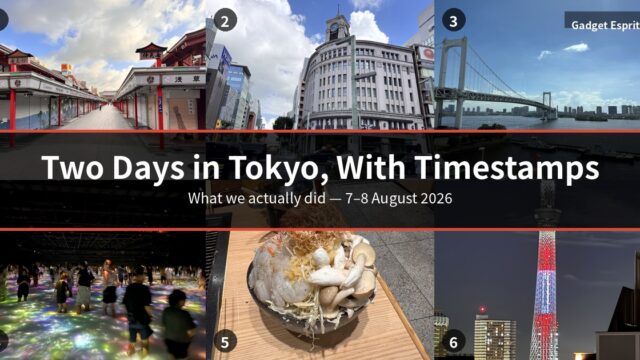
→ Two Days in Tokyo, With Timestamps: What We Actually Did — the full two-day record, every time taken from a photo.
→ Which Tokyo Walks Are Worth It in Summer — why the same distance felt easy in Ginza and hard in Odaiba.
→ Monjayaki in Tsukishima — dinner on the first evening, and whether you have to cook it yourself.